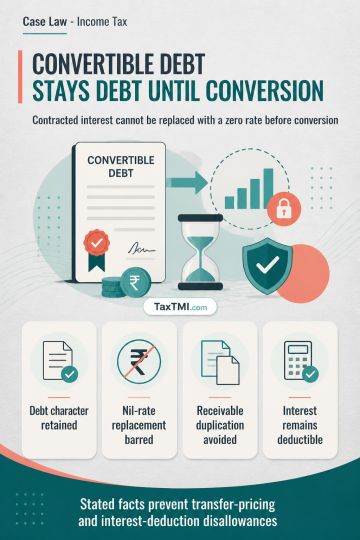
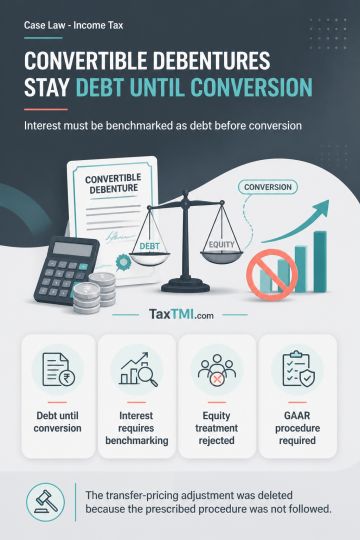
Compulsorily convertible debentures remain debt before conversion, preventing transfer-pricing and interest-deduction disallowances on the stated fact...
Stock-in-trade transfer taxability follows possession and consideration, not later conveyance registration, limiting deemed-value provisions to the ac...
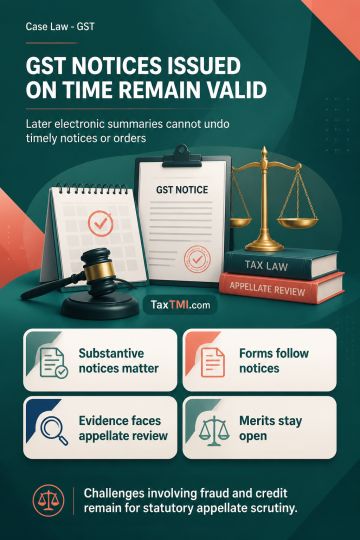
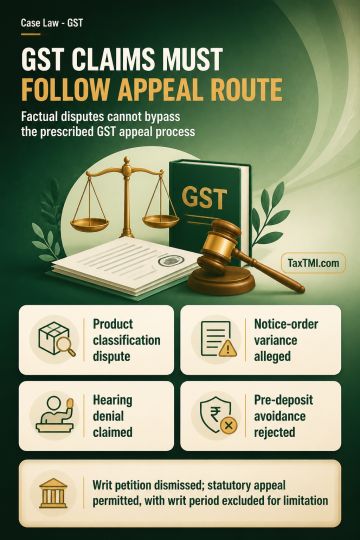
Alternative statutory remedy under GST bars writ challenge where classification, notice variance, and hearing disputes require factual appellate revie...
Rejection of an application filed u/s 10 of the Insolvency and Bankruptcy Code (IBC) by the Appellant, where the State Bank of India (SBI) had initiated proceedings u/s 13(2) of the SARFAESI Act prior to the filing. The Adjudicating Authority dismissed the Section 10 application, citing the Appellant's malicious and fraudulent intent to delay and halt SBI's recovery proceedings. However, the NCLAT held that merely filing a Section 10 application subsequent to Section 13(2) proceedings cannot be grounds for inferring fraudulent intent. The Tribunal relied on its previous judgment in Unigreen Global Private Limited vs. Punjab National Bank, which stated that pending SARFAESI or DRT proceedings cannot be grounds for rejecting a complete Section 10 application. The NCLAT ruled that the Adjudicating Authority erred in allowing SBI's Section 65 application and rejecting the Section 10 application solely based on the timing of the filings. The Tribunal revived the Section 10 application for fresh consideration by the Adjudicating Authority.
Rejection of an application filed u/s 10 of the Insolvency and Bankruptcy Code (IBC) by the Appellant, where the State Bank of India (SBI) had initiated proceedings u/s 13(2) of the SARFAESI Act prior to the filing. The Adjudicating Authority dismissed the Section 10 application, citing the Appellant's malicious and fraudulent intent to delay and halt SBI's recovery proceedings. However, the NCLAT held that merely filing a Section 10 application subsequent to Section 13(2) proceedings cannot be grounds for inferring fraudulent intent. The Tribunal relied on its previous judgment in Unigreen Global Private Limited vs. Punjab National Bank, which stated that pending SARFAESI or DRT proceedings cannot be grounds for rejecting a complete Section 10 application. The NCLAT ruled that the Adjudicating Authority erred in allowing SBI's Section 65 application and rejecting the Section 10 application solely based on the timing of the filings. The Tribunal revived the Section 10 application for fresh consideration by the Adjudicating Authority.
Note: It is a system-generated summary and is for quick reference only.
 TaxTMI
  TaxTMI
 of 4888