Medical relief status protects government-contracted mobile healthcare from commercial classification, while provisional registration cancellation req...
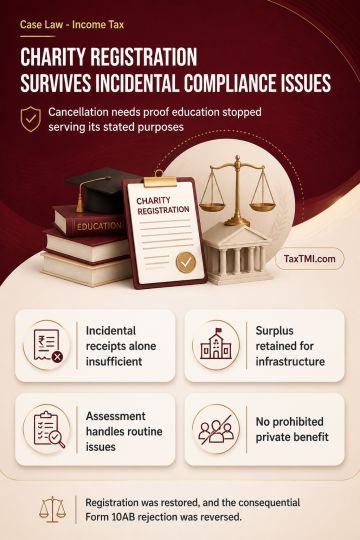
Charitable registration cancellation requires proof that educational activities abandoned their objects; incidental receipts and retained surplus are ...
Prospective customs notification amendments cannot bar provisional release consideration for earlier imports when bills of lading predate their commen...
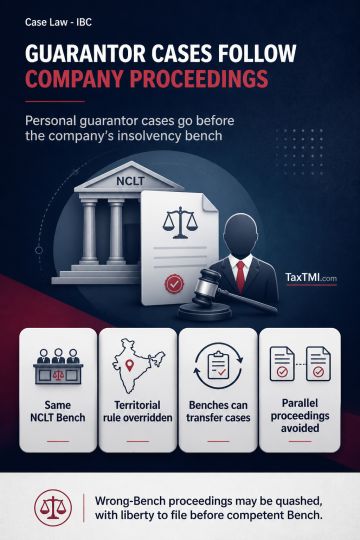
Personal guarantor insolvency jurisdiction follows the corporate debtor's CIRP Bench, enabling inter-territorial transfer and preventing parallel proc...
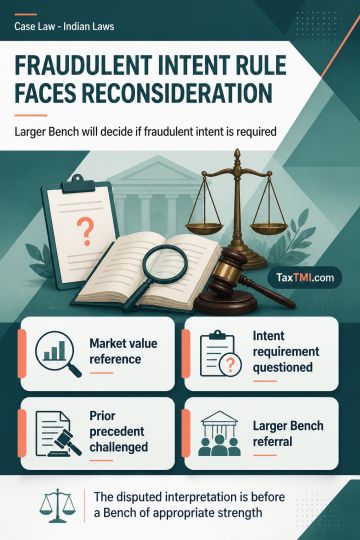
Section 47-A undervaluation threshold: fraudulent intent requirement faces reconsideration after referral to a larger Bench for authoritative resoluti...
RBI supersession powers over multi-State co-operative banks operate independently of the constitutional six-month ceiling and permit statutory extensi...
Assessee received funds from four parties, which were not considered by the Assessing Officer (AO) during assessment proceedings u/s 147 read with Section 144. The Principal Commissioner of Income Tax (PCIT) cancelled the assessment framed by AO and directed to frame assessment afresh after verifying the funds received. However, the Appellate Tribunal held that the assessment framed by AO cannot be considered erroneous or prejudicial to the revenue's interest as the AO was unaware of these funds during assessment proceedings. Invoking Section 263 by PCIT is invalid as per the Supreme Court's judgment in Malabar Industries Limited case, which mandates that for invoking Section 263, the assessment order must be erroneous and prejudicial to revenue's interest. Assessee's appeal allowed.
Assessee received funds from four parties, which were not considered by the Assessing Officer (AO) during assessment proceedings u/s 147 read with Section 144. The Principal Commissioner of Income Tax (PCIT) cancelled the assessment framed by AO and directed to frame assessment afresh after verifying the funds received. However, the Appellate Tribunal held that the assessment framed by AO cannot be considered erroneous or prejudicial to the revenue's interest as the AO was unaware of these funds during assessment proceedings. Invoking Section 263 by PCIT is invalid as per the Supreme Court's judgment in Malabar Industries Limited case, which mandates that for invoking Section 263, the assessment order must be erroneous and prejudicial to revenue's interest. Assessee's appeal allowed.
Note: It is a system-generated summary and is for quick reference only.
 TaxTMI
  TaxTMI
 of 4896