Customs exemptions cover photovoltaic assembly machinery and PVF backsheets, while fully declared cleared imports may avoid confiscation and penalties...
Specific tariff classification for LCD devices overrides treatment as electricity-meter parts, defeating differential duty, extended limitation, and p...
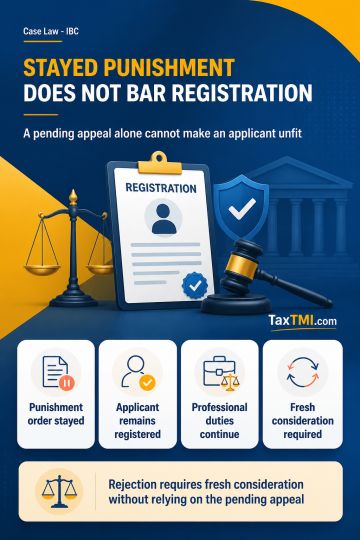
Stayed disciplinary punishment does not establish unfitness for insolvency professional registration; reconsideration must disregard mere pendency of ...
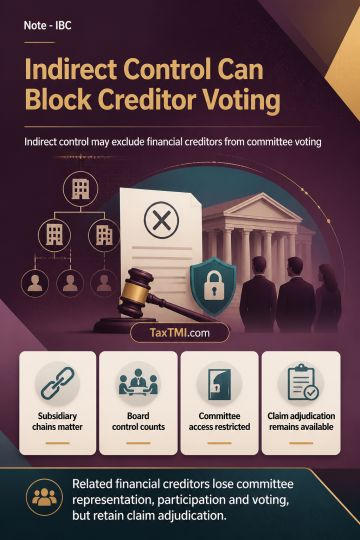
Indirect corporate control can create related-party status, excluding financial creditors from Committee of Creditors representation, participation an...
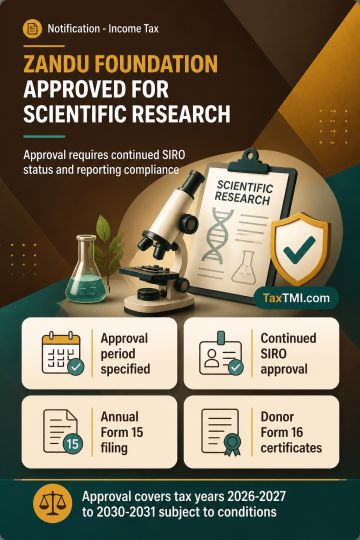
Scientific research association approval requires continuing SIRO status, annual donation reporting, and donor certificates for the approved foundatio...
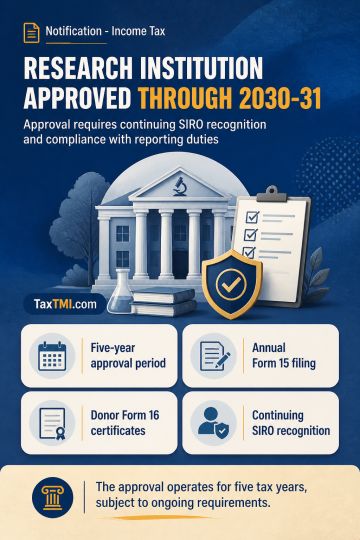
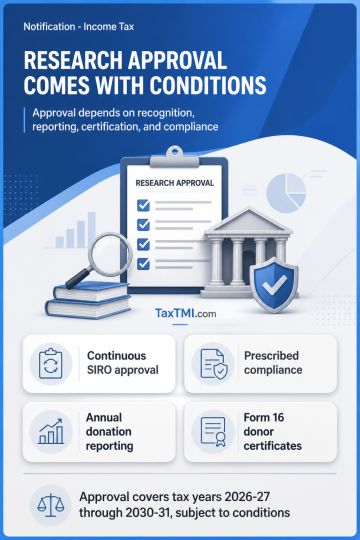
Scientific research institution approval is conditional on SIRO recognition, annual donation reporting, donor certification, and prescribed compliance...
Invocation of Section 263 by the Principal Commissioner of Income-Tax (PCIT), alleging non-application of mind and lack of jurisdiction. The key points are: The appellant maintained separate books of accounts for eligible and non-eligible units, which were duly submitted and accepted by authorities in previous years. The Assessing Officer (AO) conducted a detailed inquiry and examined the records before completing the assessment u/s 143(3). The PCIT invoked Section 263 solely based on audit objections, without independently applying mind. The ITAT held that mere audit objections cannot justify invoking Section 263, and the revenue failed to demonstrate how the AO's order was erroneous or prejudicial to its interests. Consequently, the ITAT decided in favor of the assessee, concluding that the PCIT lacked jurisdiction to invoke Section 263 in this case.
Invocation of Section 263 by the Principal Commissioner of Income-Tax (PCIT), alleging non-application of mind and lack of jurisdiction. The key points are: The appellant maintained separate books of accounts for eligible and non-eligible units, which were duly submitted and accepted by authorities in previous years. The Assessing Officer (AO) conducted a detailed inquiry and examined the records before completing the assessment u/s 143(3). The PCIT invoked Section 263 solely based on audit objections, without independently applying mind. The ITAT held that mere audit objections cannot justify invoking Section 263, and the revenue failed to demonstrate how the AO's order was erroneous or prejudicial to its interests. Consequently, the ITAT decided in favor of the assessee, concluding that the PCIT lacked jurisdiction to invoke Section 263 in this case.
Note: It is a system-generated summary and is for quick reference only.
 TaxTMI
  TaxTMI
 of 4879