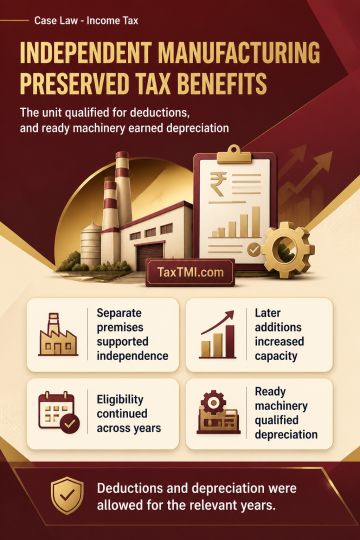
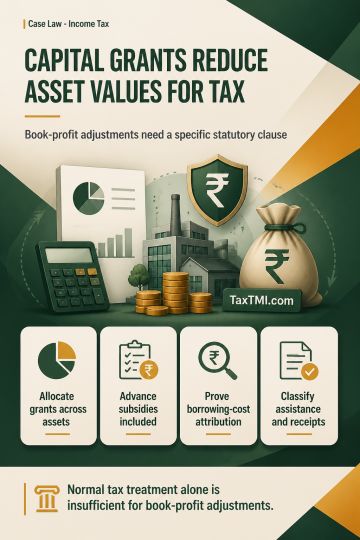
Independent manufacturing undertaking eligibility preserves Section 80IA/80IB deductions, while machinery kept ready for use qualifies for depreciatio...
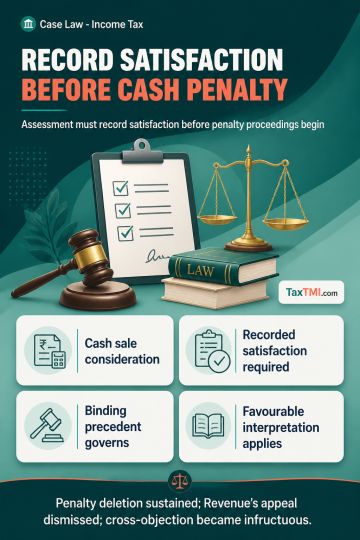
Assessing Officer Satisfaction Requirement Bars Penalty for Cash Receipt in Immovable-Property Sale Cases Where Initiation Lacks Recorded Satisfaction...
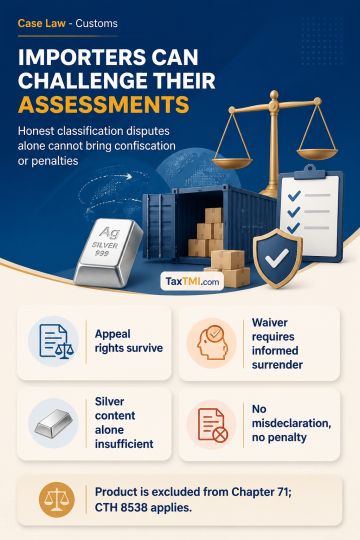
Self-assessed import entries remain appealable, while bona fide classification disputes without misdeclaration cannot justify confiscation or penaltie...
Actual-user customs exemption conditions permit turnkey project transfers when imported windmill components are exclusively used for installation and ...
Customs offence disqualification excludes civil contraventions, preventing refusal of a private bonded warehouse licence based solely on monetary pena...
Invocation of Section 263 by the Principal Commissioner of Income-Tax (PCIT), alleging non-application of mind and lack of jurisdiction. The key points are: The appellant maintained separate books of accounts for eligible and non-eligible units, which were duly submitted and accepted by authorities in previous years. The Assessing Officer (AO) conducted a detailed inquiry and examined the records before completing the assessment u/s 143(3). The PCIT invoked Section 263 solely based on audit objections, without independently applying mind. The ITAT held that mere audit objections cannot justify invoking Section 263, and the revenue failed to demonstrate how the AO's order was erroneous or prejudicial to its interests. Consequently, the ITAT decided in favor of the assessee, concluding that the PCIT lacked jurisdiction to invoke Section 263 in this case.
Invocation of Section 263 by the Principal Commissioner of Income-Tax (PCIT), alleging non-application of mind and lack of jurisdiction. The key points are: The appellant maintained separate books of accounts for eligible and non-eligible units, which were duly submitted and accepted by authorities in previous years. The Assessing Officer (AO) conducted a detailed inquiry and examined the records before completing the assessment u/s 143(3). The PCIT invoked Section 263 solely based on audit objections, without independently applying mind. The ITAT held that mere audit objections cannot justify invoking Section 263, and the revenue failed to demonstrate how the AO's order was erroneous or prejudicial to its interests. Consequently, the ITAT decided in favor of the assessee, concluding that the PCIT lacked jurisdiction to invoke Section 263 in this case.
Note: It is a system-generated summary and is for quick reference only.
 TaxTMI
  TaxTMI
 of 4891