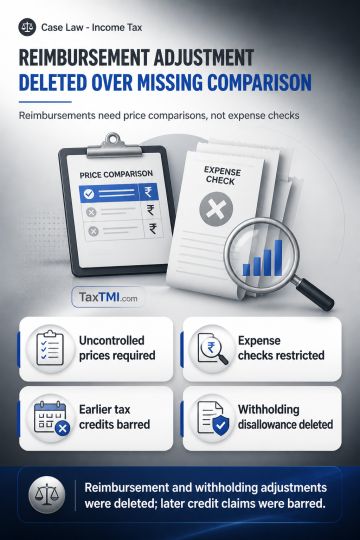
Transfer-pricing reimbursement adjustments require uncontrolled comparables and cannot become expense-genuineness reviews, resulting in deletion of th...
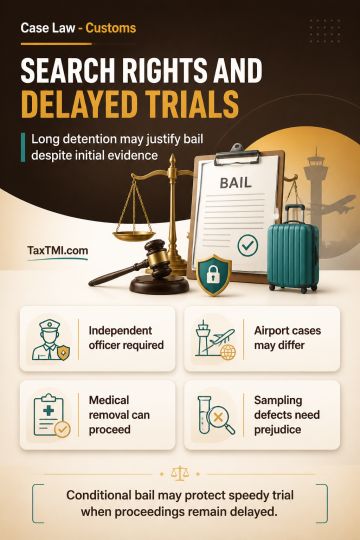
Food import sampling requirements support provisional release where unseized consignments conform to standards and raw areca classification is unestab...
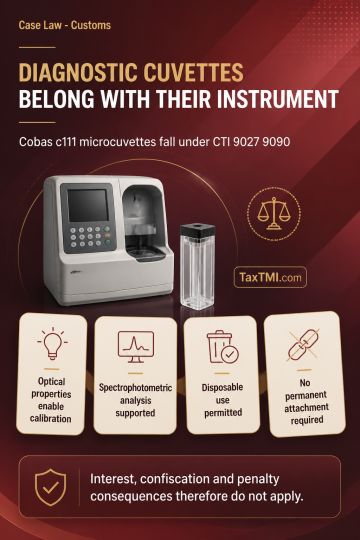
Diagnostic microcuvette classification follows sole-use analytical function, placing specialised disposable cuvettes with their analyser rather than g...
Invocation of Section 263 by the Principal Commissioner of Income-Tax (PCIT), alleging non-application of mind and lack of jurisdiction. The key points are: The appellant maintained separate books of accounts for eligible and non-eligible units, which were duly submitted and accepted by authorities in previous years. The Assessing Officer (AO) conducted a detailed inquiry and examined the records before completing the assessment u/s 143(3). The PCIT invoked Section 263 solely based on audit objections, without independently applying mind. The ITAT held that mere audit objections cannot justify invoking Section 263, and the revenue failed to demonstrate how the AO's order was erroneous or prejudicial to its interests. Consequently, the ITAT decided in favor of the assessee, concluding that the PCIT lacked jurisdiction to invoke Section 263 in this case.
Invocation of Section 263 by the Principal Commissioner of Income-Tax (PCIT), alleging non-application of mind and lack of jurisdiction. The key points are: The appellant maintained separate books of accounts for eligible and non-eligible units, which were duly submitted and accepted by authorities in previous years. The Assessing Officer (AO) conducted a detailed inquiry and examined the records before completing the assessment u/s 143(3). The PCIT invoked Section 263 solely based on audit objections, without independently applying mind. The ITAT held that mere audit objections cannot justify invoking Section 263, and the revenue failed to demonstrate how the AO's order was erroneous or prejudicial to its interests. Consequently, the ITAT decided in favor of the assessee, concluding that the PCIT lacked jurisdiction to invoke Section 263 in this case.
Note: It is a system-generated summary and is for quick reference only.
 TaxTMI
  TaxTMI
 of 4884