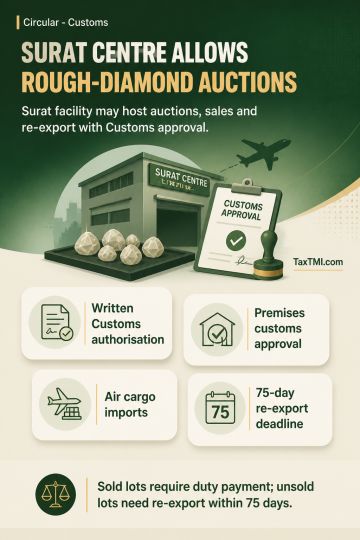
Customs exemptions cover photovoltaic assembly machinery and PVF backsheets, while fully declared cleared imports may avoid confiscation and penalties...
Specific tariff classification for LCD devices overrides treatment as electricity-meter parts, defeating differential duty, extended limitation, and p...
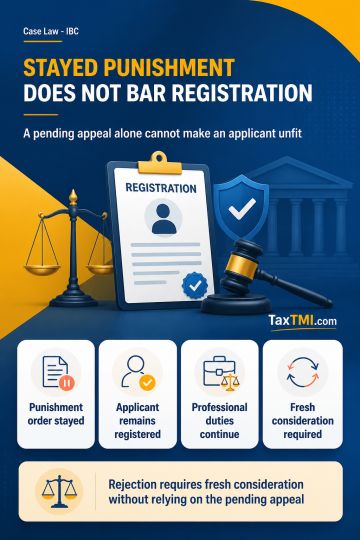
Stayed disciplinary punishment does not establish unfitness for insolvency professional registration; reconsideration must disregard mere pendency of ...
Indirect corporate control can create related-party status, excluding financial creditors from Committee of Creditors representation, participation an...
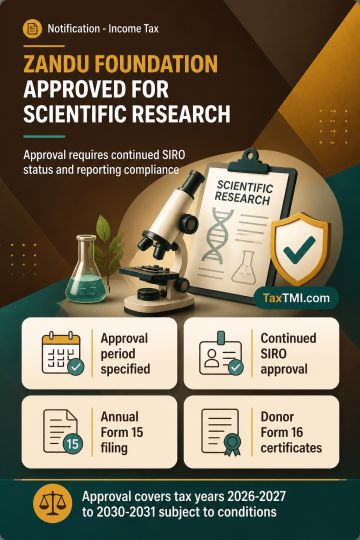
Scientific research association approval requires continuing SIRO status, annual donation reporting, and donor certificates for the approved foundatio...
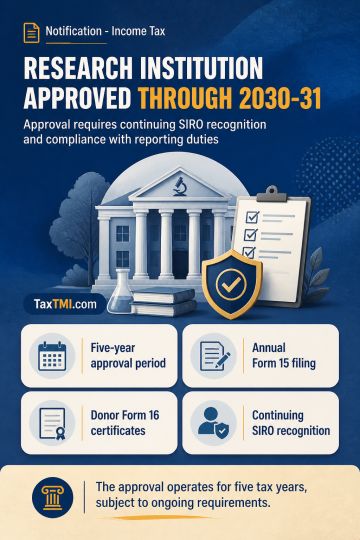
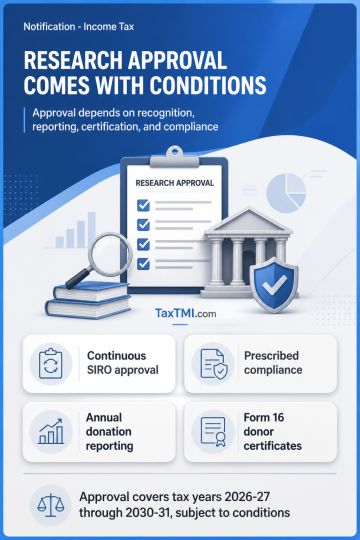
Scientific research institution approval is conditional on SIRO recognition, annual donation reporting, donor certification, and prescribed compliance...
Seizure of goods as smuggled into the country from Myanmar u/s 130 of the Customs Act, 1962. The burden of proof lies on the respondent u/s 123 to show that the seized areca nuts are not smuggled goods, or on the Department u/s 111 to establish that the seized betel nuts are of foreign origin and smuggled before confiscation. The High Court emphasized that the existence of a substantial question of law is a prerequisite for exercising jurisdiction u/s 130. The Court examined whether the Appellate Tribunal ignored material evidence or acted without evidence, which could constitute a substantial question of law. The Court analyzed the evidence, including the proximity to the international border, lack of foreign markings, absence of expert opinion on origin, and documents showing purchase from a local store. The Court concluded that the Tribunal's order cannot be treated as perverse, as it was not arrived at without evidence or reasons, thus answering the substantial question of law framed regarding perversity against the appellant.
Seizure of goods as smuggled into the country from Myanmar u/s 130 of the Customs Act, 1962. The burden of proof lies on the respondent u/s 123 to show that the seized areca nuts are not smuggled goods, or on the Department u/s 111 to establish that the seized betel nuts are of foreign origin and smuggled before confiscation. The High Court emphasized that the existence of a substantial question of law is a prerequisite for exercising jurisdiction u/s 130. The Court examined whether the Appellate Tribunal ignored material evidence or acted without evidence, which could constitute a substantial question of law. The Court analyzed the evidence, including the proximity to the international border, lack of foreign markings, absence of expert opinion on origin, and documents showing purchase from a local store. The Court concluded that the Tribunal's order cannot be treated as perverse, as it was not arrived at without evidence or reasons, thus answering the substantial question of law framed regarding perversity against the appellant.
Note: It is a system-generated summary and is for quick reference only.
 TaxTMI
  TaxTMI
 of 4894