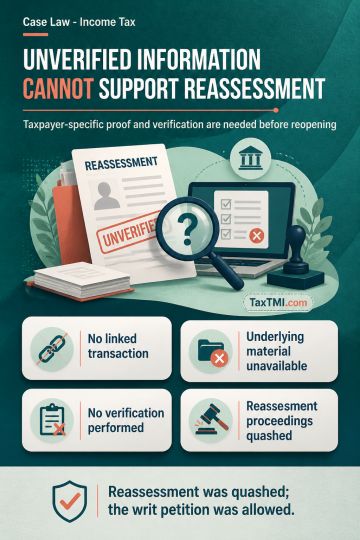
Unverified Insight Portal Information Cannot Justify Reassessment Without a Verified Taxpayer-Specific Income-Escape Nexus or Demonstrated Application...
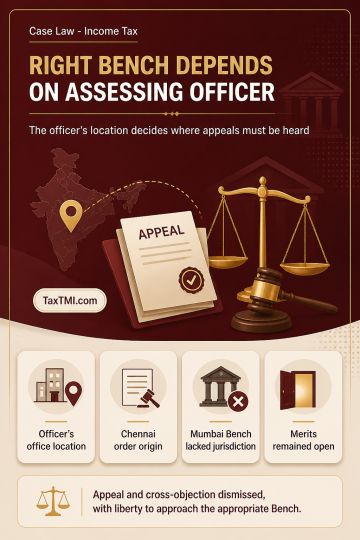
Assessing Officer jurisdiction after statutory transfer invalidates reassessment notices issued by transferor officers and nullifies resulting proceed...
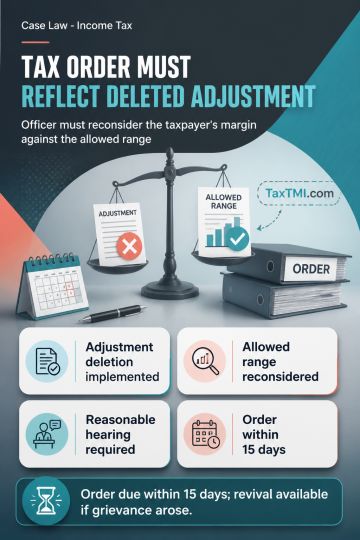
Consequential appeal-effect orders must implement rectification deleting working-capital adjustments and reconsider the resulting arm's-length range c...
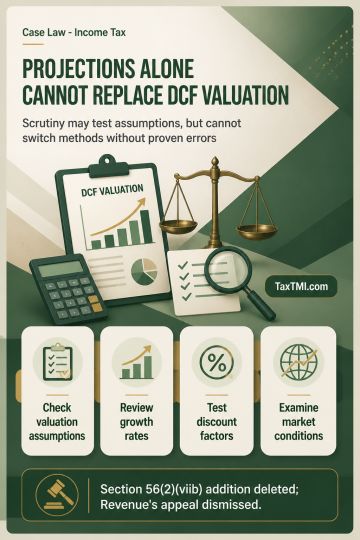
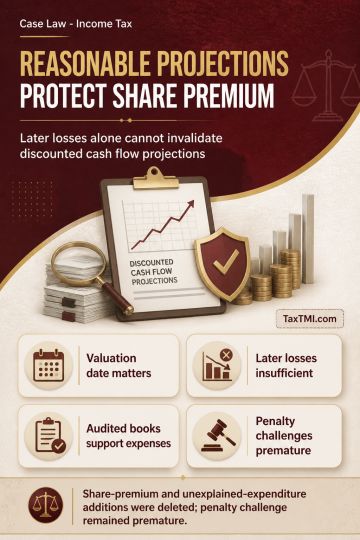
Discounted cash flow valuation protects share premium where projections are reasonable, while audited book expenses defeat unexplained-expenditure add...
Section 54 construction relief survives pre-transfer commencement when completion occurs within the statutory period, excluding ineligible spouse-owne...
The High Court held that the Directorate General of Foreign Trade (DGFT) and its officials were unjustified in refusing to consider manually corrected shipping bills for the Merchandise Exports from India Scheme (MEIS) benefit, especially after Customs allowed amendments u/s 149 of the Customs Act. The Court emphasized that artificial intelligence cannot override human intelligence, and officials cannot abdicate responsibility or deny legitimate relief due to technological limitations. Technology should serve people, not create obstacles. The DGFT should have aligned its systems with the CBIC's Advisory No. 7 of 2023. The Court directed the DGFT to process the petitioner's application for MEIS scrips and release them within 15 days if eligible, as the amended shipping bill was electronically transmitted to DGFT. The Court stressed that human and artificial intelligence must work together to achieve ease of business, and technological glitches cannot deny benefits granted by law or government schemes.
The High Court held that the Directorate General of Foreign Trade (DGFT) and its officials were unjustified in refusing to consider manually corrected shipping bills for the Merchandise Exports from India Scheme (MEIS) benefit, especially after Customs allowed amendments u/s 149 of the Customs Act. The Court emphasized that artificial intelligence cannot override human intelligence, and officials cannot abdicate responsibility or deny legitimate relief due to technological limitations. Technology should serve people, not create obstacles. The DGFT should have aligned its systems with the CBIC's Advisory No. 7 of 2023. The Court directed the DGFT to process the petitioner's application for MEIS scrips and release them within 15 days if eligible, as the amended shipping bill was electronically transmitted to DGFT. The Court stressed that human and artificial intelligence must work together to achieve ease of business, and technological glitches cannot deny benefits granted by law or government schemes.
Note: It is a system-generated summary and is for quick reference only.
 TaxTMI
  TaxTMI
 of 4881