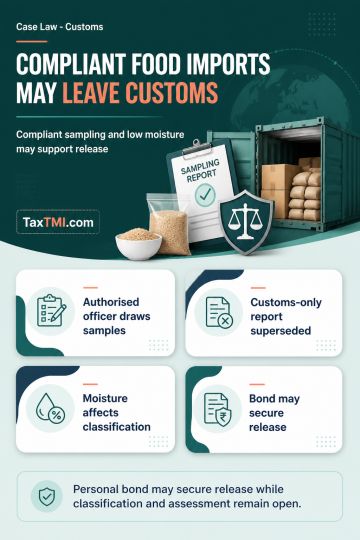
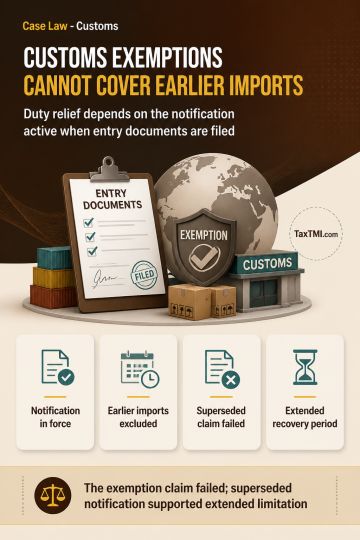
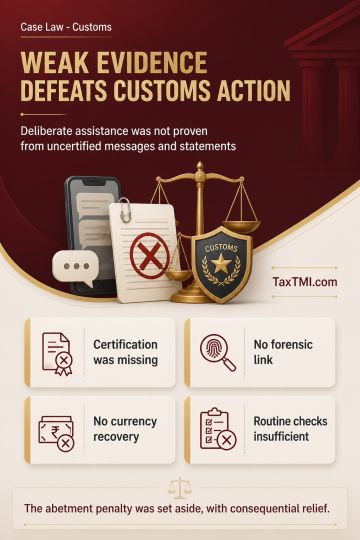
Food import sampling requirements support provisional release where unseized consignments conform to standards and raw areca classification is unestab...
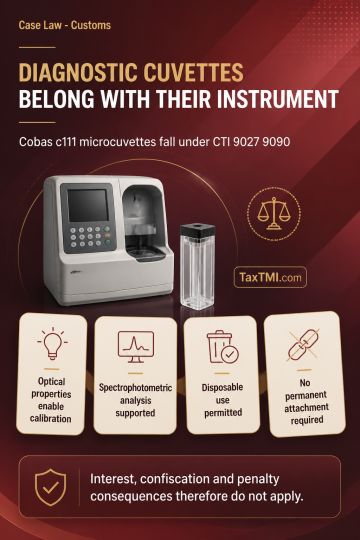
Diagnostic microcuvette classification follows sole-use analytical function, placing specialised disposable cuvettes with their analyser rather than g...
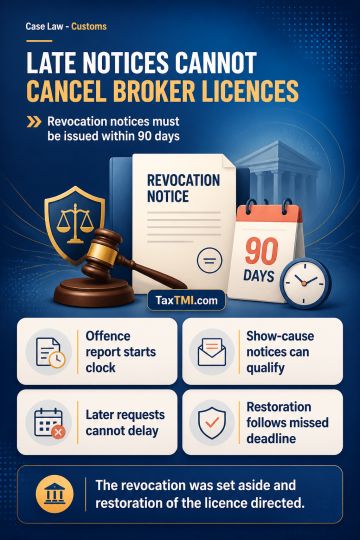
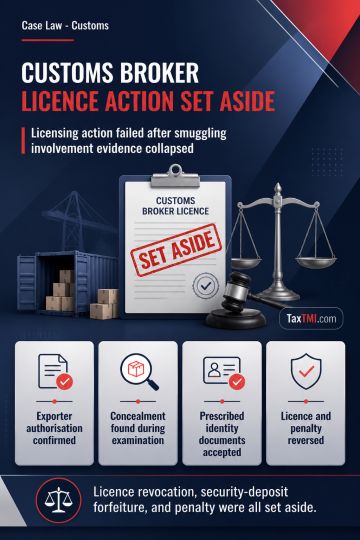
Customs Broker licensing proceedings fail when their offence-report foundation collapses and authorisation, advisory, and KYC duties remain unbreached...
The appellant imported goods known as Tetramethyldodehdronaphto Furan (TF), classified as Aroma Chemicals. The show cause notice sought change in classification on grounds of its use as raw material for manufacturing synthetic perfumery compounds, fragrances, and flavour formulas. The Tribunal held that classification must be determined based on description in tariff headings, chapter and section notes, and rules of interpretation. The imported product, being a mixture of two isomers, is classifiable under Chapter 29 as per Chapter Note 1(b). The order relied on Chapter Note 1(e) to assert that when a product is dissolved in solvents making it suitable only for specific use, it can be taken out of Chapter 29. However, no evidence was produced regarding presence of solvents or suitability for single use. Consequently, the impugned order was set aside, and the appeal was allowed.
The appellant imported goods known as Tetramethyldodehdronaphto Furan (TF), classified as Aroma Chemicals. The show cause notice sought change in classification on grounds of its use as raw material for manufacturing synthetic perfumery compounds, fragrances, and flavour formulas. The Tribunal held that classification must be determined based on description in tariff headings, chapter and section notes, and rules of interpretation. The imported product, being a mixture of two isomers, is classifiable under Chapter 29 as per Chapter Note 1(b). The order relied on Chapter Note 1(e) to assert that when a product is dissolved in solvents making it suitable only for specific use, it can be taken out of Chapter 29. However, no evidence was produced regarding presence of solvents or suitability for single use. Consequently, the impugned order was set aside, and the appeal was allowed.
Note: It is a system-generated summary and is for quick reference only.
 TaxTMI
  TaxTMI
 of 4881