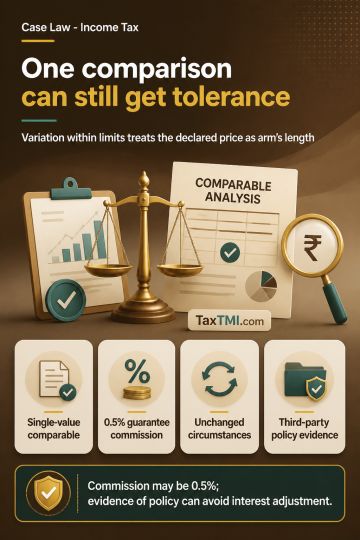
Transfer-pricing aggregation of distinct support-service and subcontract transactions was rejected, while debt-free receivables attracted no notional ...
Customs exemptions cover photovoltaic assembly machinery and PVF backsheets, while fully declared cleared imports may avoid confiscation and penalties...
Specific tariff classification for LCD devices overrides treatment as electricity-meter parts, defeating differential duty, extended limitation, and p...
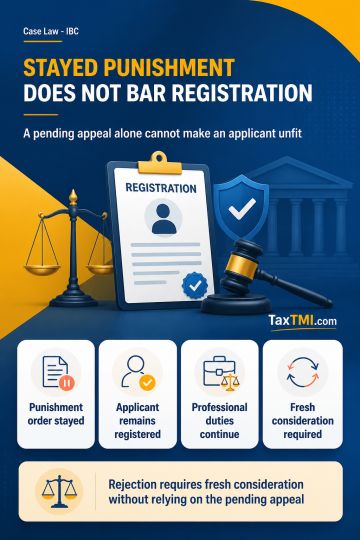
Stayed disciplinary punishment does not establish unfitness for insolvency professional registration; reconsideration must disregard mere pendency of ...
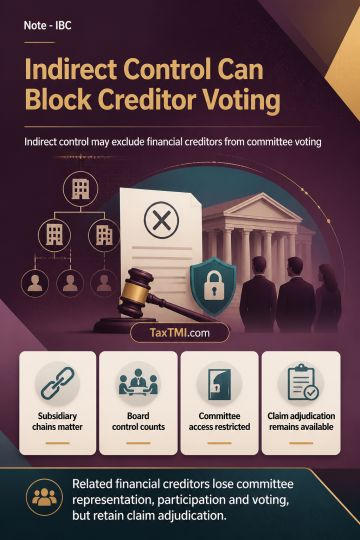
Indirect corporate control can create related-party status, excluding financial creditors from Committee of Creditors representation, participation an...
Page of 4881
Press 'Enter' after typing page number.
101 to 120 of 97618 Results
❮
❯
❯❯
0 / 200
Expand Note
Add to Folder
No Folders have been created
+
Are you sure you want to delete "My most important" ?
The High Court declined to grant interim relief, emphasizing that the amended writ petition raised numerous complex grounds which cannot be adjudicated fully at the interim stage. The Court clarified that a detailed examination of substantive grounds on merits would not be undertaken, and the assessment of contentions, particularly regarding merits, must necessarily be prima facie at this interim stage. Regarding the time limitation under Regulation 3(4) of the IBBI Regulations, the Court held that while the Regulation stipulates a strict time limit for filing a complaint, the critical issue is determining when the cause of action arose. In the present case, the allegations against the Petitioner in the Show Cause Notice dated 2nd April 2024 revolve around improper constitution and functioning of the Committee of Creditors (CoC), raising concerns about procedural irregularities and potential breaches of duty. The Court applied the principle of statutory interpretation u/s 13(2) of the General Clauses Act, 1897, to prima facie interpret the term "whole-time members" in Section 220(1) of the IBC to include a scenario with only one member, ensuring the disciplinary committee's effective operation. Ultimately, the Court found no ground to grant an interim stay on the impugned order and dismissed the present application.
The High Court declined to grant interim relief, emphasizing that the amended writ petition raised numerous complex grounds which cannot be adjudicated fully at the interim stage. The Court clarified that a detailed examination of substantive grounds on merits would not be undertaken, and the assessment of contentions, particularly regarding merits, must necessarily be prima facie at this interim stage. Regarding the time limitation under Regulation 3(4) of the IBBI Regulations, the Court held that while the Regulation stipulates a strict time limit for filing a complaint, the critical issue is determining when the cause of action arose. In the present case, the allegations against the Petitioner in the Show Cause Notice dated 2nd April 2024 revolve around improper constitution and functioning of the Committee of Creditors (CoC), raising concerns about procedural irregularities and potential breaches of duty. The Court applied the principle of statutory interpretation u/s 13(2) of the General Clauses Act, 1897, to prima facie interpret the term "whole-time members" in Section 220(1) of the IBC to include a scenario with only one member, ensuring the disciplinary committee's effective operation. Ultimately, the Court found no ground to grant an interim stay on the impugned order and dismissed the present application.
Note: It is a system-generated summary and is for quick reference only.
 TaxTMI
  TaxTMI
 of 4881