Customs-controlled cargo movement now includes GDL, subject to EXIM prioritisation, segregation, verification, reconciliation and enforcement safeguar...
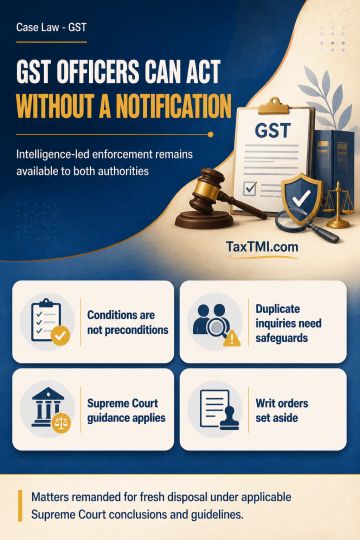
GST cross-empowerment remains effective without conditional notification, while duplicate proceedings require established safeguards against overlappi...
The corporate debtor cannot be prosecuted for prior liability after the approval of the Resolution Plan, as per Section 32-A of the Insolvency & Bankruptcy Code (IBC). However, the protection u/s 32-A is limited to the corporate debtor and does not extend to its Directors who were in charge when the offence was committed or were signatories to the cheque. The Supreme Court in Ajay Kumar Radheshuyam Goenka case clarified that in proceedings u/s 138 of the Negotiable Instruments Act, if the plan is approved or the company dissolved during the pendency, the Directors and other accused cannot escape liability by citing dissolution. They will have to continue facing prosecution. The High Court allowed the Criminal Original Petitions.
The corporate debtor cannot be prosecuted for prior liability after the approval of the Resolution Plan, as per Section 32-A of the Insolvency & Bankruptcy Code (IBC). However, the protection u/s 32-A is limited to the corporate debtor and does not extend to its Directors who were in charge when the offence was committed or were signatories to the cheque. The Supreme Court in Ajay Kumar Radheshuyam Goenka case clarified that in proceedings u/s 138 of the Negotiable Instruments Act, if the plan is approved or the company dissolved during the pendency, the Directors and other accused cannot escape liability by citing dissolution. They will have to continue facing prosecution. The High Court allowed the Criminal Original Petitions.
Note: It is a system-generated summary and is for quick reference only.
 TaxTMI
  TaxTMI
 of 4883