Faceless assessment safeguards require requested personal hearings and adequate final show-cause response time, failing which reassessment is required...
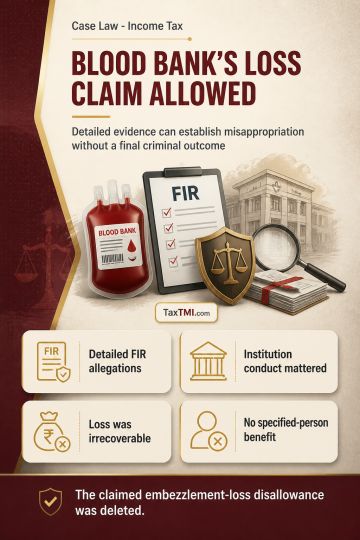
Embezzlement losses in charitable institutions remain allowable when misappropriation is established, irrecoverable, and not a specified-person benefi...
National long-distance undertaking status supports deduction where separately licensed infrastructure, resources, revenue, and expenditure establish c...
Agency reimbursement income follows contractual deposit-liability computation, while pending deposit collections do not constitute deemed-dividend loa...
The NCLAT dismissed the appeal challenging the quashing of the e-auction conducted on 31.01.2024 for the sale of the Corporate Debtor as a going concern and the rejection of the appellant's proposed Scheme of Arrangement u/s 230 of the Companies Act, 2013. The Tribunal held that with the enactment of the IBC, the significance of Section 230(1) in addressing insolvency has diminished. The follow-up process u/s 230(1) is necessary only when the Liquidator fails to sustain the Corporate Debtor as a going concern. Regulation 32A mandates the Liquidator to prioritize selling the Corporate Debtor as a going concern to maximize value. Minor discrepancies during the bid process were deemed inconsequential as the Successful Bidder is operating the Corporate Debtor as a going concern, fulfilling the IBC's objective. The appeal lacked merits and was dismissed.
The NCLAT dismissed the appeal challenging the quashing of the e-auction conducted on 31.01.2024 for the sale of the Corporate Debtor as a going concern and the rejection of the appellant's proposed Scheme of Arrangement u/s 230 of the Companies Act, 2013. The Tribunal held that with the enactment of the IBC, the significance of Section 230(1) in addressing insolvency has diminished. The follow-up process u/s 230(1) is necessary only when the Liquidator fails to sustain the Corporate Debtor as a going concern. Regulation 32A mandates the Liquidator to prioritize selling the Corporate Debtor as a going concern to maximize value. Minor discrepancies during the bid process were deemed inconsequential as the Successful Bidder is operating the Corporate Debtor as a going concern, fulfilling the IBC's objective. The appeal lacked merits and was dismissed.
Note: It is a system-generated summary and is for quick reference only.
 TaxTMI
  TaxTMI
 of 4884