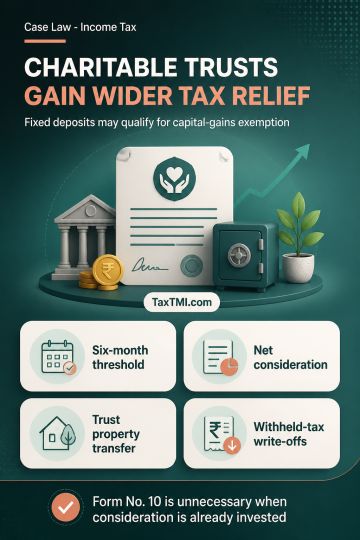
Capital-gains exemption for charitable trusts extends to qualifying fixed deposits, while unrecoverable TDS write-offs may constitute income applicati...
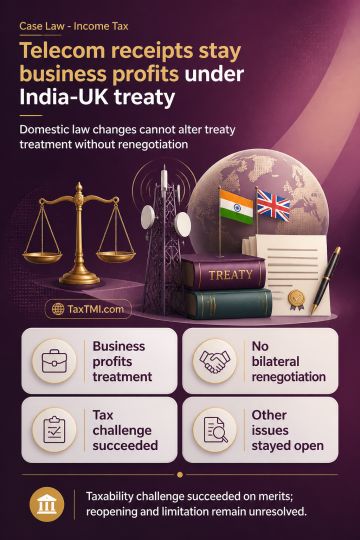
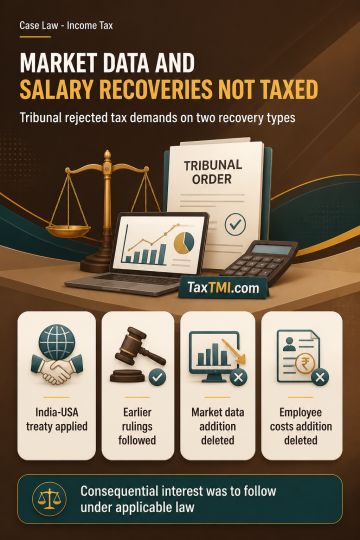
India-UK treaty characterisation of telecom-service receipts as business profits withstands unilateral domestic-law amendments for Indian tax purposes...
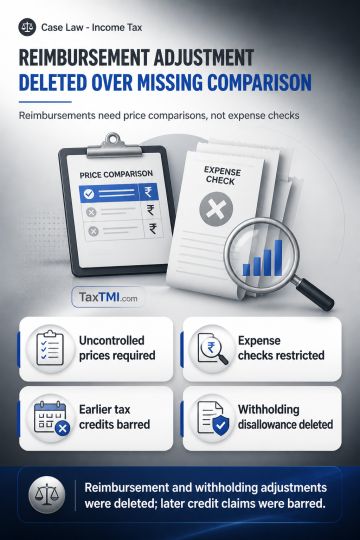
Transfer-pricing reimbursement adjustments require uncontrolled comparables and cannot become expense-genuineness reviews, resulting in deletion of th...
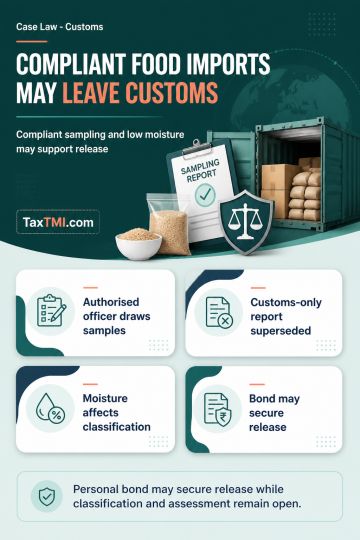
Food import sampling requirements support provisional release where unseized consignments conform to standards and raw areca classification is unestab...
The assessee society's activities were initially considered commercial by the Commissioner of Income Tax (CIT) under the second proviso to Section 2(15) of the Income Tax Act. However, the Income Tax Appellate Tribunal (ITAT) held that the society's primary objective was to secure and promote the business interests of its members, which does not necessarily imply a commercial nature. The ITAT observed that the society was formed as an initiative of the Government of India to bring stakeholders together, ultimately benefiting consumers. Despite including private sector members, the society's role as a facilitator for the hydrocarbon industry does not make its activities commercial. The expenditure statements did not indicate any funds utilized for procuring business for members or promoting their financial interests. The ITAT concluded that the Revisional Authority's order lacked legal basis and was based on conjectures beyond the scope of Section 263, ruling in favor of the assessee.
The assessee society's activities were initially considered commercial by the Commissioner of Income Tax (CIT) under the second proviso to Section 2(15) of the Income Tax Act. However, the Income Tax Appellate Tribunal (ITAT) held that the society's primary objective was to secure and promote the business interests of its members, which does not necessarily imply a commercial nature. The ITAT observed that the society was formed as an initiative of the Government of India to bring stakeholders together, ultimately benefiting consumers. Despite including private sector members, the society's role as a facilitator for the hydrocarbon industry does not make its activities commercial. The expenditure statements did not indicate any funds utilized for procuring business for members or promoting their financial interests. The ITAT concluded that the Revisional Authority's order lacked legal basis and was based on conjectures beyond the scope of Section 263, ruling in favor of the assessee.
Note: It is a system-generated summary and is for quick reference only.
 TaxTMI
  TaxTMI
 of 4894