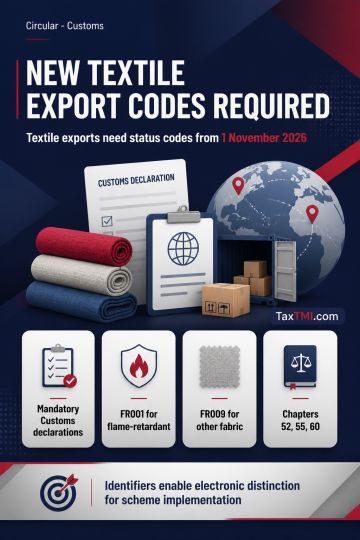
Mandatory textile export qualifiers distinguish flame-retardant fabrics from other listed fabrics for automated identification under the textiles ince...
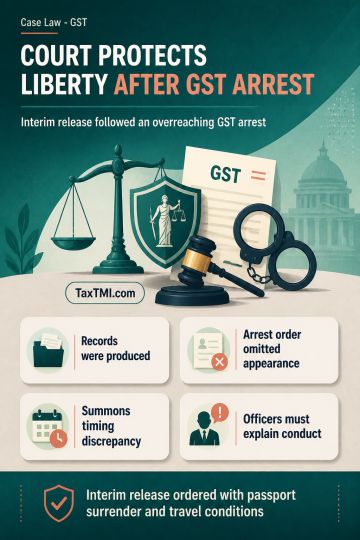
Personal liberty safeguards restrict arrest after court-directed GST appearance, requiring interim release where authorities overreach pending proceed...
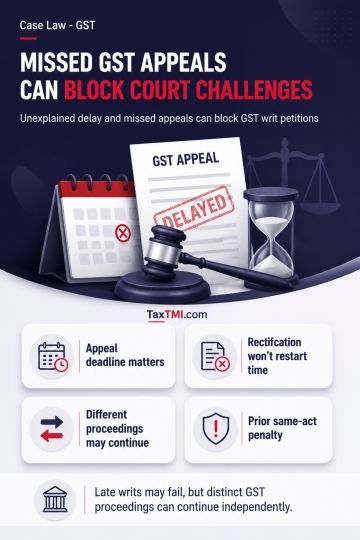
Alternative statutory remedy and delay bar GST writ challenges despite pending rectification, while distinct subject matter permits parallel proceedin...
Page of 4884
Press 'Enter' after typing page number.
261 to 280 of 97661 Results
❮
❯
❯❯
0 / 200
Expand Note
Add to Folder
No Folders have been created
+
Are you sure you want to delete "My most important" ?
The assessee society's activities were initially considered commercial by the Commissioner of Income Tax (CIT) under the second proviso to Section 2(15) of the Income Tax Act. However, the Income Tax Appellate Tribunal (ITAT) held that the society's primary objective was to secure and promote the business interests of its members, which does not necessarily imply a commercial nature. The ITAT observed that the society was formed as an initiative of the Government of India to bring stakeholders together, ultimately benefiting consumers. Despite including private sector members, the society's role as a facilitator for the hydrocarbon industry does not make its activities commercial. The expenditure statements did not indicate any funds utilized for procuring business for members or promoting their financial interests. The ITAT concluded that the Revisional Authority's order lacked legal basis and was based on conjectures beyond the scope of Section 263, ruling in favor of the assessee.
The assessee society's activities were initially considered commercial by the Commissioner of Income Tax (CIT) under the second proviso to Section 2(15) of the Income Tax Act. However, the Income Tax Appellate Tribunal (ITAT) held that the society's primary objective was to secure and promote the business interests of its members, which does not necessarily imply a commercial nature. The ITAT observed that the society was formed as an initiative of the Government of India to bring stakeholders together, ultimately benefiting consumers. Despite including private sector members, the society's role as a facilitator for the hydrocarbon industry does not make its activities commercial. The expenditure statements did not indicate any funds utilized for procuring business for members or promoting their financial interests. The ITAT concluded that the Revisional Authority's order lacked legal basis and was based on conjectures beyond the scope of Section 263, ruling in favor of the assessee.
Note: It is a system-generated summary and is for quick reference only.
 TaxTMI
  TaxTMI
 of 4884