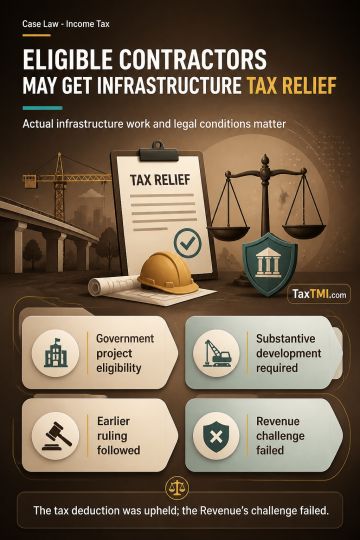
Infrastructure-development deduction remains available to EPC contractors when substantive statutory conditions outweigh contractor labels in agreemen...
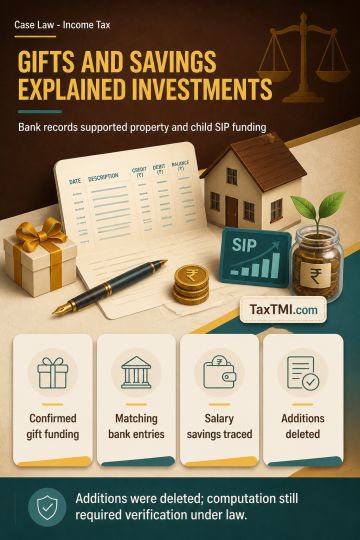
Explained Investment Sources: documented gifts and traceable salary savings supported deletion of additions for property and mutual-fund SIP investmen...
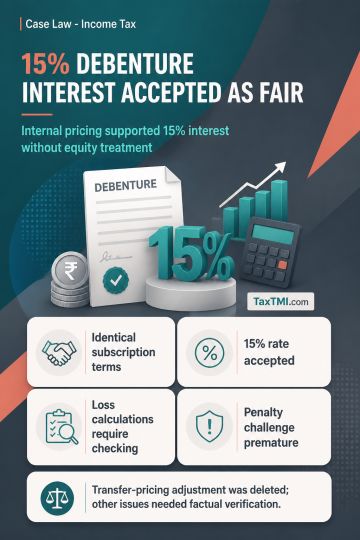
Internal comparable pricing supports arm's-length interest on compulsorily convertible debentures, preventing their recharacterisation as equity for t...
Nominee director protection shields independent financial-institution appointees from criminal liability where they lack involvement in deposit defaul...
Page of 4884
Press 'Enter' after typing page number.
241 to 260 of 97661 Results
❮
❯
❯❯
0 / 200
Expand Note
Add to Folder
No Folders have been created
+
Are you sure you want to delete "My most important" ?
The assessee society's activities were initially considered commercial by the Commissioner of Income Tax (CIT) under the second proviso to Section 2(15) of the Income Tax Act. However, the Income Tax Appellate Tribunal (ITAT) held that the society's primary objective was to secure and promote the business interests of its members, which does not necessarily imply a commercial nature. The ITAT observed that the society was formed as an initiative of the Government of India to bring stakeholders together, ultimately benefiting consumers. Despite including private sector members, the society's role as a facilitator for the hydrocarbon industry does not make its activities commercial. The expenditure statements did not indicate any funds utilized for procuring business for members or promoting their financial interests. The ITAT concluded that the Revisional Authority's order lacked legal basis and was based on conjectures beyond the scope of Section 263, ruling in favor of the assessee.
The assessee society's activities were initially considered commercial by the Commissioner of Income Tax (CIT) under the second proviso to Section 2(15) of the Income Tax Act. However, the Income Tax Appellate Tribunal (ITAT) held that the society's primary objective was to secure and promote the business interests of its members, which does not necessarily imply a commercial nature. The ITAT observed that the society was formed as an initiative of the Government of India to bring stakeholders together, ultimately benefiting consumers. Despite including private sector members, the society's role as a facilitator for the hydrocarbon industry does not make its activities commercial. The expenditure statements did not indicate any funds utilized for procuring business for members or promoting their financial interests. The ITAT concluded that the Revisional Authority's order lacked legal basis and was based on conjectures beyond the scope of Section 263, ruling in favor of the assessee.
Note: It is a system-generated summary and is for quick reference only.
 TaxTMI
  TaxTMI
 of 4884