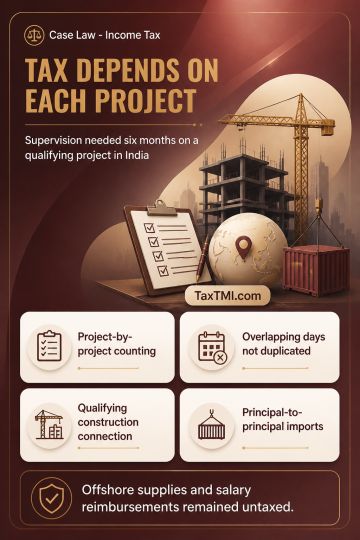
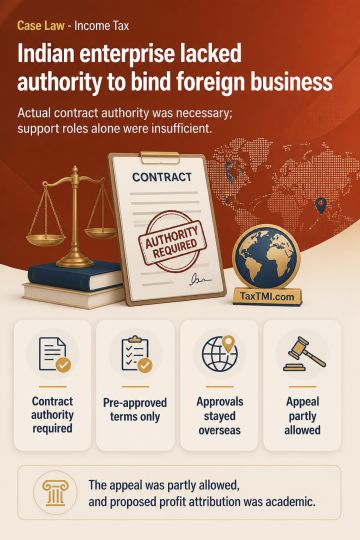
Supervisory permanent establishment requires project-wise duration and qualifying construction nexus; offshore supplies and salary reimbursements rema...
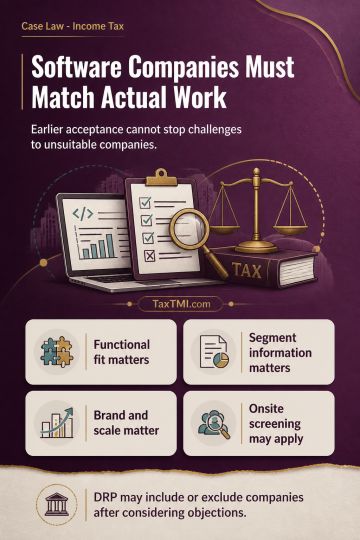
Transfer-pricing comparability permits fresh objections and filters where software service comparables are functionally unsuitable for arm's-length pr...
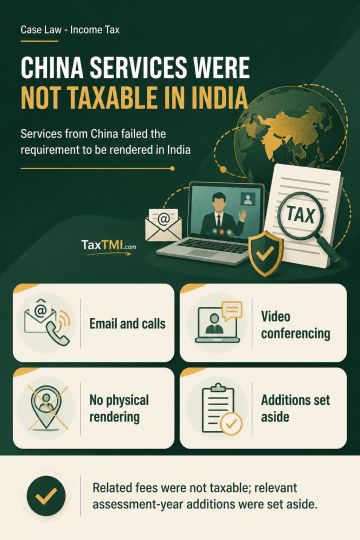
Territorial rendering requirement excludes China-based management and consultancy services from fees for technical services under the India-China DTAA...
The assessee society's activities were initially considered commercial by the Commissioner of Income Tax (CIT) under the second proviso to Section 2(15) of the Income Tax Act. However, the Income Tax Appellate Tribunal (ITAT) held that the society's primary objective was to secure and promote the business interests of its members, which does not necessarily imply a commercial nature. The ITAT observed that the society was formed as an initiative of the Government of India to bring stakeholders together, ultimately benefiting consumers. Despite including private sector members, the society's role as a facilitator for the hydrocarbon industry does not make its activities commercial. The expenditure statements did not indicate any funds utilized for procuring business for members or promoting their financial interests. The ITAT concluded that the Revisional Authority's order lacked legal basis and was based on conjectures beyond the scope of Section 263, ruling in favor of the assessee.
The assessee society's activities were initially considered commercial by the Commissioner of Income Tax (CIT) under the second proviso to Section 2(15) of the Income Tax Act. However, the Income Tax Appellate Tribunal (ITAT) held that the society's primary objective was to secure and promote the business interests of its members, which does not necessarily imply a commercial nature. The ITAT observed that the society was formed as an initiative of the Government of India to bring stakeholders together, ultimately benefiting consumers. Despite including private sector members, the society's role as a facilitator for the hydrocarbon industry does not make its activities commercial. The expenditure statements did not indicate any funds utilized for procuring business for members or promoting their financial interests. The ITAT concluded that the Revisional Authority's order lacked legal basis and was based on conjectures beyond the scope of Section 263, ruling in favor of the assessee.
Note: It is a system-generated summary and is for quick reference only.
 TaxTMI
  TaxTMI
 of 4883