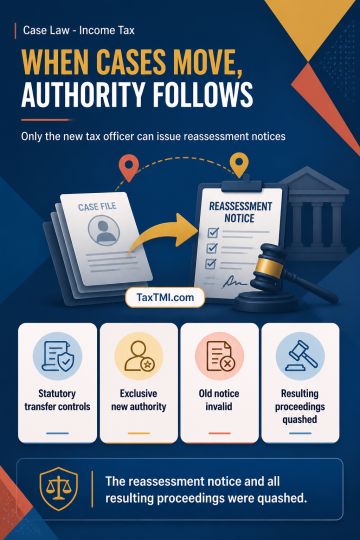
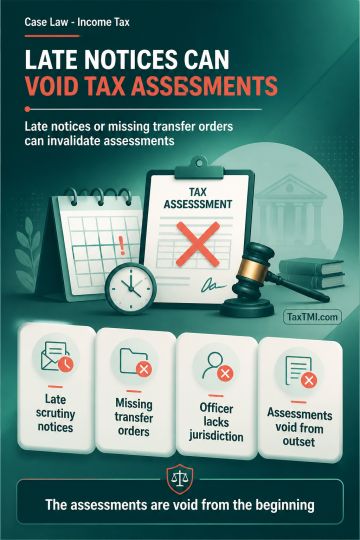
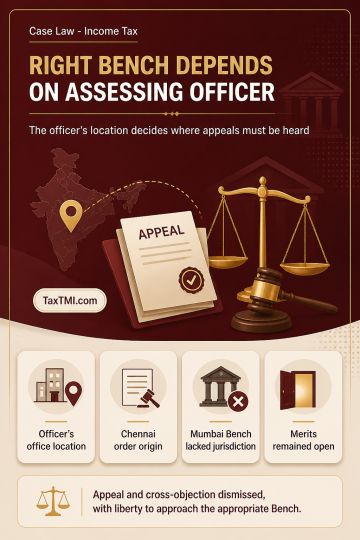
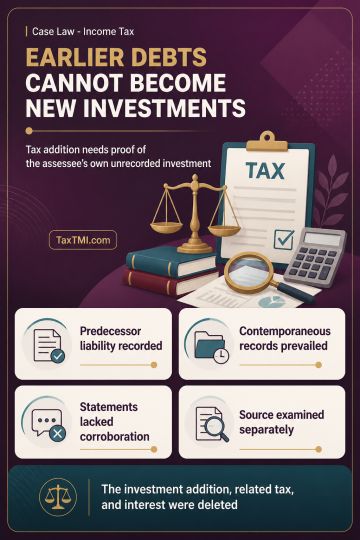
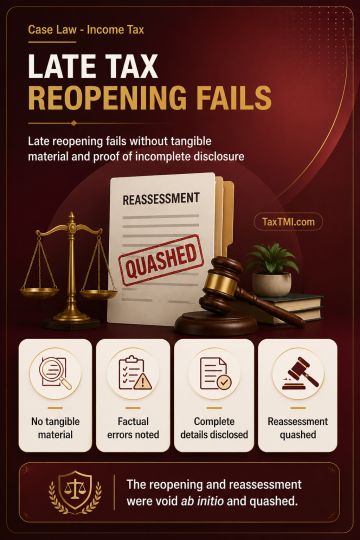
Assessing Officer jurisdiction after statutory transfer invalidates reassessment notices issued by transferor officers and nullifies resulting proceed...
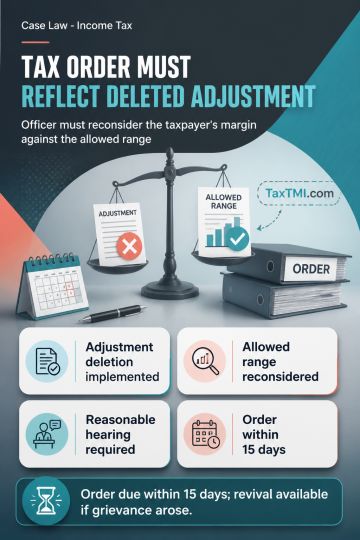
Consequential appeal-effect orders must implement rectification deleting working-capital adjustments and reconsider the resulting arm's-length range c...
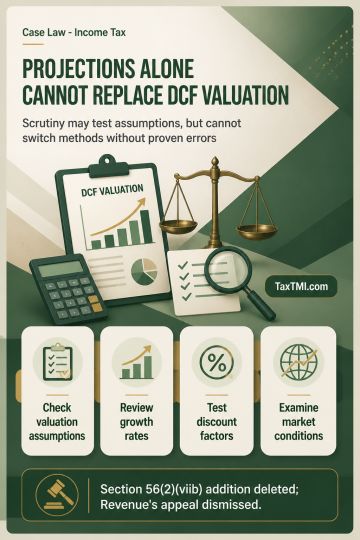
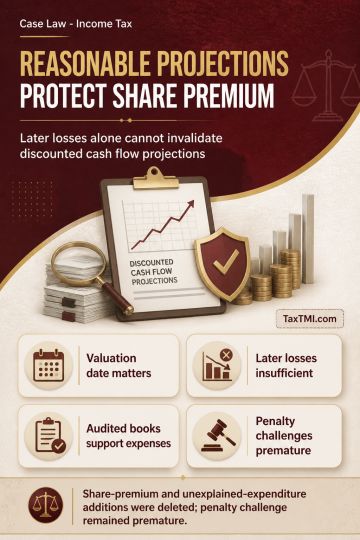
Discounted cash flow valuation protects share premium where projections are reasonable, while audited book expenses defeat unexplained-expenditure add...
Section 54 construction relief survives pre-transfer commencement when completion occurs within the statutory period, excluding ineligible spouse-owne...
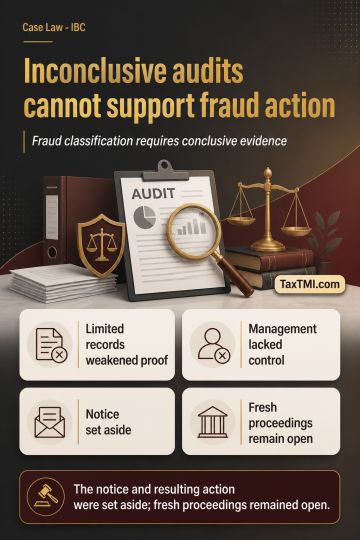
Fraud classification show-cause notices founded on inconclusive forensic audit material cannot sustain action, permitting fresh proceedings on conclus...
Page of 4888
Press 'Enter' after typing page number.
381 to 400 of 97750 Results
❮
❯
❯❯
0 / 200
Expand Note
Add to Folder
No Folders have been created
+
Are you sure you want to delete "My most important" ?
The National Company Law Appellate Tribunal (NCLAT) has remanded the case back to the Adjudicating Authority (AA) to examine and decide the issues in a comprehensive manner, including the application of the appellant in I.A. No. 1412 of 2023, preferably within four weeks. The NCLAT held that there is an absolute bar on recovery of any property occupied or possessed by the Corporate Debtor u/s 14(1)(d) of the Insolvency and Bankruptcy Code. The AA had passed a non-speaking order merely based on the consent of the Resolution Professional (RP) to release the property, without examining the maintainability of such applications by the owner/lessor in view of Section 14(1)(d). The Committee of Creditors (CoC) did not appear to have taken a final decision with proper voting regarding the vacation of the registered office. The RP's decision to release the property was his own and not confirmed by the CoC. The NCLAT found that the AA should have first examined whether it is possible to allow such applications in view of the express provisions of Section 14(1)(d), even if supported by the CoC. The appeal was allowed.
The National Company Law Appellate Tribunal (NCLAT) has remanded the case back to the Adjudicating Authority (AA) to examine and decide the issues in a comprehensive manner, including the application of the appellant in I.A. No. 1412 of 2023, preferably within four weeks. The NCLAT held that there is an absolute bar on recovery of any property occupied or possessed by the Corporate Debtor u/s 14(1)(d) of the Insolvency and Bankruptcy Code. The AA had passed a non-speaking order merely based on the consent of the Resolution Professional (RP) to release the property, without examining the maintainability of such applications by the owner/lessor in view of Section 14(1)(d). The Committee of Creditors (CoC) did not appear to have taken a final decision with proper voting regarding the vacation of the registered office. The RP's decision to release the property was his own and not confirmed by the CoC. The NCLAT found that the AA should have first examined whether it is possible to allow such applications in view of the express provisions of Section 14(1)(d), even if supported by the CoC. The appeal was allowed.
Note: It is a system-generated summary and is for quick reference only.
 TaxTMI
  TaxTMI
 of 4888