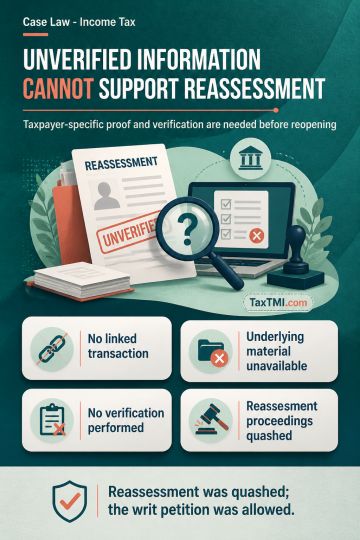
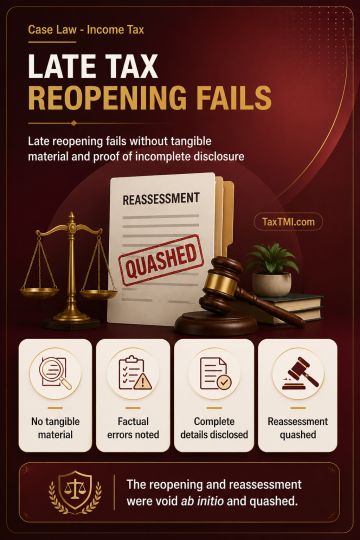
Unverified Insight Portal Information Cannot Justify Reassessment Without a Verified Taxpayer-Specific Income-Escape Nexus or Demonstrated Application...
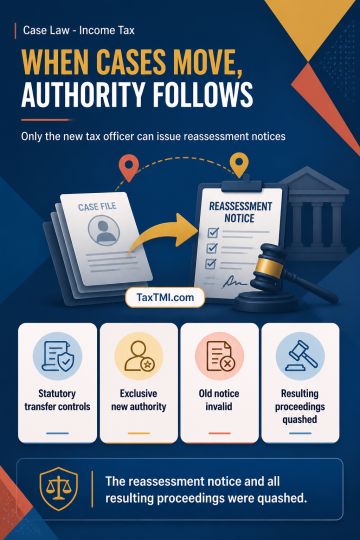
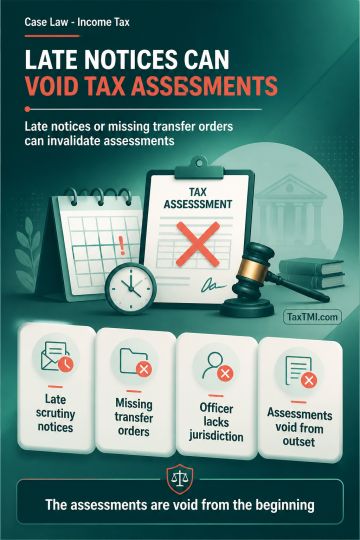
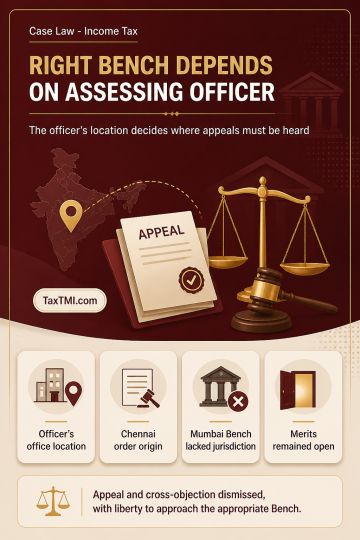
Assessing Officer jurisdiction after statutory transfer invalidates reassessment notices issued by transferor officers and nullifies resulting proceed...
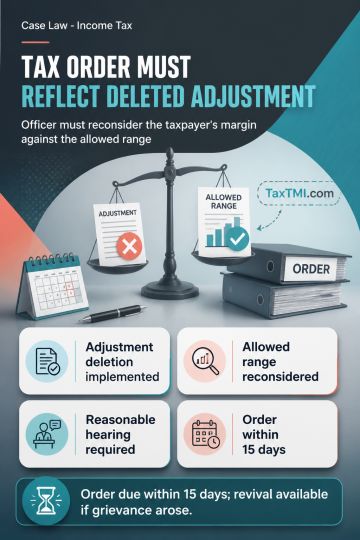
Consequential appeal-effect orders must implement rectification deleting working-capital adjustments and reconsider the resulting arm's-length range c...
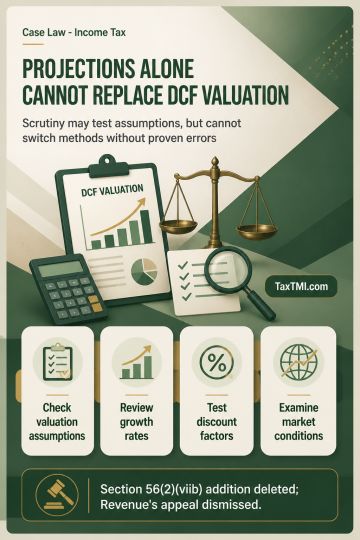
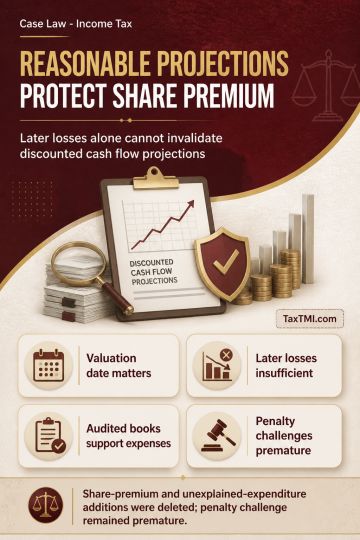
Discounted cash flow valuation protects share premium where projections are reasonable, while audited book expenses defeat unexplained-expenditure add...
Section 54 construction relief survives pre-transfer commencement when completion occurs within the statutory period, excluding ineligible spouse-owne...
Interpretation of Section 141 of the Negotiable Instruments Act, which deals with vicarious liability for offenses committed by companies u/s 138 (dishonor of cheques). The key points are: Section 141 is a penal provision that must be strictly construed. Liability under this section depends on the role played by the person in the company's affairs, not merely their designation. To attract liability, the person must have been in charge of and responsible for the company's conduct at the time of the offense's commission. Merely being a director or having some association with the company is insufficient. The complaint must specify the accused's role and how they were responsible for the company's conduct. In this case, the petitioner had resigned as director before the relevant events (issuance, dishonor, and notice of dishonor of cheque) occurred. Therefore, the petitioner cannot be held vicariously liable u/s 141 as they were not in charge or responsible for the company's conduct during the commission of the offense.
Interpretation of Section 141 of the Negotiable Instruments Act, which deals with vicarious liability for offenses committed by companies u/s 138 (dishonor of cheques). The key points are: Section 141 is a penal provision that must be strictly construed. Liability under this section depends on the role played by the person in the company's affairs, not merely their designation. To attract liability, the person must have been in charge of and responsible for the company's conduct at the time of the offense's commission. Merely being a director or having some association with the company is insufficient. The complaint must specify the accused's role and how they were responsible for the company's conduct. In this case, the petitioner had resigned as director before the relevant events (issuance, dishonor, and notice of dishonor of cheque) occurred. Therefore, the petitioner cannot be held vicariously liable u/s 141 as they were not in charge or responsible for the company's conduct during the commission of the offense.
Note: It is a system-generated summary and is for quick reference only.
 TaxTMI
  TaxTMI
 of 4888