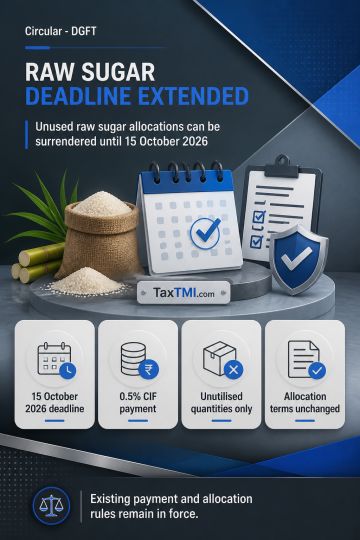
Customs-controlled cargo movement now includes GDL, subject to EXIM prioritisation, segregation, verification, reconciliation and enforcement safeguar...
The penalty notice issued u/s 271(1)(c) of the Act was defective as it did not specify whether the penalty proceedings were initiated for concealment of income or furnishing of inaccurate particulars of income. When the charge is not specified in the notice, it is considered an omnibus notice. The Delhi High Court in the case of PCIT vs. Sahara India Life Insurance Co. Ltd. and the Bombay High Court in the case of Mr. Mohd. Farhan A. Shaikh (Full Bench) held that the penalty order passed without specifying the charge in the notice is liable to be quashed due to this fatal defect. Consequently, the penalty in this case is liable to be deleted in favor of the assessee.
The penalty notice issued u/s 271(1)(c) of the Act was defective as it did not specify whether the penalty proceedings were initiated for concealment of income or furnishing of inaccurate particulars of income. When the charge is not specified in the notice, it is considered an omnibus notice. The Delhi High Court in the case of PCIT vs. Sahara India Life Insurance Co. Ltd. and the Bombay High Court in the case of Mr. Mohd. Farhan A. Shaikh (Full Bench) held that the penalty order passed without specifying the charge in the notice is liable to be quashed due to this fatal defect. Consequently, the penalty in this case is liable to be deleted in favor of the assessee.
Note: It is a system-generated summary and is for quick reference only.
 TaxTMI
  TaxTMI
 of 4884