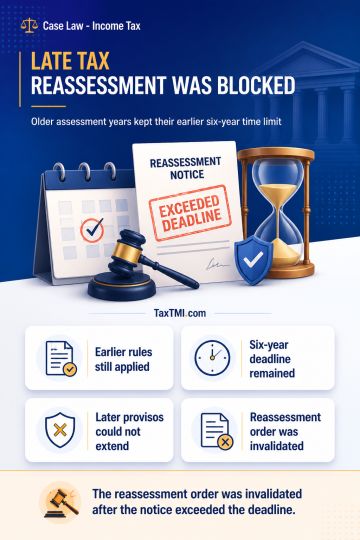
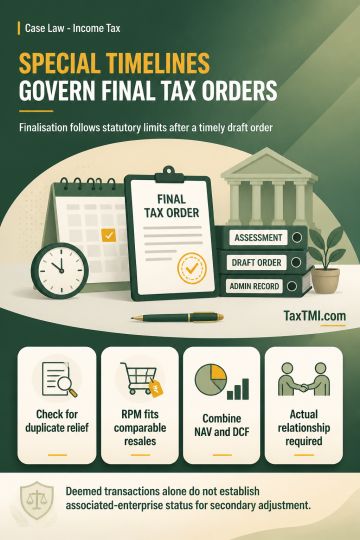
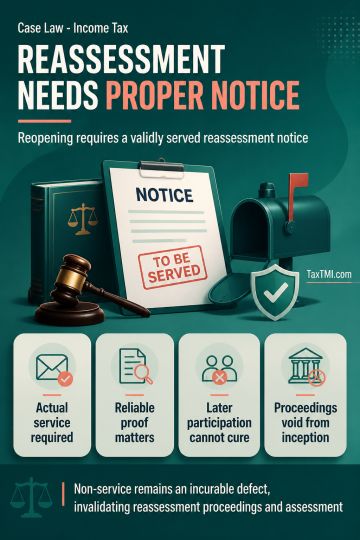
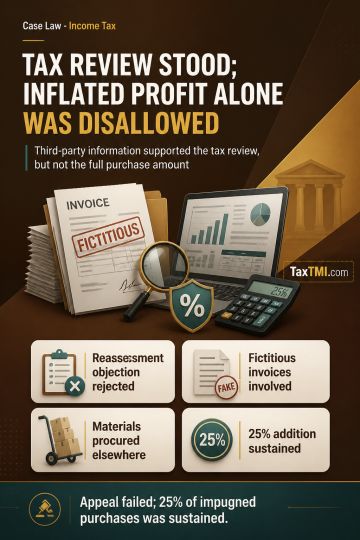
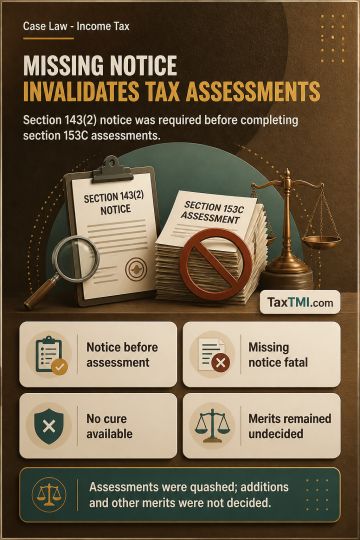
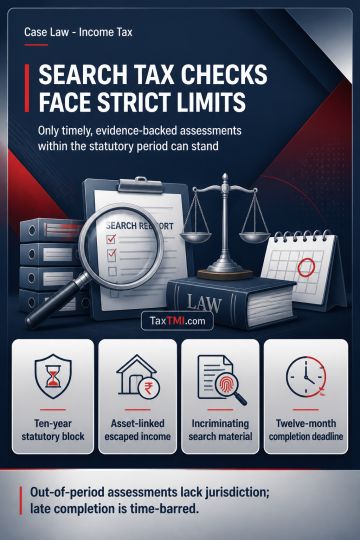
Pre-amendment reassessment limitation bars late notices under the preserved regime, invalidating consequential reassessment for affected earlier asses...
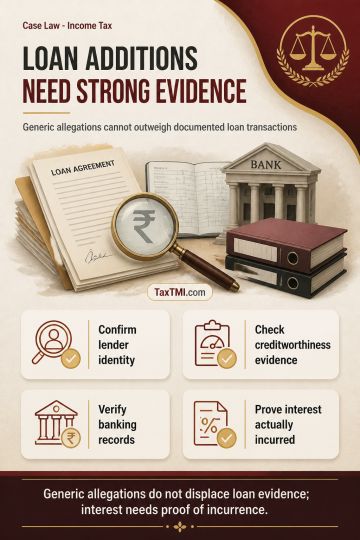
Cash-sales explanations for bank deposits require documentary reconciliation; reassessment notice survived where effective response time was available...
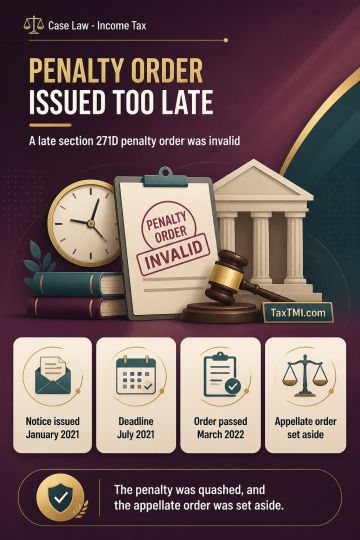
Functional comparability in transfer pricing prevents ad hoc arm's length adjustments where functions, assets, risks and reliable comparables are unes...
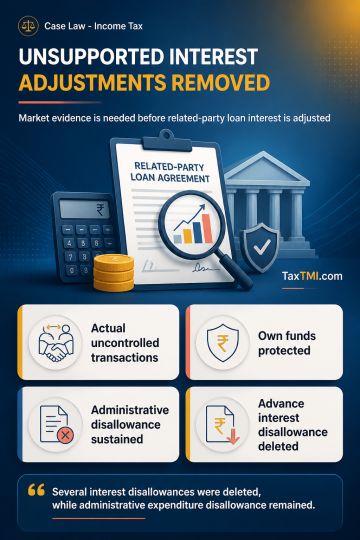
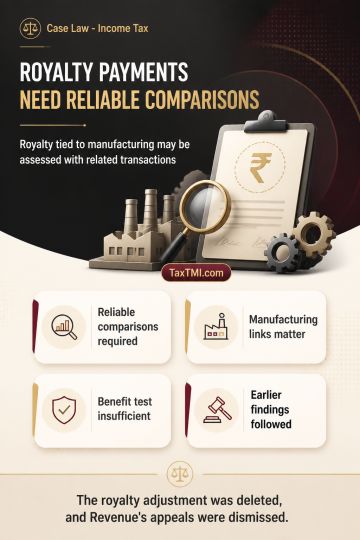
Contingency expenses, exempt-income disallowance, and royalty benchmarking: unsupported adjustments were deleted under consistent accounting and trans...
Page of 4920
Press 'Enter' after typing page number.
61 to 80 of 98394 Results
❮
❯
❯❯
0 / 200
Expand Note
Add to Folder
No Folders have been created
+
Are you sure you want to delete "My most important" ?
Issue of invoking an extended period of limitation for service tax assessment in cases involving interpretation of legal provisions. It establishes that mere interpretation differences or omissions without intent cannot justify invoking the extended period. The key points are: Interpretation issues regarding taxability do not constitute willful suppression of facts justifying extended limitation. The responsibility lies with the tax officer to scrutinize returns and make assessments within the normal period. Any revenue loss due to non-scrutiny is a policy risk taken by the department. Extended limitation requires evidence of fraud, collusion, willful misstatement or violation with intent, which cannot be presumed from differing interpretations or non-scrutiny. The tribunal ruled in favor of the assessee on the limitation issue, deeming it unnecessary to examine the merits.
Issue of invoking an extended period of limitation for service tax assessment in cases involving interpretation of legal provisions. It establishes that mere interpretation differences or omissions without intent cannot justify invoking the extended period. The key points are: Interpretation issues regarding taxability do not constitute willful suppression of facts justifying extended limitation. The responsibility lies with the tax officer to scrutinize returns and make assessments within the normal period. Any revenue loss due to non-scrutiny is a policy risk taken by the department. Extended limitation requires evidence of fraud, collusion, willful misstatement or violation with intent, which cannot be presumed from differing interpretations or non-scrutiny. The tribunal ruled in favor of the assessee on the limitation issue, deeming it unnecessary to examine the merits.
Note: It is a system-generated summary and is for quick reference only.
 TaxTMI
 TaxTMI

 of 4920