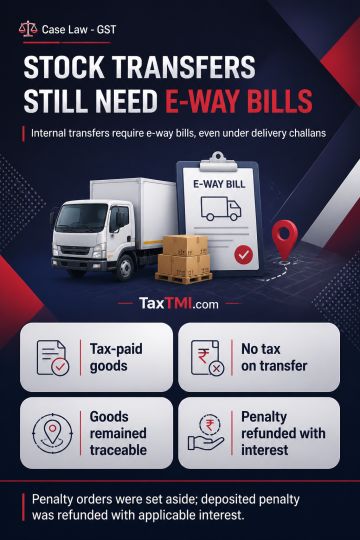
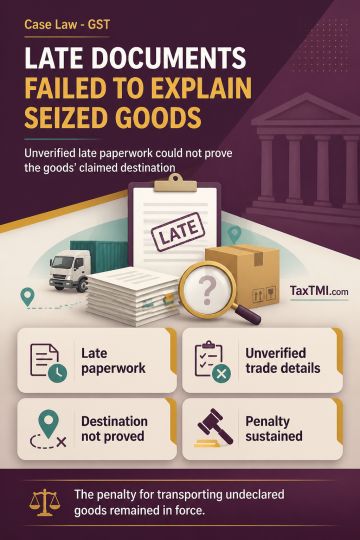
Delayed transport documents failed to validate intercepted goods, sustaining transit-state penalties where the claimed interstate destination remained...
Issue of invoking an extended period of limitation for service tax assessment in cases involving interpretation of legal provisions. It establishes that mere interpretation differences or omissions without intent cannot justify invoking the extended period. The key points are: Interpretation issues regarding taxability do not constitute willful suppression of facts justifying extended limitation. The responsibility lies with the tax officer to scrutinize returns and make assessments within the normal period. Any revenue loss due to non-scrutiny is a policy risk taken by the department. Extended limitation requires evidence of fraud, collusion, willful misstatement or violation with intent, which cannot be presumed from differing interpretations or non-scrutiny. The tribunal ruled in favor of the assessee on the limitation issue, deeming it unnecessary to examine the merits.
Issue of invoking an extended period of limitation for service tax assessment in cases involving interpretation of legal provisions. It establishes that mere interpretation differences or omissions without intent cannot justify invoking the extended period. The key points are: Interpretation issues regarding taxability do not constitute willful suppression of facts justifying extended limitation. The responsibility lies with the tax officer to scrutinize returns and make assessments within the normal period. Any revenue loss due to non-scrutiny is a policy risk taken by the department. Extended limitation requires evidence of fraud, collusion, willful misstatement or violation with intent, which cannot be presumed from differing interpretations or non-scrutiny. The tribunal ruled in favor of the assessee on the limitation issue, deeming it unnecessary to examine the merits.
Note: It is a system-generated summary and is for quick reference only.
 TaxTMI
  TaxTMI
 of 4920