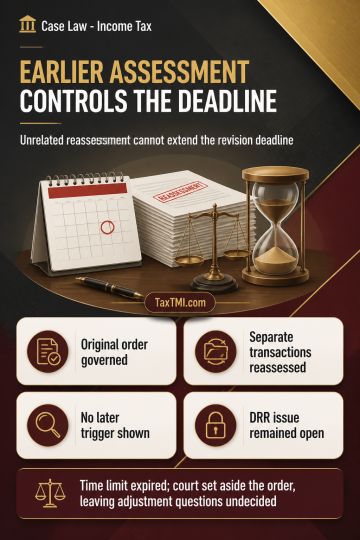
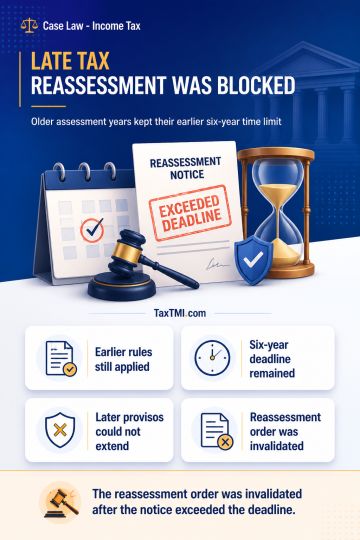
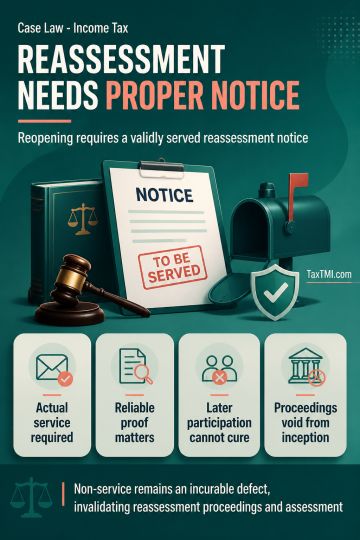
Pre-amendment reassessment limitation bars late notices under the preserved regime, invalidating consequential reassessment for affected earlier asses...
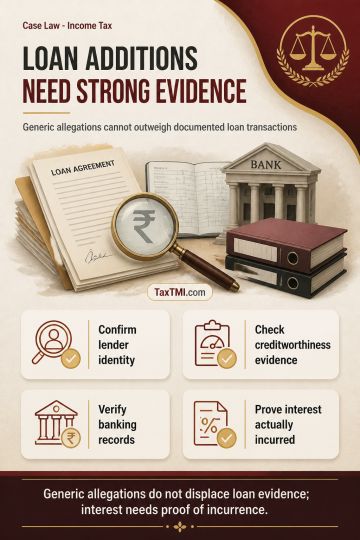
Cash-sales explanations for bank deposits require documentary reconciliation; reassessment notice survived where effective response time was available...
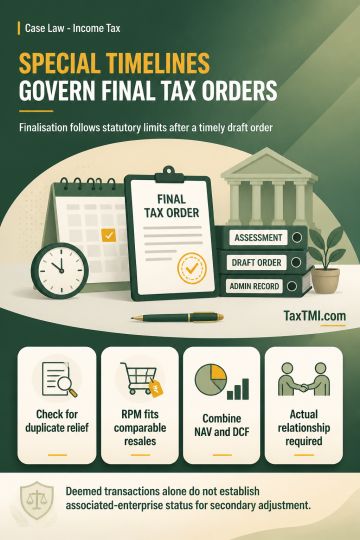
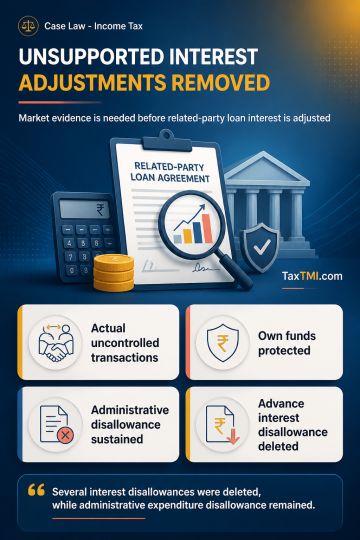
Functional comparability in transfer pricing prevents ad hoc arm's length adjustments where functions, assets, risks and reliable comparables are unes...
Section 154 allows the Income Tax Authorities to amend, correct, and pass orders notwithstanding anything in law, except matters already considered on appeal or revision. The Assessing Officer's powers are wide-ranging, allowing amendment of earlier orders suo motu or on rectification application. In this scrutiny case, the Assessing Officer could have examined the law and waived deductions from book profits for MAT liability calculation. The ITAT found the inadvertent mistake occurred due to misinterpretation and can be corrected u/s 154, as no new facts or accounts were introduced. The High Court held that the mistake arising from misinterpretation of law while filing the ITR can be rectified u/s 154, dismissing the Revenue's appeal.
Section 154 allows the Income Tax Authorities to amend, correct, and pass orders notwithstanding anything in law, except matters already considered on appeal or revision. The Assessing Officer's powers are wide-ranging, allowing amendment of earlier orders suo motu or on rectification application. In this scrutiny case, the Assessing Officer could have examined the law and waived deductions from book profits for MAT liability calculation. The ITAT found the inadvertent mistake occurred due to misinterpretation and can be corrected u/s 154, as no new facts or accounts were introduced. The High Court held that the mistake arising from misinterpretation of law while filing the ITR can be rectified u/s 154, dismissing the Revenue's appeal.
Note: It is a system-generated summary and is for quick reference only.
 TaxTMI
 TaxTMI

 of 4918