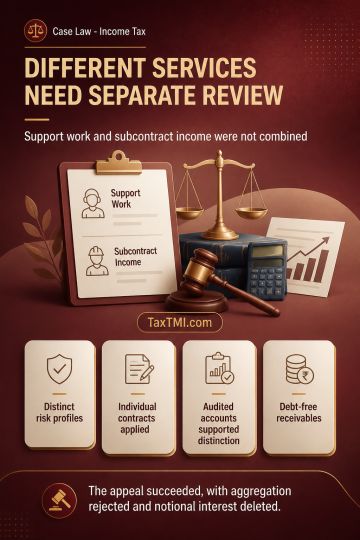
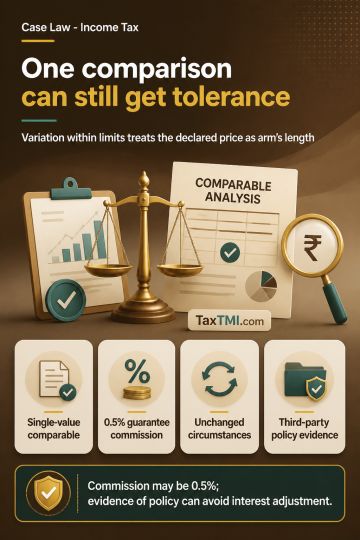
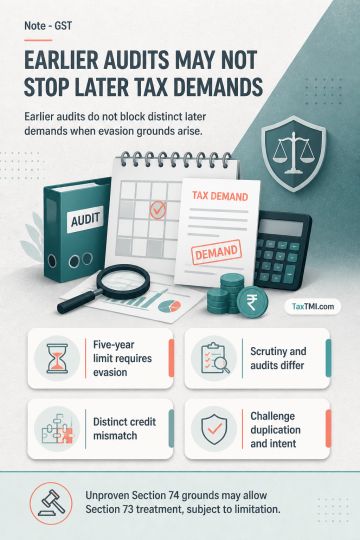
Transfer-pricing aggregation of distinct support-service and subcontract transactions was rejected, while debt-free receivables attracted no notional ...
Customs exemptions cover photovoltaic assembly machinery and PVF backsheets, while fully declared cleared imports may avoid confiscation and penalties...
Specific tariff classification for LCD devices overrides treatment as electricity-meter parts, defeating differential duty, extended limitation, and p...
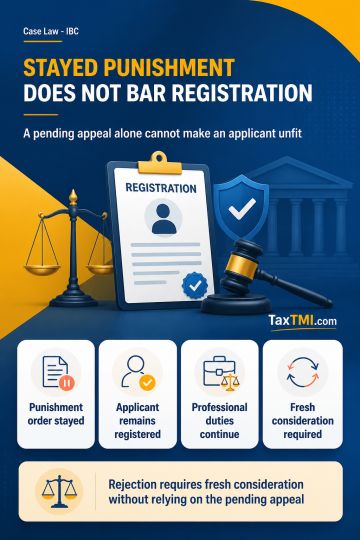
Stayed disciplinary punishment does not establish unfitness for insolvency professional registration; reconsideration must disregard mere pendency of ...
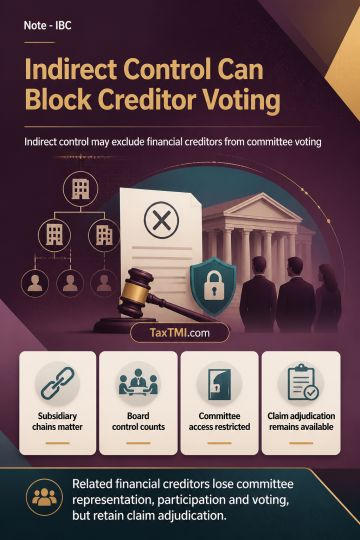
Indirect corporate control can create related-party status, excluding financial creditors from Committee of Creditors representation, participation an...
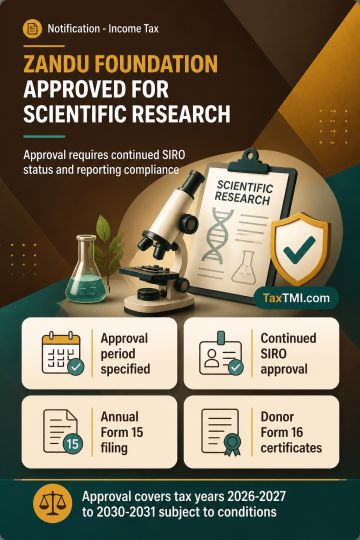
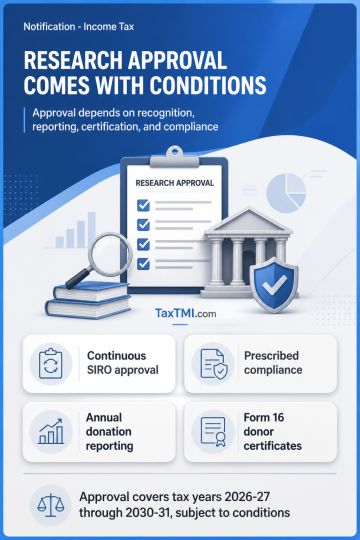
Scientific research association approval requires continuing SIRO status, annual donation reporting, and donor certificates for the approved foundatio...
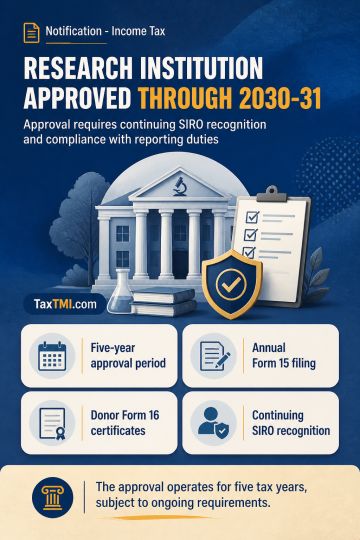
Scientific research institution approval is conditional on SIRO recognition, annual donation reporting, donor certification, and prescribed compliance...
Page of 4878
Press 'Enter' after typing page number.
41 to 60 of 97553 Results
❮
❯
❯❯
0 / 200
Expand Note
Add to Folder
No Folders have been created
+
Are you sure you want to delete "My most important" ?
The High Court examined the validity of reassessment notices issued u/s 148 of the Income Tax Act by the Joint Assistant Commissioner (JAC) in light of the Faceless Assessment Scheme formulated u/s 151A. The key points are: The Act allows reassessment based on information from Risk Management System (RMS), audit objections, information from other countries, information u/s 135A schemes, or orders of Tribunals/Courts. The JAC can form an opinion based on such information and initiate reassessment proceedings u/s 148A. Information gathered during searches/surveys is also deemed as "information" for reassessment purposes under Explanation 2 to Section 148. The Faceless Assessment Scheme segregates the initiation of reassessment proceedings by the JAC from the actual faceless assessment by the National Faceless Assessment Centre (NFAC). The JAC examines information from RMS/other sources and forms an opinion on reassessment, while the NFAC conducts the actual faceless assessment through automated allocation. Rendering the JAC's powers redundant under the faceless scheme would conflict with beneficial construction principles and undermine provisions for comprehensive data analysis and informed decision-making. The High Court upheld the validity of notices issued by the JAC, observing a harmonious distribution of functions between the JAC and NF.
The High Court examined the validity of reassessment notices issued u/s 148 of the Income Tax Act by the Joint Assistant Commissioner (JAC) in light of the Faceless Assessment Scheme formulated u/s 151A. The key points are: The Act allows reassessment based on information from Risk Management System (RMS), audit objections, information from other countries, information u/s 135A schemes, or orders of Tribunals/Courts. The JAC can form an opinion based on such information and initiate reassessment proceedings u/s 148A. Information gathered during searches/surveys is also deemed as "information" for reassessment purposes under Explanation 2 to Section 148. The Faceless Assessment Scheme segregates the initiation of reassessment proceedings by the JAC from the actual faceless assessment by the National Faceless Assessment Centre (NFAC). The JAC examines information from RMS/other sources and forms an opinion on reassessment, while the NFAC conducts the actual faceless assessment through automated allocation. Rendering the JAC's powers redundant under the faceless scheme would conflict with beneficial construction principles and undermine provisions for comprehensive data analysis and informed decision-making. The High Court upheld the validity of notices issued by the JAC, observing a harmonious distribution of functions between the JAC and NF.
Note: It is a system-generated summary and is for quick reference only.
 TaxTMI
  TaxTMI
 of 4878