Customs exemptions cover photovoltaic assembly machinery and PVF backsheets, while fully declared cleared imports may avoid confiscation and penalties...
Specific tariff classification for LCD devices overrides treatment as electricity-meter parts, defeating differential duty, extended limitation, and p...
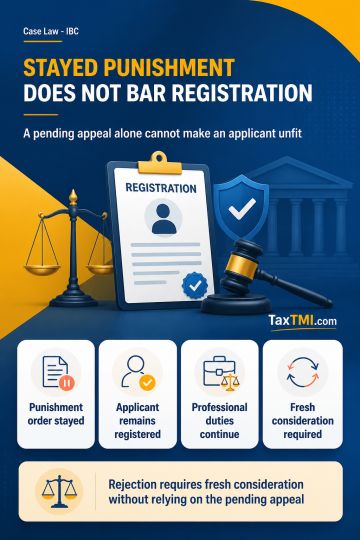
Stayed disciplinary punishment does not establish unfitness for insolvency professional registration; reconsideration must disregard mere pendency of ...
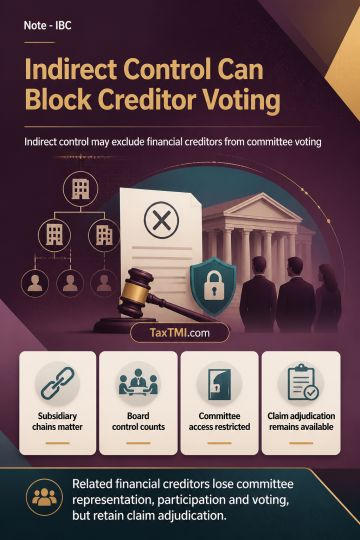
Indirect corporate control can create related-party status, excluding financial creditors from Committee of Creditors representation, participation an...
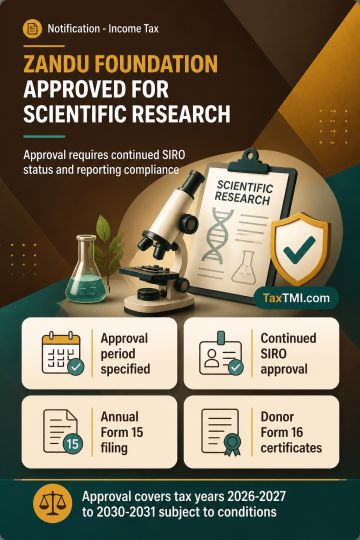
Scientific research association approval requires continuing SIRO status, annual donation reporting, and donor certificates for the approved foundatio...
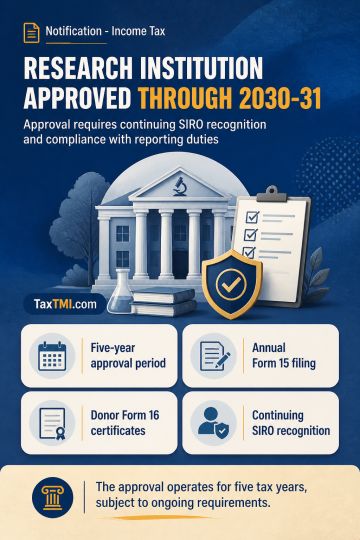
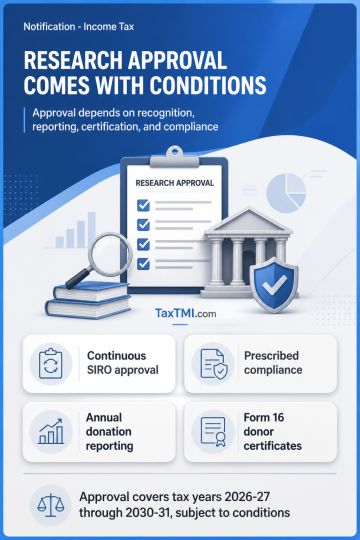
Scientific research institution approval is conditional on SIRO recognition, annual donation reporting, donor certification, and prescribed compliance...
The Income Tax Settlement Commission (ITSC) has wide powers under Chapter XIX-A to examine and evaluate all aspects of an application for settlement, including calling for reports, directing further inquiries, and holistically examining matters beyond the disclosures made by the applicant. The essential ingredients for granting immunity u/s 245H are cooperation by the applicant in computing total income and full and true disclosure of income, which are the same prerequisites for computation u/s 245D(4). Once the ITSC finds these conditions satisfied, its order granting immunity cannot be questioned separately, as both provisions are premised on identical considerations. The ITSC's order has finality u/s 245I, and can only be reviewed on grounds provided in Chapter XIX-A. Interfering with the grant of immunity would amount to questioning the acceptance of the application itself, which cannot be done if the statutory conditions were found satisfied. The principle of severability cannot be invoked as the considerations for computation and immunity are not distinct.
The Income Tax Settlement Commission (ITSC) has wide powers under Chapter XIX-A to examine and evaluate all aspects of an application for settlement, including calling for reports, directing further inquiries, and holistically examining matters beyond the disclosures made by the applicant. The essential ingredients for granting immunity u/s 245H are cooperation by the applicant in computing total income and full and true disclosure of income, which are the same prerequisites for computation u/s 245D(4). Once the ITSC finds these conditions satisfied, its order granting immunity cannot be questioned separately, as both provisions are premised on identical considerations. The ITSC's order has finality u/s 245I, and can only be reviewed on grounds provided in Chapter XIX-A. Interfering with the grant of immunity would amount to questioning the acceptance of the application itself, which cannot be done if the statutory conditions were found satisfied. The principle of severability cannot be invoked as the considerations for computation and immunity are not distinct.
Note: It is a system-generated summary and is for quick reference only.
 TaxTMI
  TaxTMI
 of 4879