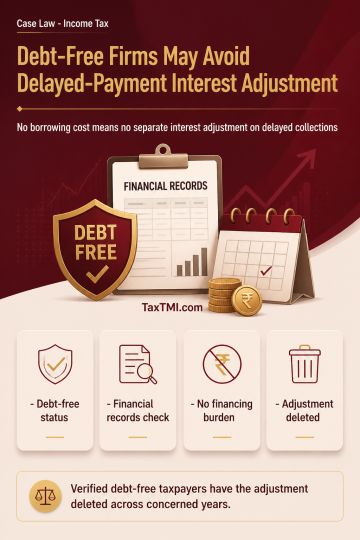
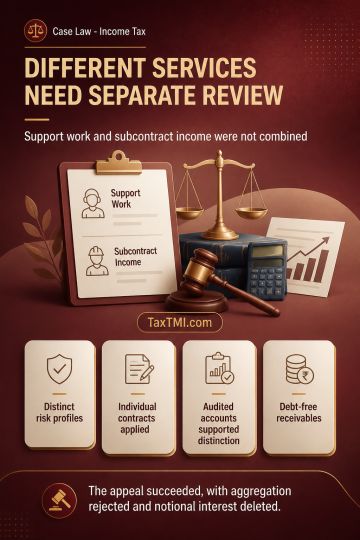
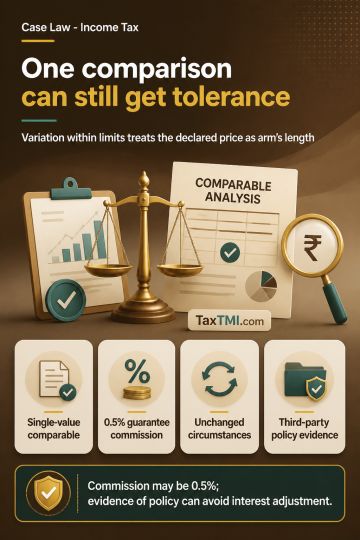
Transfer-pricing aggregation of distinct support-service and subcontract transactions was rejected, while debt-free receivables attracted no notional ...
Customs exemptions cover photovoltaic assembly machinery and PVF backsheets, while fully declared cleared imports may avoid confiscation and penalties...
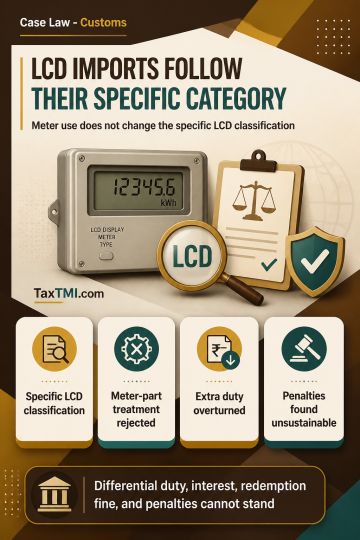
Specific tariff classification for LCD devices overrides treatment as electricity-meter parts, defeating differential duty, extended limitation, and p...
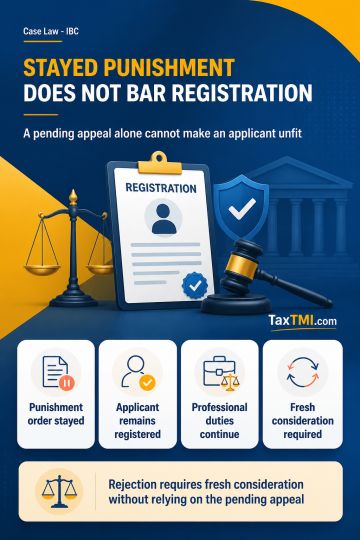
Stayed disciplinary punishment does not establish unfitness for insolvency professional registration; reconsideration must disregard mere pendency of ...
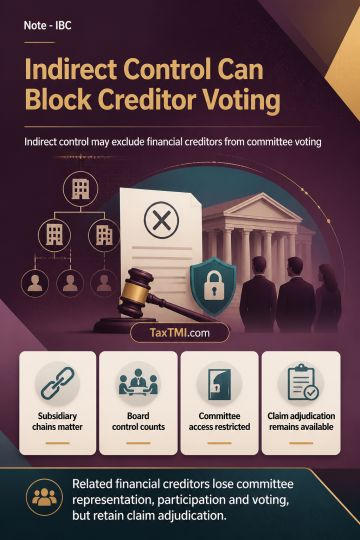
Indirect corporate control can create related-party status, excluding financial creditors from Committee of Creditors representation, participation an...
Page of 4881
Press 'Enter' after typing page number.
101 to 120 of 97618 Results
❮
❯
❯❯
0 / 200
Expand Note
Add to Folder
No Folders have been created
+
Are you sure you want to delete "My most important" ?
The High Court held that the assessee, a banking company, is entitled to exclude interest earned from securities on an accrual basis for income tax purposes. It can claim deduction of bad debts on total average outstanding rural advances without restricting it to incremental advances made during the year. Non-rural bad debts written off and debited to the reserve account can be claimed as a deduction u/s 36(1)(vii). Balances lying unclaimed with the bank for more than three years cannot be treated as income. The assessee is bound to follow the mercantile system of accounting as per the Income Tax Act, Companies Act, and RBI guidelines. The Court ruled that share listing fees are allowable as revenue expenditure and cannot be treated as capital expenditure. Regarding deduction u/s 36(1)(vii) and 36(1)(vii)(a), the issue was remitted to the Assessing Officer to re-examine in light of the Supreme Court's decision in Catholic Syrian Bank Limited. The assessee is entitled to depreciation on account of shifting securities from the available for sale category to the held to maturity category. The assessee is also entitled to deduction of amortization loss/expenses on government securities classified as held to maturity.
The High Court held that the assessee, a banking company, is entitled to exclude interest earned from securities on an accrual basis for income tax purposes. It can claim deduction of bad debts on total average outstanding rural advances without restricting it to incremental advances made during the year. Non-rural bad debts written off and debited to the reserve account can be claimed as a deduction u/s 36(1)(vii). Balances lying unclaimed with the bank for more than three years cannot be treated as income. The assessee is bound to follow the mercantile system of accounting as per the Income Tax Act, Companies Act, and RBI guidelines. The Court ruled that share listing fees are allowable as revenue expenditure and cannot be treated as capital expenditure. Regarding deduction u/s 36(1)(vii) and 36(1)(vii)(a), the issue was remitted to the Assessing Officer to re-examine in light of the Supreme Court's decision in Catholic Syrian Bank Limited. The assessee is entitled to depreciation on account of shifting securities from the available for sale category to the held to maturity category. The assessee is also entitled to deduction of amortization loss/expenses on government securities classified as held to maturity.
Note: It is a system-generated summary and is for quick reference only.
 TaxTMI
  TaxTMI
 of 4881