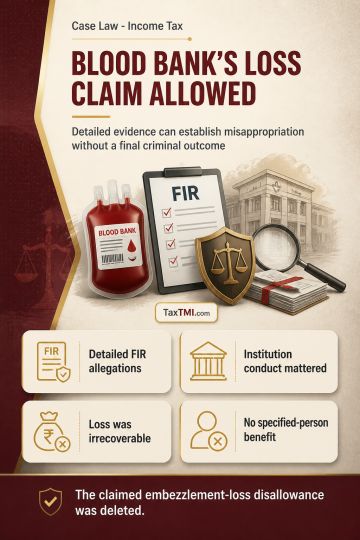
Embezzlement losses in charitable institutions remain allowable when misappropriation is established, irrecoverable, and not a specified-person benefi...
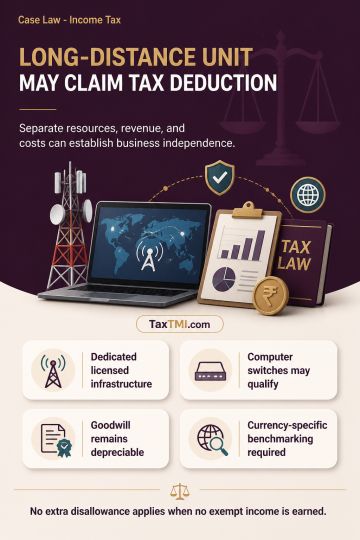
National long-distance undertaking status supports deduction where separately licensed infrastructure, resources, revenue, and expenditure establish c...
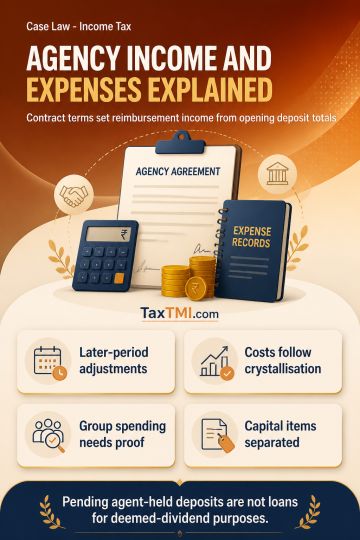
Agency reimbursement income follows contractual deposit-liability computation, while pending deposit collections do not constitute deemed-dividend loa...
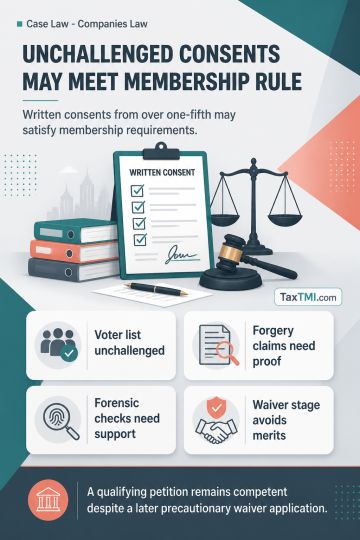
Membership-consent thresholds for oppression petitions are satisfied by unchallenged voter-list consents, while unsupported forgery claims require pro...
Disallowance of contingency expenses claimed by the assessee. The Assessing Officer (AO) disallowed the contingency expenses despite acknowledging that the total cost figure in the Cost to Completion (CTC) report matched the total cost figure in the books of accounts. The Tribunal held that the contingency expenditure, though initially budgeted, is eventually recorded in the books of accounts as actual expenditure. The Tribunal observed that the AO himself admitted that the total cost figure in the CTC report matched the total cost figure in the books of accounts. Since the contingency figures were recorded against the total expenditure, it is illogical to assume that the assessee booked bogus expenditure and generated cash outflow. The Tribunal emphasized that in survey operations, the onus is on the revenue authorities to provide cogent evidence that the assessee incurred expenses not recorded in the books of accounts. As the impugned expenditure was found recorded in the regular books of accounts, the allegation of non-compliance with Standard Operating Procedure (SOP) is irrelevant. The Tribunal directed the AO to delete the additions from the captioned appeals.
Disallowance of contingency expenses claimed by the assessee. The Assessing Officer (AO) disallowed the contingency expenses despite acknowledging that the total cost figure in the Cost to Completion (CTC) report matched the total cost figure in the books of accounts. The Tribunal held that the contingency expenditure, though initially budgeted, is eventually recorded in the books of accounts as actual expenditure. The Tribunal observed that the AO himself admitted that the total cost figure in the CTC report matched the total cost figure in the books of accounts. Since the contingency figures were recorded against the total expenditure, it is illogical to assume that the assessee booked bogus expenditure and generated cash outflow. The Tribunal emphasized that in survey operations, the onus is on the revenue authorities to provide cogent evidence that the assessee incurred expenses not recorded in the books of accounts. As the impugned expenditure was found recorded in the regular books of accounts, the allegation of non-compliance with Standard Operating Procedure (SOP) is irrelevant. The Tribunal directed the AO to delete the additions from the captioned appeals.
Note: It is a system-generated summary and is for quick reference only.
 TaxTMI
  TaxTMI
 of 4881