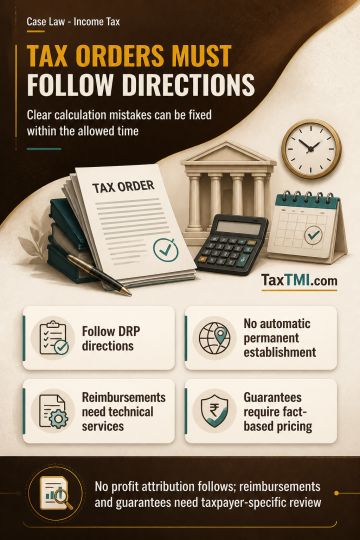
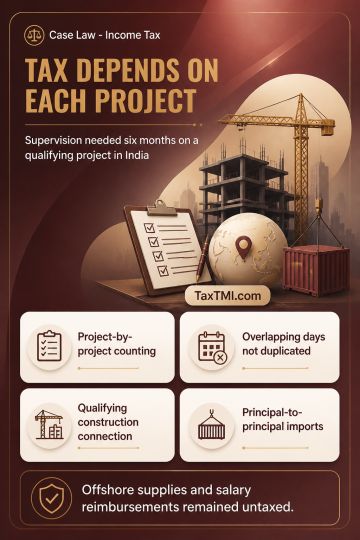
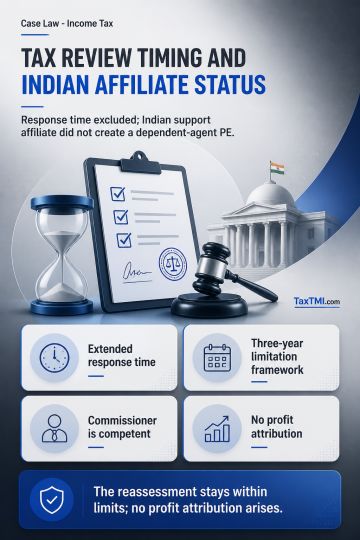
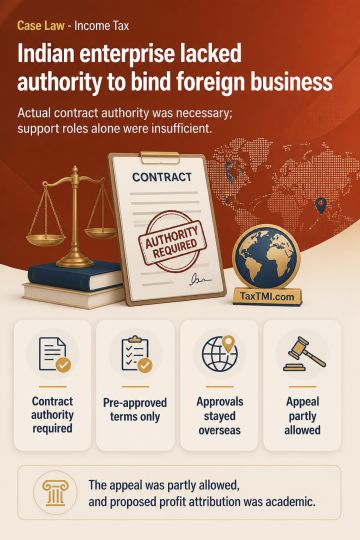
Supervisory permanent establishment requires project-wise duration and qualifying construction nexus; offshore supplies and salary reimbursements rema...
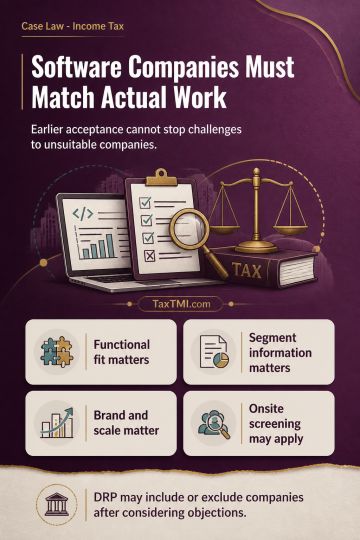
Transfer-pricing comparability permits fresh objections and filters where software service comparables are functionally unsuitable for arm's-length pr...
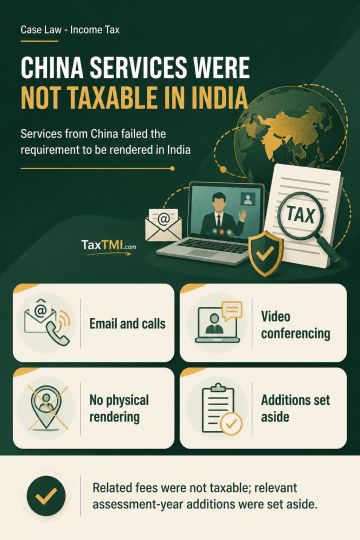
Territorial rendering requirement excludes China-based management and consultancy services from fees for technical services under the India-China DTAA...
Disallowance of contingency expenses claimed by the assessee. The Assessing Officer (AO) disallowed the contingency expenses despite acknowledging that the total cost figure in the Cost to Completion (CTC) report matched the total cost figure in the books of accounts. The Tribunal held that the contingency expenditure, though initially budgeted, is eventually recorded in the books of accounts as actual expenditure. The Tribunal observed that the AO himself admitted that the total cost figure in the CTC report matched the total cost figure in the books of accounts. Since the contingency figures were recorded against the total expenditure, it is illogical to assume that the assessee booked bogus expenditure and generated cash outflow. The Tribunal emphasized that in survey operations, the onus is on the revenue authorities to provide cogent evidence that the assessee incurred expenses not recorded in the books of accounts. As the impugned expenditure was found recorded in the regular books of accounts, the allegation of non-compliance with Standard Operating Procedure (SOP) is irrelevant. The Tribunal directed the AO to delete the additions from the captioned appeals.
Disallowance of contingency expenses claimed by the assessee. The Assessing Officer (AO) disallowed the contingency expenses despite acknowledging that the total cost figure in the Cost to Completion (CTC) report matched the total cost figure in the books of accounts. The Tribunal held that the contingency expenditure, though initially budgeted, is eventually recorded in the books of accounts as actual expenditure. The Tribunal observed that the AO himself admitted that the total cost figure in the CTC report matched the total cost figure in the books of accounts. Since the contingency figures were recorded against the total expenditure, it is illogical to assume that the assessee booked bogus expenditure and generated cash outflow. The Tribunal emphasized that in survey operations, the onus is on the revenue authorities to provide cogent evidence that the assessee incurred expenses not recorded in the books of accounts. As the impugned expenditure was found recorded in the regular books of accounts, the allegation of non-compliance with Standard Operating Procedure (SOP) is irrelevant. The Tribunal directed the AO to delete the additions from the captioned appeals.
Note: It is a system-generated summary and is for quick reference only.
 TaxTMI
  TaxTMI
 of 4891