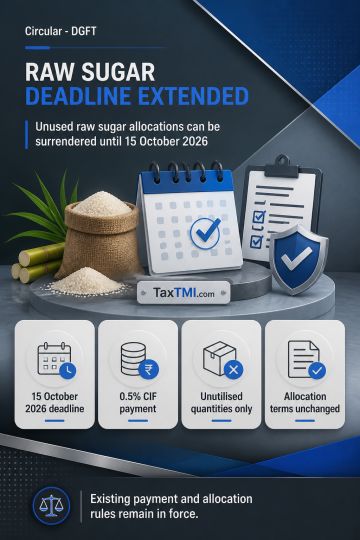
Customs-controlled cargo movement now includes GDL, subject to EXIM prioritisation, segregation, verification, reconciliation and enforcement safeguar...
Applicability of Section 64(1) and Section 54F of the Income Tax Act. Section 64(1) allows for the inclusion of a dependent spouse's income in the assessee's taxable income. The Tribunal held that the assessee's wife was dependent, and her income was rightly included in the assessee's return u/s 64(1). Regarding Section 54F, which provides exemption from long-term capital gains on the sale of a residential property if the proceeds are invested in another residential property, the Tribunal held that the investment in two adjacent flats by the assessee's wife qualified as a single residential unit. Therefore, the assessee was eligible for the exemption u/s 54F, despite the amendment restricting it to one residential unit from April 1, 2015. The Tribunal relied on previous judicial precedents and allowed the assessee's appeal.
Applicability of Section 64(1) and Section 54F of the Income Tax Act. Section 64(1) allows for the inclusion of a dependent spouse's income in the assessee's taxable income. The Tribunal held that the assessee's wife was dependent, and her income was rightly included in the assessee's return u/s 64(1). Regarding Section 54F, which provides exemption from long-term capital gains on the sale of a residential property if the proceeds are invested in another residential property, the Tribunal held that the investment in two adjacent flats by the assessee's wife qualified as a single residential unit. Therefore, the assessee was eligible for the exemption u/s 54F, despite the amendment restricting it to one residential unit from April 1, 2015. The Tribunal relied on previous judicial precedents and allowed the assessee's appeal.
Note: It is a system-generated summary and is for quick reference only.
 TaxTMI
  TaxTMI
 of 4881