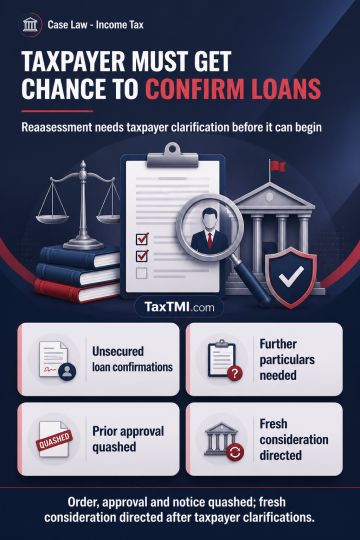
Opportunity to furnish unsecured-loan confirmations is required before reassessment initiation; proceedings require fresh consideration after taxpayer...
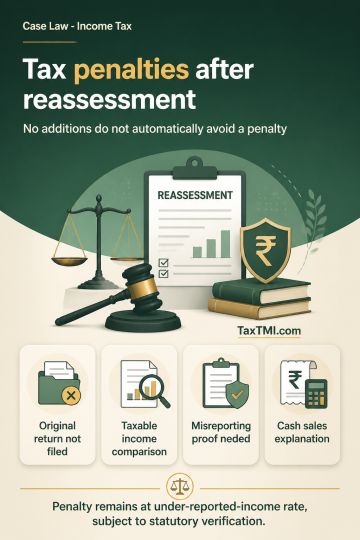
Under-reporting on a first reassessment return attracts penalty, while enhanced misreporting penalty requires proof of a statutory misreporting catego...
This case pertains to a writ petition filed by a company invoking Article 226 of the Constitution, seeking directions to the Reserve Bank of India (RBI) to initiate action against Exclusive Capital Limited under Chapter IIIB of the RBI Act, 1934. The Court held that a writ of mandamus lies when statutory authorities fail to exercise their powers, leading to irreparable harm to statutory rights. Despite repeated reminders, Exclusive Capital Limited's management failed to provide organizational details, statutory compliance records, personnel particulars, and financial statements, indicating mismanagement. The company's reply denied RBI's concerns and claimed the conversion of OCDs into CCPS was to restore leverage ratio, and that RBI regulations were inapplicable. The Court distinguished the Krishnakrupa case, where the High Court refused to interfere in RBI's banking affairs. Finding ample material warranting an inquiry into Exclusive Capital Limited's affairs and RBI's failure to exercise supervisory powers, the Court directed the suspension of the company's Board of Directors until further orders and compliance reporting on 02.12.2024.
This case pertains to a writ petition filed by a company invoking Article 226 of the Constitution, seeking directions to the Reserve Bank of India (RBI) to initiate action against Exclusive Capital Limited under Chapter IIIB of the RBI Act, 1934. The Court held that a writ of mandamus lies when statutory authorities fail to exercise their powers, leading to irreparable harm to statutory rights. Despite repeated reminders, Exclusive Capital Limited's management failed to provide organizational details, statutory compliance records, personnel particulars, and financial statements, indicating mismanagement. The company's reply denied RBI's concerns and claimed the conversion of OCDs into CCPS was to restore leverage ratio, and that RBI regulations were inapplicable. The Court distinguished the Krishnakrupa case, where the High Court refused to interfere in RBI's banking affairs. Finding ample material warranting an inquiry into Exclusive Capital Limited's affairs and RBI's failure to exercise supervisory powers, the Court directed the suspension of the company's Board of Directors until further orders and compliance reporting on 02.12.2024.
Note: It is a system-generated summary and is for quick reference only.
 TaxTMI
  TaxTMI
 of 4915