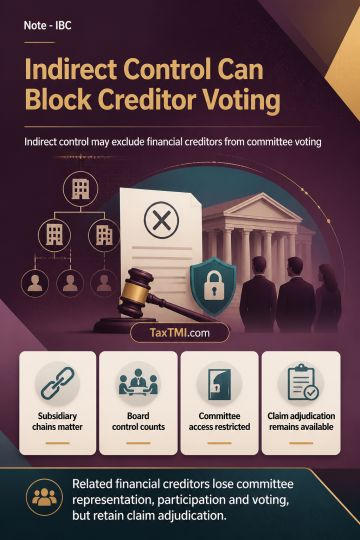
Indirect corporate control can create related-party status, excluding financial creditors from Committee of Creditors representation, participation an...
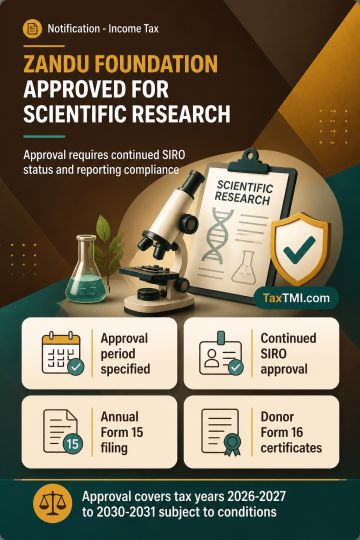
Scientific research association approval requires continuing SIRO status, annual donation reporting, and donor certificates for the approved foundatio...
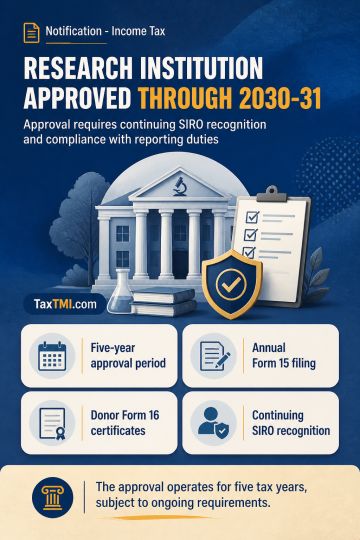
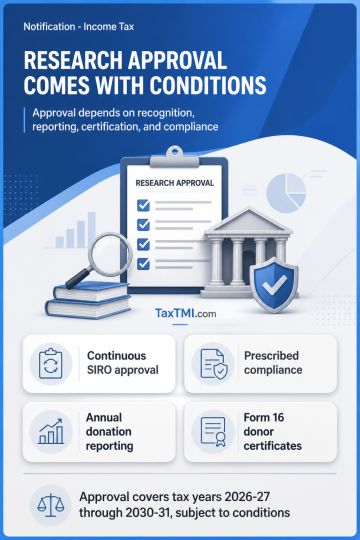
Scientific research institution approval is conditional on SIRO recognition, annual donation reporting, donor certification, and prescribed compliance...
The appellant's Daman unit mistakenly paid duty liability of their Halol unit due to an error in the ERP system meant for all group units. The issue pertains to determining the date for computing the one-year time limit u/s 11B for filing a refund application - whether it should be the initial filing date or the subsequent re-filing date after the department returned the initial application. The Tribunal held that since the appellant initially filed the refund claim within one year, the date of first filing should be considered, rendering the refund application not time-barred. Relying on the Gujarat High Court's judgment in Auro Pumps Private Ltd, the Tribunal ruled that the duty paid in excess is refundable. The Commissioner (Appeals)'s order was set aside, and the appeal was allowed, with the Tribunal affirming the Commissioner (Appeals)'s power to remand matters based on amendments to the Central Excise Act, 1944.
The appellant's Daman unit mistakenly paid duty liability of their Halol unit due to an error in the ERP system meant for all group units. The issue pertains to determining the date for computing the one-year time limit u/s 11B for filing a refund application - whether it should be the initial filing date or the subsequent re-filing date after the department returned the initial application. The Tribunal held that since the appellant initially filed the refund claim within one year, the date of first filing should be considered, rendering the refund application not time-barred. Relying on the Gujarat High Court's judgment in Auro Pumps Private Ltd, the Tribunal ruled that the duty paid in excess is refundable. The Commissioner (Appeals)'s order was set aside, and the appeal was allowed, with the Tribunal affirming the Commissioner (Appeals)'s power to remand matters based on amendments to the Central Excise Act, 1944.
Note: It is a system-generated summary and is for quick reference only.
 TaxTMI
  TaxTMI
 of 4884