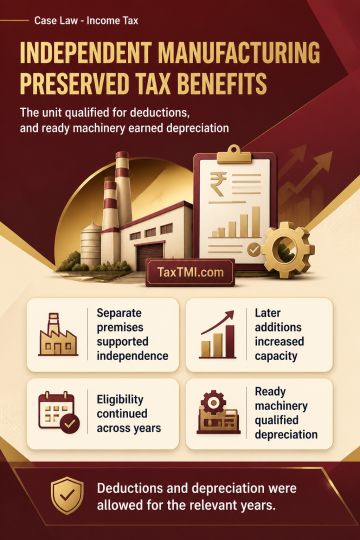
Independent manufacturing undertaking eligibility preserves Section 80IA/80IB deductions, while machinery kept ready for use qualifies for depreciatio...
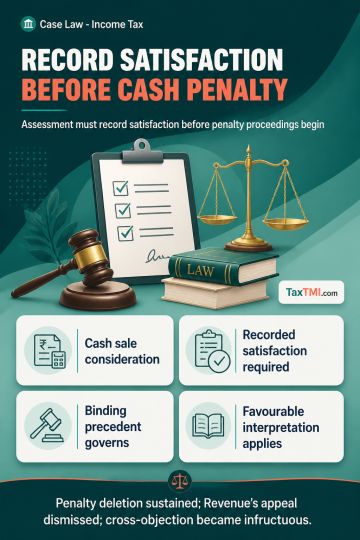
Assessing Officer Satisfaction Requirement Bars Penalty for Cash Receipt in Immovable-Property Sale Cases Where Initiation Lacks Recorded Satisfaction...
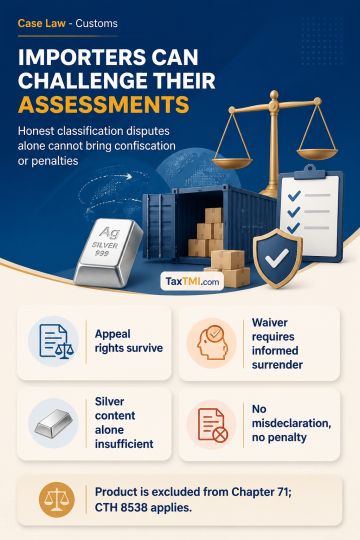
Self-assessed import entries remain appealable, while bona fide classification disputes without misdeclaration cannot justify confiscation or penaltie...
Actual-user customs exemption conditions permit turnkey project transfers when imported windmill components are exclusively used for installation and ...
Customs offence disqualification excludes civil contraventions, preventing refusal of a private bonded warehouse licence based solely on monetary pena...
Central Excise and Service Tax Appellate Tribunal (CESTAT) case involving valuation of imported goods - rejection of declared value - enhancement of value. The tribunal held that when the imported goods were numerous, only a few items were referenced without considering the importer's submissions. The grounds for value enhancement were not communicated to the importer, violating natural justice principles. The tribunal observed that the provisions of Rule 3(b) of the Customs Valuation Rules, 2007, regarding transaction value for imports by related persons, were not properly applied. The original authority failed to examine the values against identical or similar items imported by independent buyers from the same supplier or other contemporaneous imports. The lower appellate authority's order setting aside the original order without determining the appropriate values created a vacuum. The case was remanded to the original authority to reconsider the issue afresh, adhering to natural justice principles and examining all relevant factors within three months.
Central Excise and Service Tax Appellate Tribunal (CESTAT) case involving valuation of imported goods - rejection of declared value - enhancement of value. The tribunal held that when the imported goods were numerous, only a few items were referenced without considering the importer's submissions. The grounds for value enhancement were not communicated to the importer, violating natural justice principles. The tribunal observed that the provisions of Rule 3(b) of the Customs Valuation Rules, 2007, regarding transaction value for imports by related persons, were not properly applied. The original authority failed to examine the values against identical or similar items imported by independent buyers from the same supplier or other contemporaneous imports. The lower appellate authority's order setting aside the original order without determining the appropriate values created a vacuum. The case was remanded to the original authority to reconsider the issue afresh, adhering to natural justice principles and examining all relevant factors within three months.
Note: It is a system-generated summary and is for quick reference only.
 TaxTMI
  TaxTMI
 of 4884