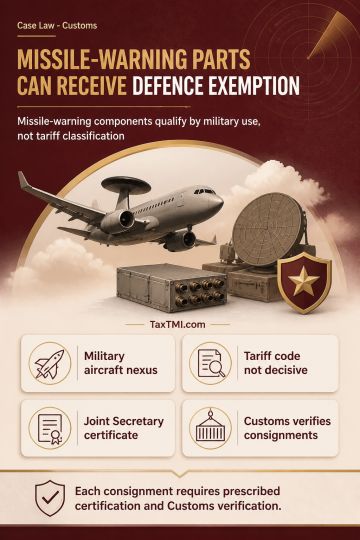
Customs-controlled cargo movement now includes GDL, subject to EXIM prioritisation, segregation, verification, reconciliation and enforcement safeguar...
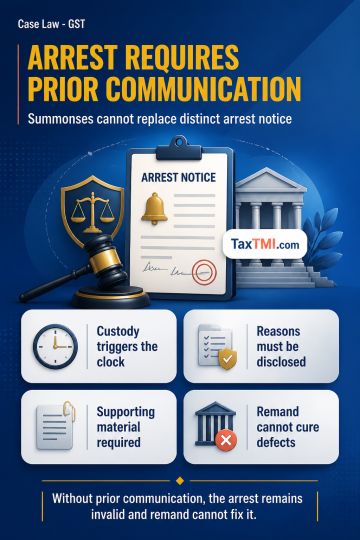
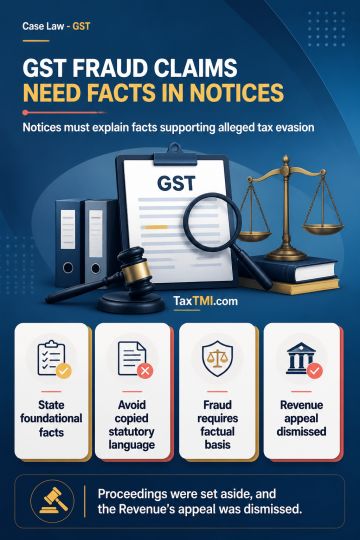
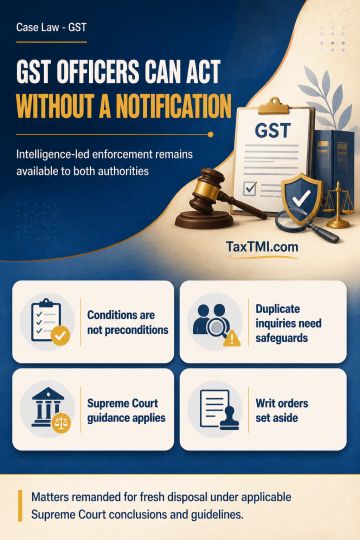
GST cross-empowerment remains effective without conditional notification, while duplicate proceedings require established safeguards against overlappi...
The appellant is not liable to pay service tax on supply of water by the Government of Odisha, as the issue has been settled by the Tribunal's decision in a previous case. The agreement between the appellant and the government is for supply of water, for which charges are paid based on volume drawn, and it is not a case of assignment of right to use natural resources. Regarding re-availment of Cenvat credit subsequent to change of option u/r 6(3) of the Cenvat Credit Rules, 2004, the appellant had intimated the department, and no suppression can be alleged. Therefore, the demand of Rs. 183,09,57,095/- is set aside. Concerning Cenvat credit availed on invoices after one year of issuance, the appellant had shown it in the ER-1 return, and no suppression of facts can be alleged. Consequently, Cenvat credit cannot be denied. As no demand is sustainable, no interest is payable, and no penalty is imposable. The impugned order is set aside, and the appeal is allowed.
The appellant is not liable to pay service tax on supply of water by the Government of Odisha, as the issue has been settled by the Tribunal's decision in a previous case. The agreement between the appellant and the government is for supply of water, for which charges are paid based on volume drawn, and it is not a case of assignment of right to use natural resources. Regarding re-availment of Cenvat credit subsequent to change of option u/r 6(3) of the Cenvat Credit Rules, 2004, the appellant had intimated the department, and no suppression can be alleged. Therefore, the demand of Rs. 183,09,57,095/- is set aside. Concerning Cenvat credit availed on invoices after one year of issuance, the appellant had shown it in the ER-1 return, and no suppression of facts can be alleged. Consequently, Cenvat credit cannot be denied. As no demand is sustainable, no interest is payable, and no penalty is imposable. The impugned order is set aside, and the appeal is allowed.
Note: It is a system-generated summary and is for quick reference only.
 TaxTMI
  TaxTMI
 of 4886