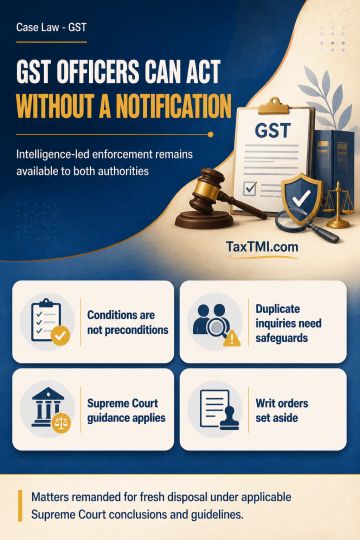
GST cross-empowerment remains effective without conditional notification, while duplicate proceedings require established safeguards against overlappi...
The Supreme Court examined whether the Public Premises Act, 1971 overrides the Arbitration and Conciliation Act, 1996, and if there was any error in appointing an arbitrator u/s 11 of the latter Act. The Court held that the dispute related to promises arising from an agreement dated 26.09.2012, concerning the right of renewal and the legality of enhanced demand, which subsisted until 11.09.2015. The Public Premises Act did not apply to this period, and the dispute depended on interpreting the agreement terms. The High Court did not err in appointing an arbitrator u/s 11, as the revision of storage charges and right of renewal arose during the contract's subsistence and were covered by the arbitration clause. The Court dismissed the appeal and imposed costs of Rs. 50,000 for unnecessary litigation.
The Supreme Court examined whether the Public Premises Act, 1971 overrides the Arbitration and Conciliation Act, 1996, and if there was any error in appointing an arbitrator u/s 11 of the latter Act. The Court held that the dispute related to promises arising from an agreement dated 26.09.2012, concerning the right of renewal and the legality of enhanced demand, which subsisted until 11.09.2015. The Public Premises Act did not apply to this period, and the dispute depended on interpreting the agreement terms. The High Court did not err in appointing an arbitrator u/s 11, as the revision of storage charges and right of renewal arose during the contract's subsistence and were covered by the arbitration clause. The Court dismissed the appeal and imposed costs of Rs. 50,000 for unnecessary litigation.
Note: It is a system-generated summary and is for quick reference only.
 TaxTMI
  TaxTMI
 of 4881