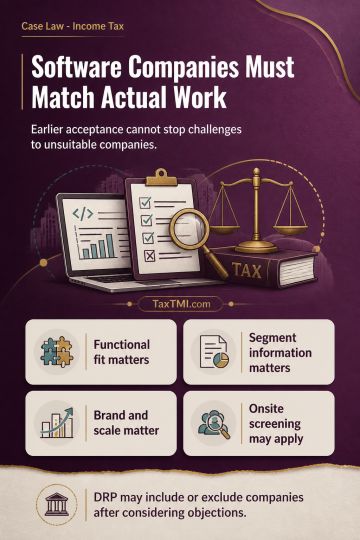
Transfer-pricing comparability permits fresh objections and filters where software service comparables are functionally unsuitable for arm's-length pr...
Territorial rendering requirement excludes China-based management and consultancy services from fees for technical services under the India-China DTAA...
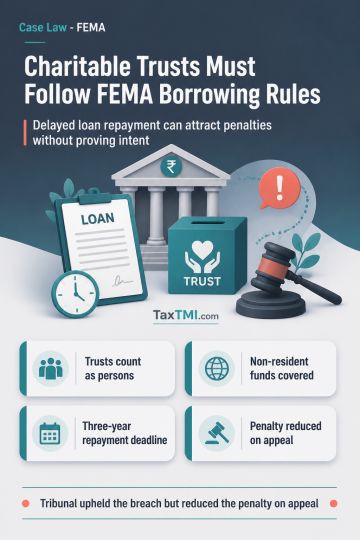
FEMA borrowing restrictions bind charitable trusts, and civil penalties apply without proving intent for delayed repayment of non-resident rupee loans...
Classification of imported goods, specifically di-methyl lauryl amine (DMLA), under the Customs Tariff Act, 1975. The key points are: The classification of DMLA as a 'surface active agent' under heading 3402 was disputed. The test reports submitted were questioned for their validity and bona fides. The adjudicating authority did not consider the test reports furnished by the importer. The Supreme Court's ruling in Hindustan Ferodo Ltd v. Collector of Central Excise emphasizes that the onus of establishing the classification lies with the Revenue, and if evidence is not led, the appeal should be allowed. The benchmark in note 3 of chapter 34 of the Customs Tariff Act, 1975, must be met through valid test results. The order was set aside for fresh adjudication after considering the test results. The penalties imposed on individuals were found unsustainable and set aside. The dispute was remanded back to the original authority for fresh adjudication.
Classification of imported goods, specifically di-methyl lauryl amine (DMLA), under the Customs Tariff Act, 1975. The key points are: The classification of DMLA as a 'surface active agent' under heading 3402 was disputed. The test reports submitted were questioned for their validity and bona fides. The adjudicating authority did not consider the test reports furnished by the importer. The Supreme Court's ruling in Hindustan Ferodo Ltd v. Collector of Central Excise emphasizes that the onus of establishing the classification lies with the Revenue, and if evidence is not led, the appeal should be allowed. The benchmark in note 3 of chapter 34 of the Customs Tariff Act, 1975, must be met through valid test results. The order was set aside for fresh adjudication after considering the test results. The penalties imposed on individuals were found unsustainable and set aside. The dispute was remanded back to the original authority for fresh adjudication.
Note: It is a system-generated summary and is for quick reference only.
 TaxTMI
  TaxTMI
 of 4891