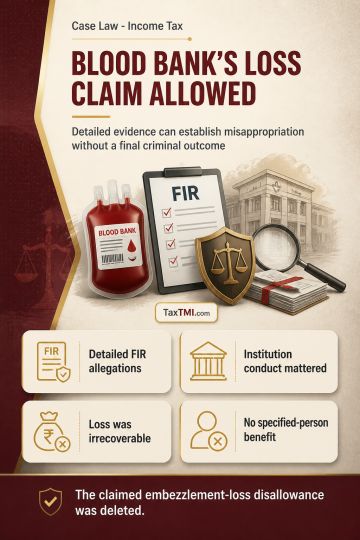
Embezzlement losses in charitable institutions remain allowable when misappropriation is established, irrecoverable, and not a specified-person benefi...
National long-distance undertaking status supports deduction where separately licensed infrastructure, resources, revenue, and expenditure establish c...
Agency reimbursement income follows contractual deposit-liability computation, while pending deposit collections do not constitute deemed-dividend loa...
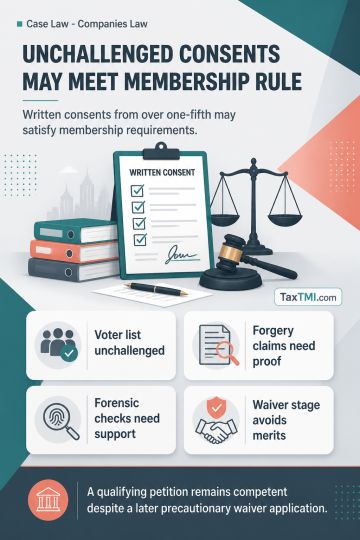
Membership-consent thresholds for oppression petitions are satisfied by unchallenged voter-list consents, while unsupported forgery claims require pro...
The adjudicating authority's superficial view on classifying the impugned goods under the SCOMET regime of the Foreign Trade Policy (FTP) is incorrect. The FTP is designed by the DGFT under the Foreign Trade Act, with customs playing an enforcement role. In technical matters like SCOMET, customs should obtain the licensing authority's opinion before applying restrictions indiscriminately. The assumption that restrictions can be broadbanded in a restrictive regime reflects an incorrect perspective on licensing rules. The authority failed to discharge its responsibility of factual ascertainment for adjudication and imposing penalties, disregarding the defense. The order is set aside, and the matter remanded to the original authority to seek the licensing authority's opinion on SCOMET applicability, consider any defense, and dispose of the show cause notice accordingly. The appeals are allowed by remand.
The adjudicating authority's superficial view on classifying the impugned goods under the SCOMET regime of the Foreign Trade Policy (FTP) is incorrect. The FTP is designed by the DGFT under the Foreign Trade Act, with customs playing an enforcement role. In technical matters like SCOMET, customs should obtain the licensing authority's opinion before applying restrictions indiscriminately. The assumption that restrictions can be broadbanded in a restrictive regime reflects an incorrect perspective on licensing rules. The authority failed to discharge its responsibility of factual ascertainment for adjudication and imposing penalties, disregarding the defense. The order is set aside, and the matter remanded to the original authority to seek the licensing authority's opinion on SCOMET applicability, consider any defense, and dispose of the show cause notice accordingly. The appeals are allowed by remand.
Note: It is a system-generated summary and is for quick reference only.
 TaxTMI
  TaxTMI
 of 4881