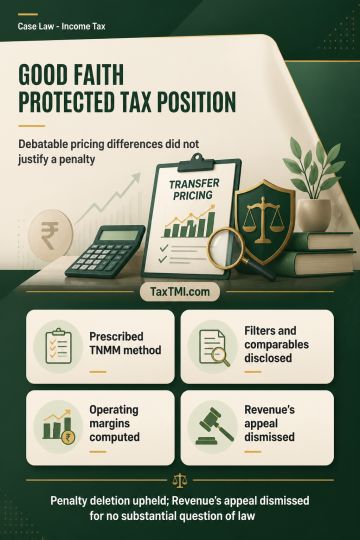
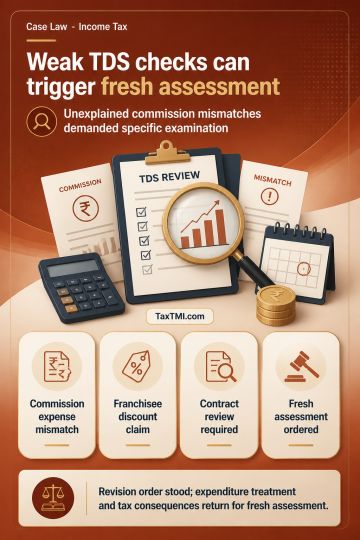
SEZ-unit profit deduction covers voluntary transfer-pricing adjustments, while exempt-income costs, foreign-exchange loss and ITeS comparables are exa...
The Assessing Officer (AO) failed to conduct relevant inquiries regarding the shares held as penny stocks by the assessee in GCM Securities Ltd. The Principal Commissioner of Income Tax (PCIT) invoked Section 263, finding the assessment order erroneous and prejudicial to the Revenue's interests. The PCIT observed that the AO did not adequately verify the transactions involving GCM Securities Ltd. shares, which exhibited volatile price fluctuations. The PCIT relied on judicial precedents highlighting that abnormal price differences without corresponding changes in underlying security prices indicate manipulative objectives. Direct evidence of such manipulative activities is difficult to obtain. A holistic approach considering the preponderance of probabilities is required, especially when little-known companies experience steep share price rises within a short period. The assessee's argument that sale proceeds received by cheque and Securities Transaction Tax paid prove the genuineness of the long-term capital gains cannot be accepted due to adverse evidence collected by the Revenue. The PCIT set aside the issue for the AO to pass a fresh assessment order after providing adequate opportunities to the assessee. The Tribunal upheld the PCIT's directions, as the AO failed to conduct worthwhile inquiries regarding the GCM Securities Ltd. shares.
The Assessing Officer (AO) failed to conduct relevant inquiries regarding the shares held as penny stocks by the assessee in GCM Securities Ltd. The Principal Commissioner of Income Tax (PCIT) invoked Section 263, finding the assessment order erroneous and prejudicial to the Revenue's interests. The PCIT observed that the AO did not adequately verify the transactions involving GCM Securities Ltd. shares, which exhibited volatile price fluctuations. The PCIT relied on judicial precedents highlighting that abnormal price differences without corresponding changes in underlying security prices indicate manipulative objectives. Direct evidence of such manipulative activities is difficult to obtain. A holistic approach considering the preponderance of probabilities is required, especially when little-known companies experience steep share price rises within a short period. The assessee's argument that sale proceeds received by cheque and Securities Transaction Tax paid prove the genuineness of the long-term capital gains cannot be accepted due to adverse evidence collected by the Revenue. The PCIT set aside the issue for the AO to pass a fresh assessment order after providing adequate opportunities to the assessee. The Tribunal upheld the PCIT's directions, as the AO failed to conduct worthwhile inquiries regarding the GCM Securities Ltd. shares.
Note: It is a system-generated summary and is for quick reference only.
 TaxTMI
  TaxTMI
 of 4881