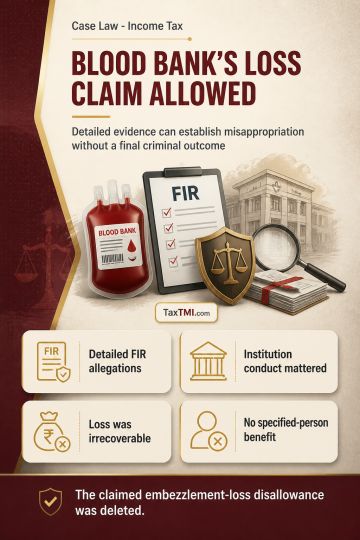
Embezzlement losses in charitable institutions remain allowable when misappropriation is established, irrecoverable, and not a specified-person benefi...
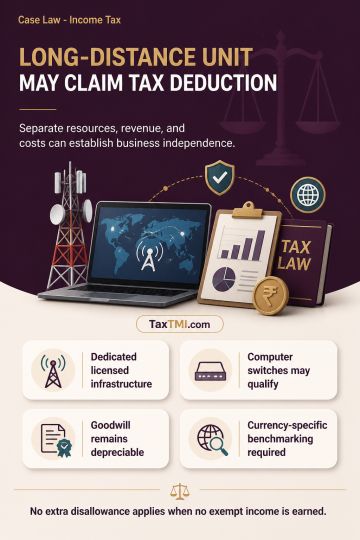
National long-distance undertaking status supports deduction where separately licensed infrastructure, resources, revenue, and expenditure establish c...
Agency reimbursement income follows contractual deposit-liability computation, while pending deposit collections do not constitute deemed-dividend loa...
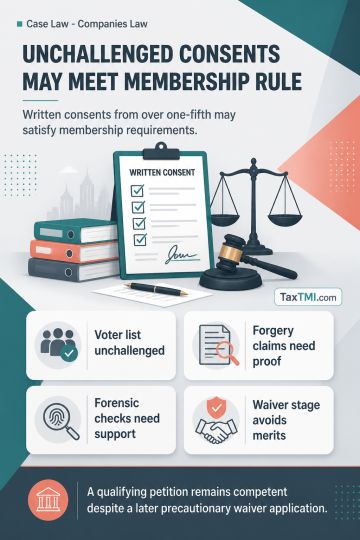
Membership-consent thresholds for oppression petitions are satisfied by unchallenged voter-list consents, while unsupported forgery claims require pro...
A case concerning the suspension of a warehousing operation, alleged breach of conditions for operating a public bonded warehouse, and imposition of redemption fine and penalty. The High Court upheld the CESTAT's findings that there was no breach of license conditions, based on the record and permissions granted by Customs authorities for unloading/storing goods under their supervision. The allegations of misinterpreting permissions were found baseless. The CESTAT correctly overlooked procedural issues not raised earlier regarding advance discharge permission and mandatory filing of Bills of Entry before vessel arrival. With no breach of license terms or confiscation of goods, the CESTAT rightly set aside penalties u/ss 117 and 112(b)(ii) of the Customs Act for alleged violations like non-reporting of time-expired bonds, storage of non-bonded goods, and lack of audit trail facilities. No substantial question of law arose, and the Appeal was dismissed.
A case concerning the suspension of a warehousing operation, alleged breach of conditions for operating a public bonded warehouse, and imposition of redemption fine and penalty. The High Court upheld the CESTAT's findings that there was no breach of license conditions, based on the record and permissions granted by Customs authorities for unloading/storing goods under their supervision. The allegations of misinterpreting permissions were found baseless. The CESTAT correctly overlooked procedural issues not raised earlier regarding advance discharge permission and mandatory filing of Bills of Entry before vessel arrival. With no breach of license terms or confiscation of goods, the CESTAT rightly set aside penalties u/ss 117 and 112(b)(ii) of the Customs Act for alleged violations like non-reporting of time-expired bonds, storage of non-bonded goods, and lack of audit trail facilities. No substantial question of law arose, and the Appeal was dismissed.
Note: It is a system-generated summary and is for quick reference only.
 TaxTMI
  TaxTMI
 of 4881