Transfer-pricing aggregation of distinct support-service and subcontract transactions was rejected, while debt-free receivables attracted no notional ...
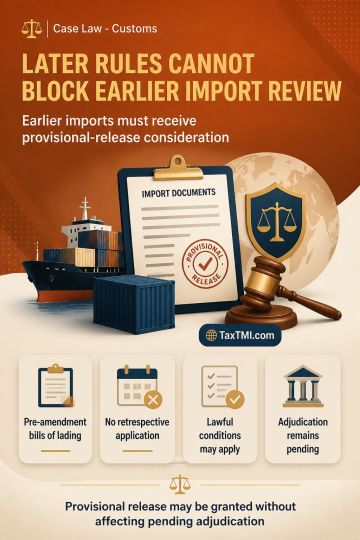
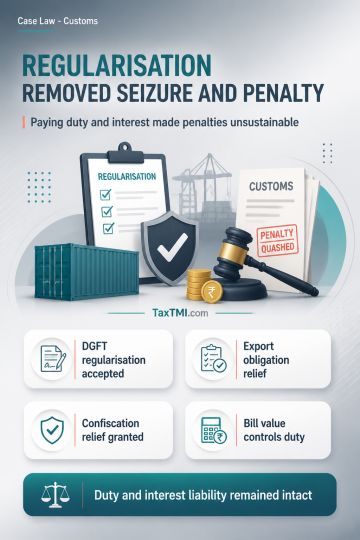
Customs exemptions cover photovoltaic assembly machinery and PVF backsheets, while fully declared cleared imports may avoid confiscation and penalties...
Specific tariff classification for LCD devices overrides treatment as electricity-meter parts, defeating differential duty, extended limitation, and p...
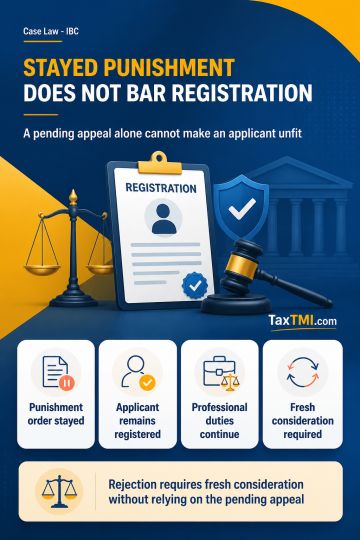
Stayed disciplinary punishment does not establish unfitness for insolvency professional registration; reconsideration must disregard mere pendency of ...
Page of 4897
Press 'Enter' after typing page number.
401 to 420 of 97923 Results
❮
❯
❯❯
0 / 200
Expand Note
Add to Folder
No Folders have been created
+
Are you sure you want to delete "My most important" ?
The judgment addresses the applicability of Section 31 of the Insolvency and Bankruptcy Code (IBC) concerning the recovery of tax dues from the successful resolution applicant who acquired the assets of the corporate debtor. The court held that once the petitioner acquired the assets through the auction process under IBC, any claims not raised earlier stand extinguished. The respondent cannot recover dues pertaining to the period prior to the petitioner's acquisition. Section 31 mandates that the approved resolution plan binds all stakeholders, including government authorities. The retrospective applicability of the 2019 amendment to Section 31, upheld by the Supreme Court, reinforces this position. The IBC aims to revive the corporate debtor, and the approved resolution plan must provide for payment of insolvency costs. Consequently, the demand notice issued by the respondent seeking pre-acquisition dues is arbitrary, violating Article 14, and the petitioner is not liable for outstanding tax dues prior to asset acquisition under IBC.
The judgment addresses the applicability of Section 31 of the Insolvency and Bankruptcy Code (IBC) concerning the recovery of tax dues from the successful resolution applicant who acquired the assets of the corporate debtor. The court held that once the petitioner acquired the assets through the auction process under IBC, any claims not raised earlier stand extinguished. The respondent cannot recover dues pertaining to the period prior to the petitioner's acquisition. Section 31 mandates that the approved resolution plan binds all stakeholders, including government authorities. The retrospective applicability of the 2019 amendment to Section 31, upheld by the Supreme Court, reinforces this position. The IBC aims to revive the corporate debtor, and the approved resolution plan must provide for payment of insolvency costs. Consequently, the demand notice issued by the respondent seeking pre-acquisition dues is arbitrary, violating Article 14, and the petitioner is not liable for outstanding tax dues prior to asset acquisition under IBC.
Note: It is a system-generated summary and is for quick reference only.
 TaxTMI
  TaxTMI
 of 4897