Loading...

⚠ ✕
❮ Top
☎ Help
☰
×

By creating an account you can:

Logo TaxTMI
Call Us / Help / Feedback✕

Contact Us At :

✉ E-mail: [email protected]

✆ Call / WhatsApp at: +91 99117 96707

For more information, Check Contact Us

FAQs :

To know Frequently Asked Questions, Check FAQs

Most Asked Video Tutorials :

For more tutorials, Check Video Tutorials

Submit Feedback/Suggestion :

Email :
Please provide your email address so we can follow up on your feedback.
Category :
Description :
Min 15 characters 0/2000
Make Most of Text Search ✕
  1. Checkout this video tutorial: How to search effectively on TaxTMI.
  2. Put words in double quotes for exact word search, eg: "income tax"
  3. Avoid noise words such as : 'and, of, the, a'
  4. Sort by Relevance to get the most relevant document.
  5. Press Enter to add multiple terms/multiple phrases, and then click on Search to Search.
  6. Text Search
  7. The system will try to fetch results that contains ALL your words.
  8. Once you add keywords, you'll see a new 'Search In' filter that makes your results even more precise.
  9. Text Search
╳
Add to...
You have not created any category. Kindly create one to bookmark this item!
✕
Create New Category
Hide
Title :
Description :
❮❮ Hide
❮ Default View
Expand ❯❯
Close ✕
🔎 Filters / Advanced Search ❯
TEXT

Press 'Enter' to add multiple search terms. Rules for Better Search

Search In
Main Text + AI Text ❯
  • Main Text
  • Main Text + AI Text
  • AI Text
Law:
---- All Laws---- ❯
  • ---- All Laws----
  • Income Tax
  • Direct Taxes
  • Benami Property
  • Central GST Laws
  • SGST - State GST Laws
  • Customs
  • FTP - Foreign Trade Policy
  • SEZ - Special Economic Zone
  • FEMA - Foreign Exchange Management
  • Companies Law
  • SEBI - Securities & Exchange Board of India
  • IBC - Insolvency and Bankruptcy
  • Law of Competition
  • PMLA - Money-Laundering
  • Indian Laws
  • Bill / Finance Bills
  • Wealth Tax
  • Service Tax
  • Central Excise
  • VAT / Sales Tax
Month:
---- All Months ---- ❯
  • ---- All Months ----
  • January
  • February
  • March
  • April
  • May
  • June
  • July
  • August
  • September
  • October
  • November
  • December
Year:
---- All Years ---- ❯
  • ---- All Years ----
  • 2026
  • 2025
  • 2024
  • 2023
  • 2022
  • 2021
  • 2020
  • 2019
  • 2018
  • 2017
  • 2016
  • 2015
  • 2014
  • 2013
  • 2012
  • 2011
Sort By: ?
In Sort By 'Default', exact matches for text search are shown at the top, followed by the remaining results in their regular order.
Relevance Default Date
☰   Show Results ❯
    Equivalent-value attachment under the PMLA may extend to property despite unproven lawful sources and pre-crime acquisition.
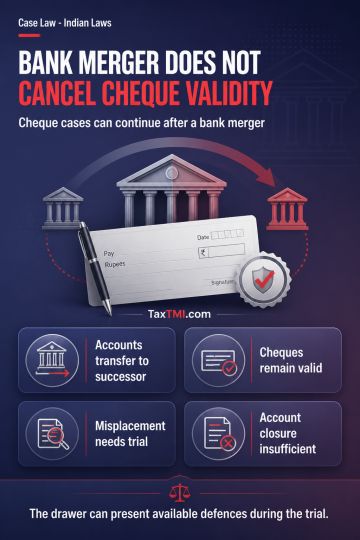
    Cheque validity after bank merger: merger does not invalidate the account, so dishonour proceedings continue despite account-closure claims.
    PMLA attachments cannot rely on later FIRs absent from original proceedings, requiring fresh action after investigation.
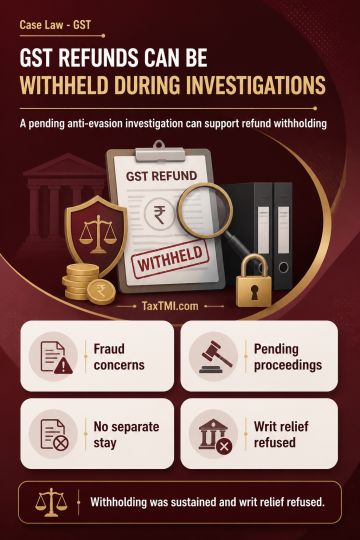
    GST refund withholding under Section 54(11) remains available during anti-evasion proceedings without a separate judicial stay.
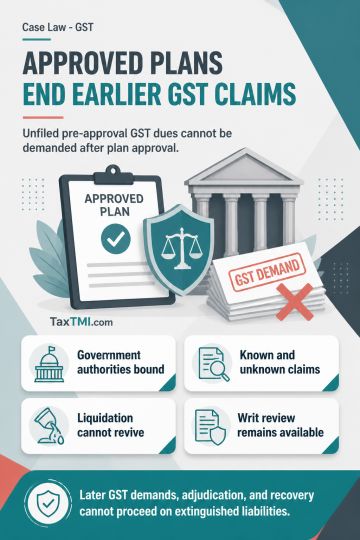
    Resolution-plan extinguishment bars unfiled GST dues and permits writ review despite a statutory appellate remedy.
    Section 74 fraud allegations must be particularised; an ITC mismatch alone cannot sustain a notice for wrongful credit.
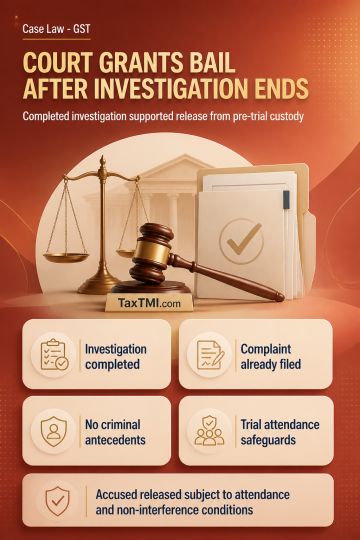
    Bail in CGST prosecution: completed investigation and documentary evidence supported release subject to safeguards against trial interference.
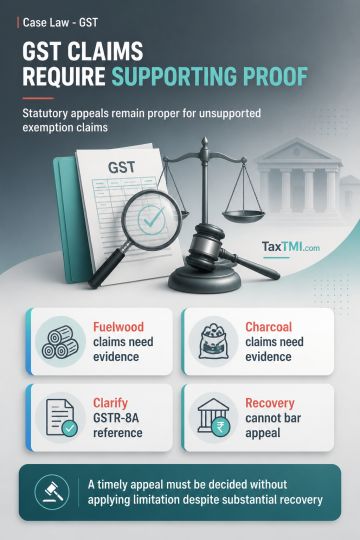
    Statutory GST appeals remain the appropriate remedy where exemption claims lack substantiation during adjudication proceedings.
    Ex parte GST assessment permits fresh adjudication subject to reply and disputed-tax pre-deposit despite expired appellate limitation.
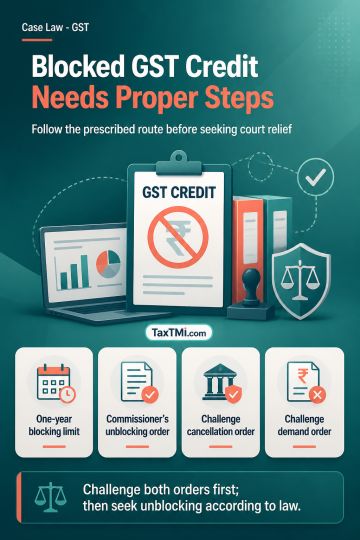
    Input tax credit blocking requires use of the prescribed unblocking remedy before writ relief, especially after demand proceedings.
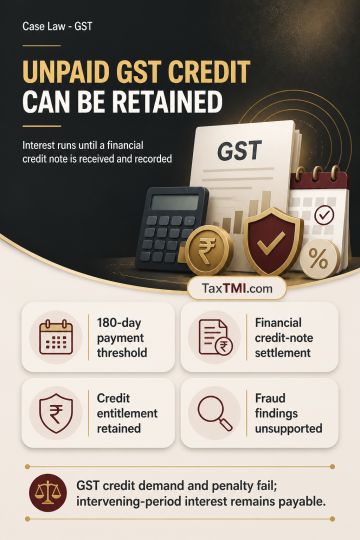
    Input tax credit on unpaid consideration attracts interest despite later financial credit-note settlement and retained credit entitlement.
    Blocked input tax credit for resort construction remains unavailable; interest follows actual utilisation, while delayed payment attracts statutory pe...
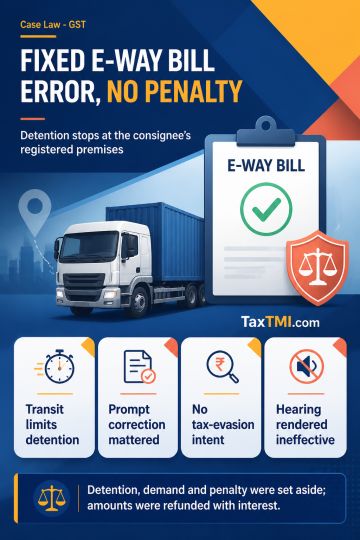
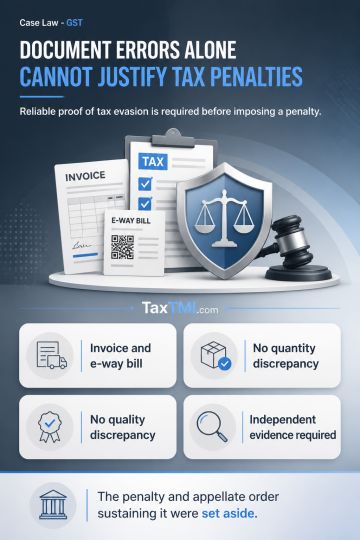
    Detention authority ends when transit ends; curable e-way bill omissions cannot justify penalties without tax-evasion intent.
    Revised anti-profiteering methodology permits project-level ITC recalculation, requiring homebuyer refunds with interest while excluding retrospective...
    Technical transport-document discrepancies cannot justify tax penalties without reliable evidence of deliberate contravention and intent to evade tax.
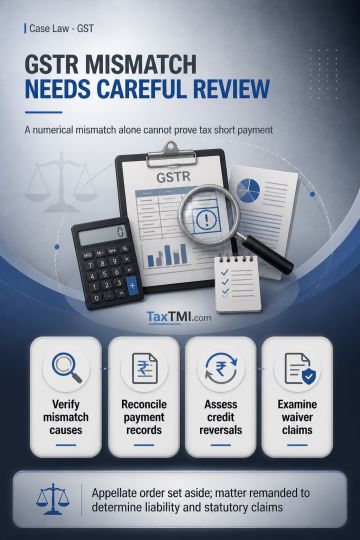
    GSTR return mismatches require liability verification, with reasoned reconsideration where tax, interest, penalty, and credit issues remain unresolved...
    Expired e-way bills alone do not establish tax-evasion intent, requiring independent evidence before GST penalties may be imposed.
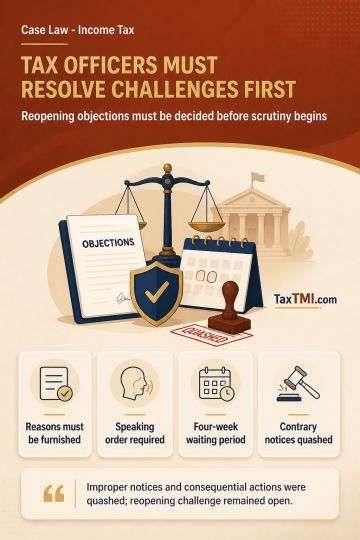
    Reassessment objections must be decided before scrutiny, and assessment notices cannot issue during the four-week challenge period.
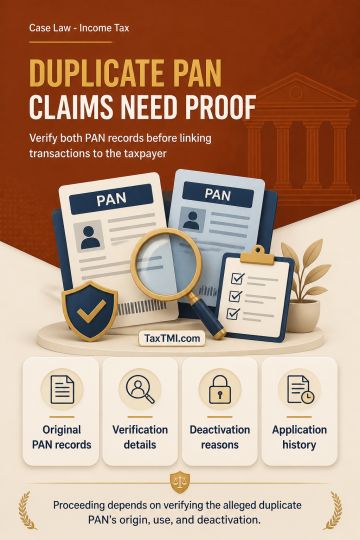
    Duplicate PAN allocation requires record verification and deactivation reasons before assessment-related transactions can be attributed to an assessee...
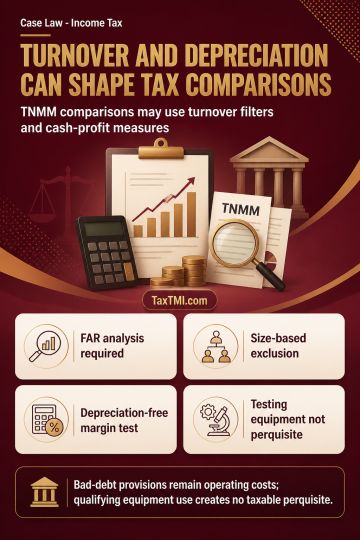
    Transfer-pricing comparability under TNMM permits turnover filtering and depreciation-adjusted cash profit indicators where functional differences mat...
❮
❯
❯❯
Maximize Maximize Maximize
0 / 200
Expand Note
Add to Folder

No Folders have been created

+

Are you sure you want to delete "My most important" ?

NOTE:

Highlights
Showing Results for :
Reset Filters
Results Found:
Show All Summaries Hide All Summaries

Highlights

Back

All Highlights

Showing Results for :
Reset Filters
No Records Found

Highlights

Back

All Highlights

The NCLAT held that the NCLT erred in unilaterally changing the...

NCLAT Restores Original Appointed Date for Scheme, Citing NCLT's Error; Highlights Financial Implications of Date Change.

Contents
Summary
Note

Note

-

Bookmark

Print

Print

Companies Law October 21, 2024 Case Laws AT
The NCLAT held that the NCLT erred in unilaterally changing the appointed date from 1.4.2019 to 1.4.2020 while admitting the scheme of arrangement. The application was filed on 1.12.2019, and as per the circular, the appointed date within a year of filing did not require any justification. Even if the appointed date was ante-dated beyond a year, mere justification that it was not against public interest was sufficient. Despite the Covid-19 pandemic delay, the appointed date should have remained 1.4.2019. The NCLT's role is supervisory, and if statutory compliance and no violation of law or public policy is found, it cannot sit in appeal over the commercial wisdom of the parties approving the scheme. Altering the appointed date would have serious financial implications. The NCLAT allowed the appeal, restoring the appointed date as 1.4.2019.

Topics

Acts Income Tax