Human-probability test defeats political donation deductions where banking records mask accommodation-entry fund layering rather than genuine contribu...
Electronic evidence and search statements in tax assessments require authenticity review and corroboration, while procedural manuals lack statutory fo...
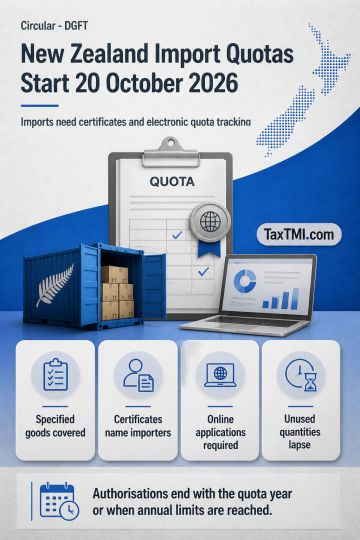
Tariff rate quota authorisations govern preferential imports of specified New Zealand goods through export certification and electronic customs debiti...
Electronic Continuity Bond Registration replaces manual container permissions, with quarterly reporting and re-export monitoring for duty-free contain...
Refund for excess customs duty paid by filing an application for amendment of the bill of entry u/ss 149 or 154 of the Customs Act, 1962. It was held that a refund u/s 27 can only be granted if the assessment is modified u/s 128 or other relevant provisions. Sections 149 and 154 allow for amendment of documents or correction of clerical errors, respectively. If review is limited to Section 128, other provisions like Sections 149, 154, and 28 (for recovering short-paid duty) would become redundant. Even for self-assessed bills of entry, importers can seek amendment u/s 149. However, in this case, no request was made initially for rectification or amendment u/s 149 or 154. The adjudication authority rightly rejected the refund claim based on the Supreme Court's judgment in ITC Ltd. The appellate authority erred in not considering the proper officer's power to allow corrections u/s 149, as no other objections were raised regarding amending the bill of entry to avail the benefit of the correct notification.
Refund for excess customs duty paid by filing an application for amendment of the bill of entry u/ss 149 or 154 of the Customs Act, 1962. It was held that a refund u/s 27 can only be granted if the assessment is modified u/s 128 or other relevant provisions. Sections 149 and 154 allow for amendment of documents or correction of clerical errors, respectively. If review is limited to Section 128, other provisions like Sections 149, 154, and 28 (for recovering short-paid duty) would become redundant. Even for self-assessed bills of entry, importers can seek amendment u/s 149. However, in this case, no request was made initially for rectification or amendment u/s 149 or 154. The adjudication authority rightly rejected the refund claim based on the Supreme Court's judgment in ITC Ltd. The appellate authority erred in not considering the proper officer's power to allow corrections u/s 149, as no other objections were raised regarding amending the bill of entry to avail the benefit of the correct notification.
Note: It is a system-generated summary and is for quick reference only.
 TaxTMI
 TaxTMI

 of 4921