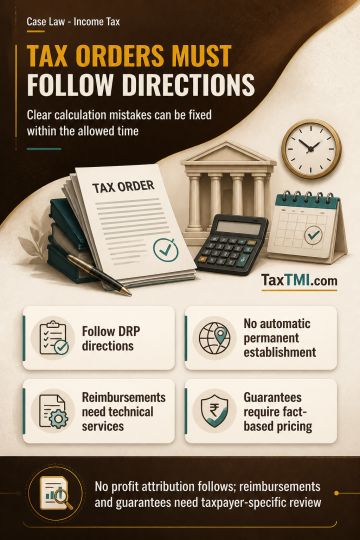
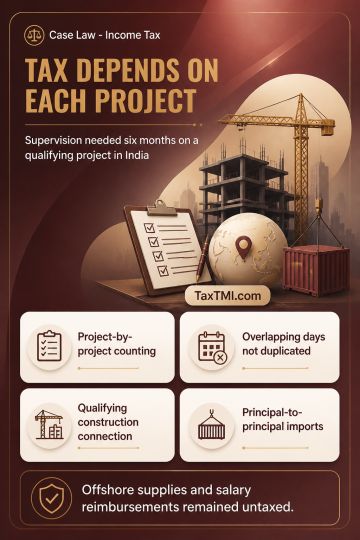
Supervisory permanent establishment requires project-wise duration and qualifying construction nexus; offshore supplies and salary reimbursements rema...
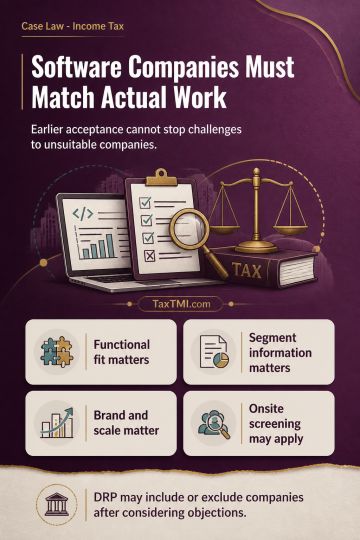
Transfer-pricing comparability permits fresh objections and filters where software service comparables are functionally unsuitable for arm's-length pr...
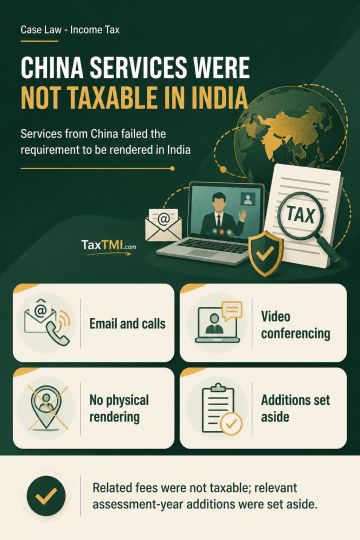
Territorial rendering requirement excludes China-based management and consultancy services from fees for technical services under the India-China DTAA...
Page of 4888
Press 'Enter' after typing page number.
281 to 300 of 97755 Results
❮
❯
❯❯
0 / 200
Expand Note
Add to Folder
No Folders have been created
+
Are you sure you want to delete "My most important" ?
The Negotiable Instruments Act, 1881 was enacted to define and amend laws relating to promissory notes, bills of exchange, and cheques. Section 138, introduced through the Banking, Public Financial Institutions and Negotiable Instruments Laws (Amendment) Act, 1988, provides penalties for dishonor of cheques due to insufficient funds. Subsequent amendments aimed to expedite cases through summary trials and make offenses compoundable. The Supreme Court highlighted the objective of instilling faith in banking operations and preventing dishonesty in drawing cheques without sufficient funds. The Bengal Money Lenders Act, 1940 and Chapter XVII of the Negotiable Instruments Act operate independently with distinct objectives. There is no conflict between provisions, and civil remedies for unlicensed money lenders are not barred by criminal penalties u/s 138. The High Court dismissed the revision application, finding no merit in claims of abuse of process.
The Negotiable Instruments Act, 1881 was enacted to define and amend laws relating to promissory notes, bills of exchange, and cheques. Section 138, introduced through the Banking, Public Financial Institutions and Negotiable Instruments Laws (Amendment) Act, 1988, provides penalties for dishonor of cheques due to insufficient funds. Subsequent amendments aimed to expedite cases through summary trials and make offenses compoundable. The Supreme Court highlighted the objective of instilling faith in banking operations and preventing dishonesty in drawing cheques without sufficient funds. The Bengal Money Lenders Act, 1940 and Chapter XVII of the Negotiable Instruments Act operate independently with distinct objectives. There is no conflict between provisions, and civil remedies for unlicensed money lenders are not barred by criminal penalties u/s 138. The High Court dismissed the revision application, finding no merit in claims of abuse of process.
Note: It is a system-generated summary and is for quick reference only.
 TaxTMI
  TaxTMI
 of 4888