Mandatory textile export qualifiers distinguish flame-retardant fabrics from other listed fabrics for automated identification under the textiles ince...
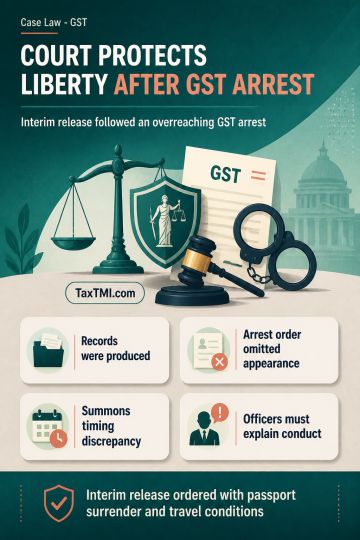
Personal liberty safeguards restrict arrest after court-directed GST appearance, requiring interim release where authorities overreach pending proceed...
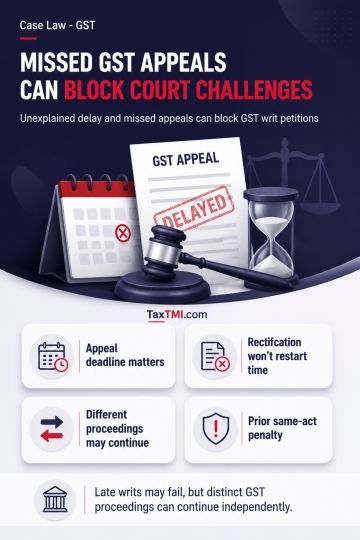
Alternative statutory remedy and delay bar GST writ challenges despite pending rectification, while distinct subject matter permits parallel proceedin...
The NCLAT considered the applicability of time limitation for filing an appeal and whether there was sufficient cause for condonation of delay. It held that when an order is not pronounced in open court, the limitation period for filing an appeal does not commence, as per the Supreme Court's judgment in Sanjay Pandurang Kalate. Although the appellant claimed the order was not uploaded until 20.02.2024, the liquidator had communicated the order to the appellant on 25.01.2024. Therefore, the appellant could not claim that the limitation period would not begin at least from 25.01.2024. The expression "sufficient cause" is elastic, allowing courts to apply the law meaningfully to serve the ends of justice. The Supreme Court in Sheo Raj Singh vs. Union of India held that condonation of delay is a discretionary power, and its exercise depends on the sufficiency of the cause shown and the acceptability of the explanation, regardless of the length of delay. In the present case, no date of uploading was brought on record, so the limitation period could not be pegged to the date of uploading. However, since the appeal was filed on 02.03.2024, within 45 days from 25.01.2024 when the order was communicated, the NCLAT found sufficient cause to condone the delay.
The NCLAT considered the applicability of time limitation for filing an appeal and whether there was sufficient cause for condonation of delay. It held that when an order is not pronounced in open court, the limitation period for filing an appeal does not commence, as per the Supreme Court's judgment in Sanjay Pandurang Kalate. Although the appellant claimed the order was not uploaded until 20.02.2024, the liquidator had communicated the order to the appellant on 25.01.2024. Therefore, the appellant could not claim that the limitation period would not begin at least from 25.01.2024. The expression "sufficient cause" is elastic, allowing courts to apply the law meaningfully to serve the ends of justice. The Supreme Court in Sheo Raj Singh vs. Union of India held that condonation of delay is a discretionary power, and its exercise depends on the sufficiency of the cause shown and the acceptability of the explanation, regardless of the length of delay. In the present case, no date of uploading was brought on record, so the limitation period could not be pegged to the date of uploading. However, since the appeal was filed on 02.03.2024, within 45 days from 25.01.2024 when the order was communicated, the NCLAT found sufficient cause to condone the delay.
Note: It is a system-generated summary and is for quick reference only.
 TaxTMI
  TaxTMI
 of 4881