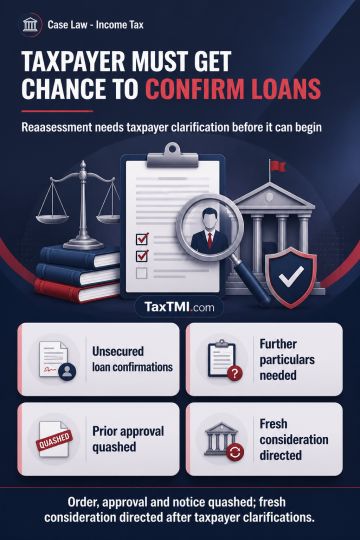
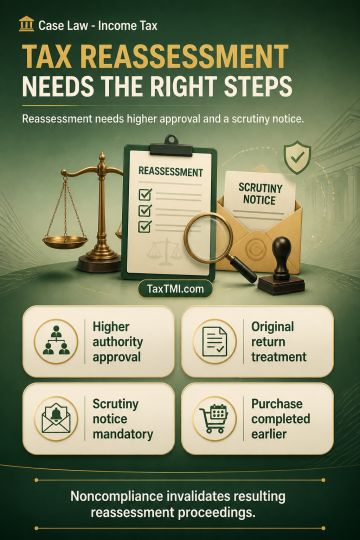
Opportunity to furnish unsecured-loan confirmations is required before reassessment initiation; proceedings require fresh consideration after taxpayer...
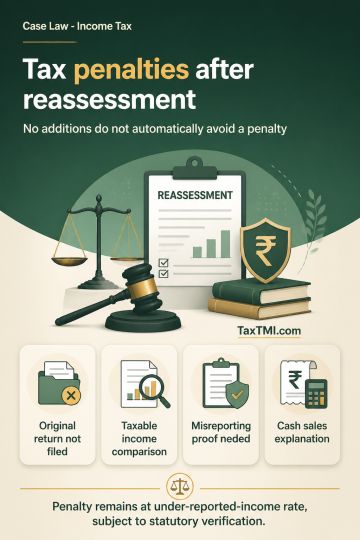
Under-reporting on a first reassessment return attracts penalty, while enhanced misreporting penalty requires proof of a statutory misreporting catego...
The case pertains to the taxability of a reserve arising from an amalgamation u/s 28(iv) and Section 56(2)(x)(c) of the Income Tax Act. The key points are: The appointed date for amalgamation was 01.04.2017, making Section 56(2)(viia) inapplicable. The assessee received assets worth Rs. 149.29 crore without consideration due to the amalgamation. The Assessing Officer sought to tax this amount u/s 28(iv) as a benefit/perquisite arising from business. However, the prerequisites for Section 28(iv) were not met as there was no benefit/perquisite, it did not arise from the assessee's business, and the receipt was capital in nature. The amalgamation reserve was created for accounting purposes and did not result from business activities. The CIT(A) correctly held that the capital reserve cannot be treated as income u/s 28(iv). The ITAT upheld the CIT(A)'s order, deciding against the revenue authorities.
The case pertains to the taxability of a reserve arising from an amalgamation u/s 28(iv) and Section 56(2)(x)(c) of the Income Tax Act. The key points are: The appointed date for amalgamation was 01.04.2017, making Section 56(2)(viia) inapplicable. The assessee received assets worth Rs. 149.29 crore without consideration due to the amalgamation. The Assessing Officer sought to tax this amount u/s 28(iv) as a benefit/perquisite arising from business. However, the prerequisites for Section 28(iv) were not met as there was no benefit/perquisite, it did not arise from the assessee's business, and the receipt was capital in nature. The amalgamation reserve was created for accounting purposes and did not result from business activities. The CIT(A) correctly held that the capital reserve cannot be treated as income u/s 28(iv). The ITAT upheld the CIT(A)'s order, deciding against the revenue authorities.
Note: It is a system-generated summary and is for quick reference only.
 TaxTMI
 TaxTMI

 of 4915