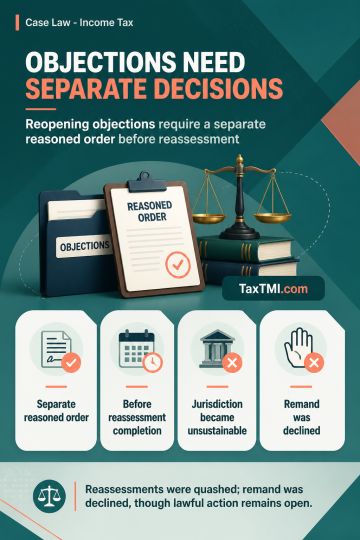
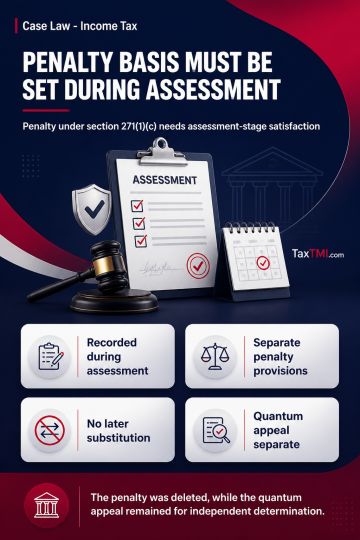
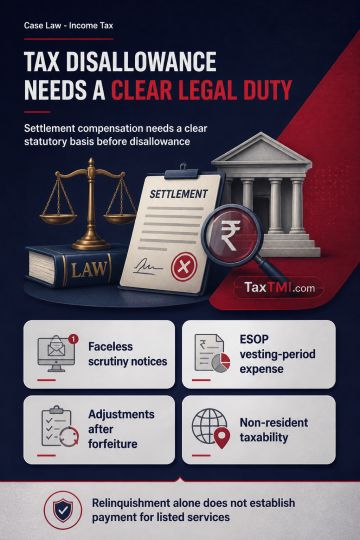
Separate speaking orders on reopening objections are mandatory; deciding them within reassessment invalidates jurisdiction and precludes revival of st...
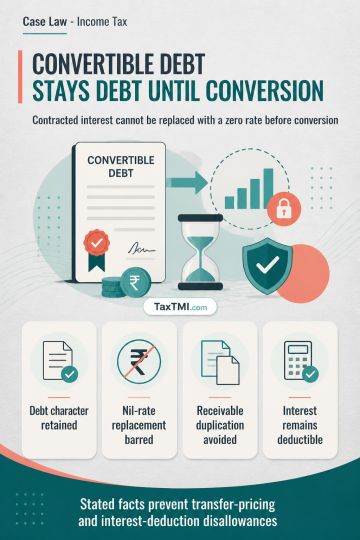
Compulsorily convertible debentures remain debt before conversion, preventing transfer-pricing and interest-deduction disallowances on the stated fact...
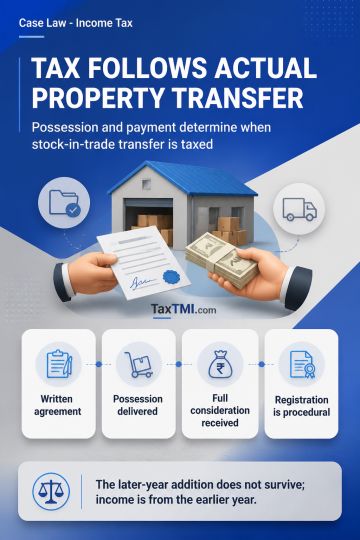
Stock-in-trade transfer taxability follows possession and consideration, not later conveyance registration, limiting deemed-value provisions to the ac...
The High Court held that the revenue authorities committed grave illegality by not granting pre-decisional hearing to the appellants before blocking their Electronic Credit Ledger u/r 86A of CGST Rules, violating principles of natural justice. The Court observed that although Rule 86A doesn't expressly provide for pre-decisional hearing, it has to be read into the provision when serious civil consequences arise. The authorities passed orders solely based on communication from another officer without independently analyzing if Input Tax Credit was on account of fake invoices, which is impermissible. The orders lacked valid material constituting 'reasons to believe' and were passed on borrowed satisfaction, rendering them bald, vague, and unreasoned. Quashing the impugned orders, the Court allowed the appeals, holding that the mandatory requirements for invoking Rule 86A were not fulfilled by the revenue authorities.
The High Court held that the revenue authorities committed grave illegality by not granting pre-decisional hearing to the appellants before blocking their Electronic Credit Ledger u/r 86A of CGST Rules, violating principles of natural justice. The Court observed that although Rule 86A doesn't expressly provide for pre-decisional hearing, it has to be read into the provision when serious civil consequences arise. The authorities passed orders solely based on communication from another officer without independently analyzing if Input Tax Credit was on account of fake invoices, which is impermissible. The orders lacked valid material constituting 'reasons to believe' and were passed on borrowed satisfaction, rendering them bald, vague, and unreasoned. Quashing the impugned orders, the Court allowed the appeals, holding that the mandatory requirements for invoking Rule 86A were not fulfilled by the revenue authorities.
Note: It is a system-generated summary and is for quick reference only.
 TaxTMI
  TaxTMI
 of 4894