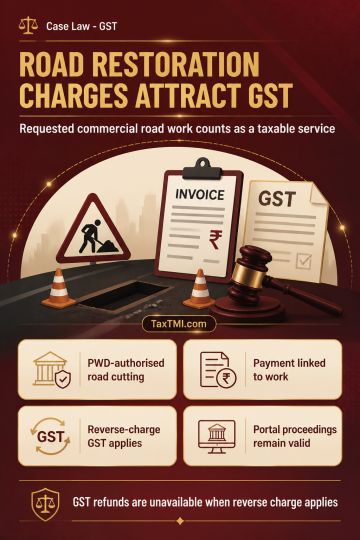
Road restoration charges constitute taxable services when requested for commercial pipeline activity, requiring reverse-charge GST from the business r...
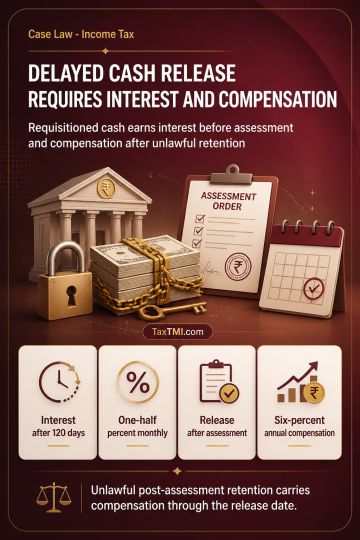
Interest on delayed release of requisitioned cash includes statutory pre-assessment interest and restitutionary compensation for unlawful post-assessm...
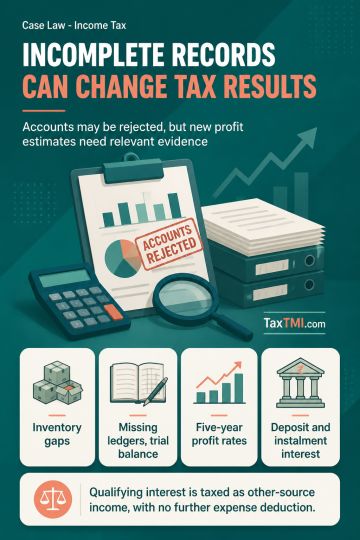
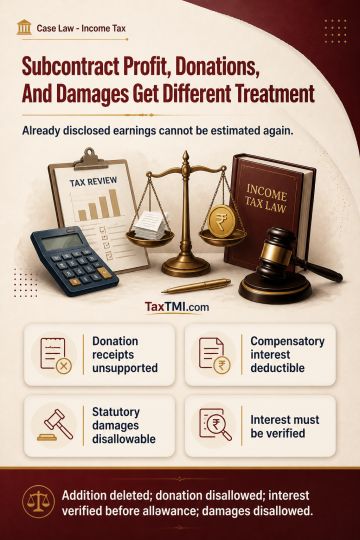
Incomplete inventory records justify rejecting accounts, while profit estimation requires relevant comparable material and interest falls under other ...
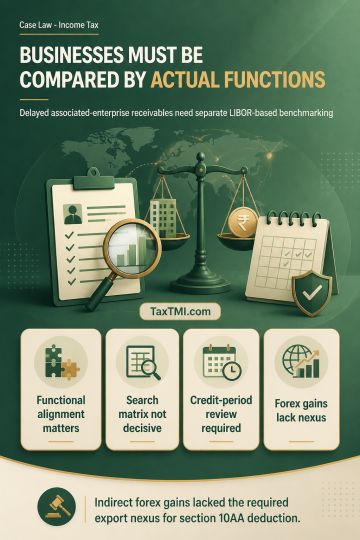
Transfer-pricing comparability requires functional alignment; delayed associated-enterprise receivables need separate LIBOR-based benchmarking, while ...
Extended reassessment limitation in search cases requires asset-linked escaped income, invalidating additions based only on unexplained money or expen...
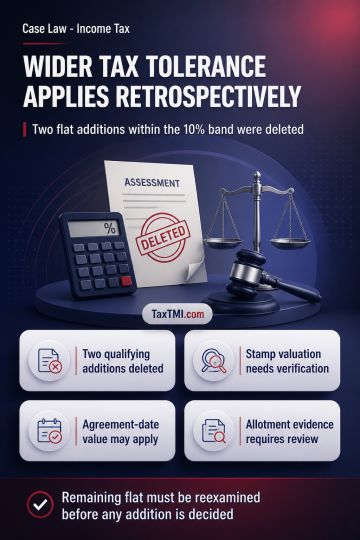
Enhanced tolerance band under section 43CA applies retrospectively, deleting qualifying deemed-sale additions while disputed stamp valuation requires ...
This is a summary of a case dealing with the determination of fair market value (FMV) for computing long-term capital gains (LTCG) and allowing deductions for cost of improvements. The key points are: the Tax Appellate Tribunal upheld the Assessing Officer's adoption of FMV as per the District Valuation Officer's report, rejecting the assessee's argument for using the 'reverse indexation method'. However, the Tribunal allowed the deduction for cost of improvement incurred in FY 1991-92, which was erroneously omitted by lower authorities. It also directed the Assessing Officer to rectify a mathematical mistake in computing the total indexed cost of improvement. The Tribunal's decision partially favored the assessee regarding the allowable deductions.
This is a summary of a case dealing with the determination of fair market value (FMV) for computing long-term capital gains (LTCG) and allowing deductions for cost of improvements. The key points are: the Tax Appellate Tribunal upheld the Assessing Officer's adoption of FMV as per the District Valuation Officer's report, rejecting the assessee's argument for using the 'reverse indexation method'. However, the Tribunal allowed the deduction for cost of improvement incurred in FY 1991-92, which was erroneously omitted by lower authorities. It also directed the Assessing Officer to rectify a mathematical mistake in computing the total indexed cost of improvement. The Tribunal's decision partially favored the assessee regarding the allowable deductions.
Note: It is a system-generated summary and is for quick reference only.
 TaxTMI
 TaxTMI

 of 4920