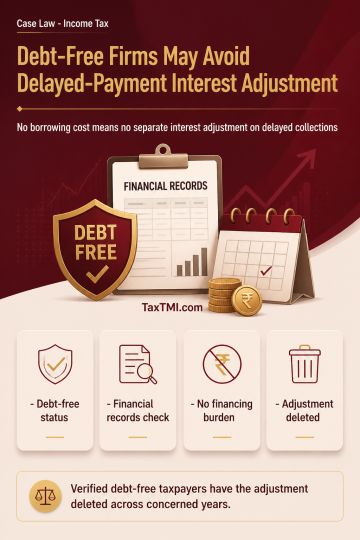
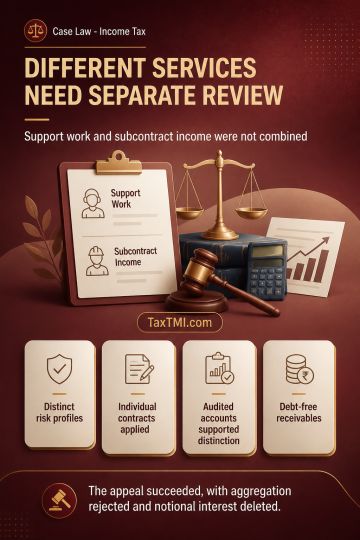
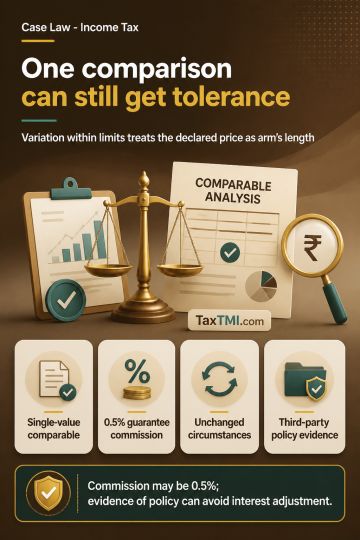
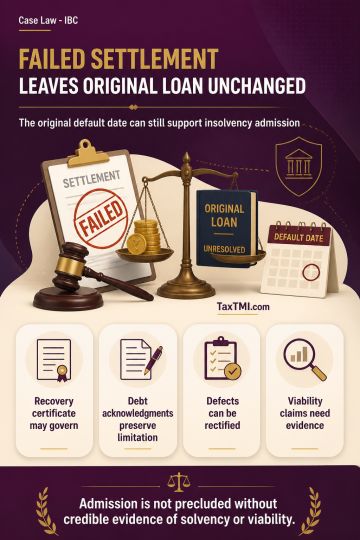
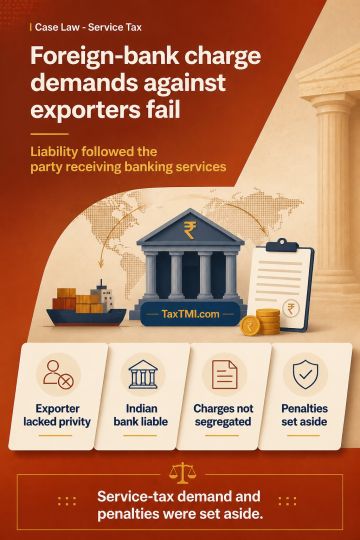
Transfer-pricing aggregation of distinct support-service and subcontract transactions was rejected, while debt-free receivables attracted no notional ...
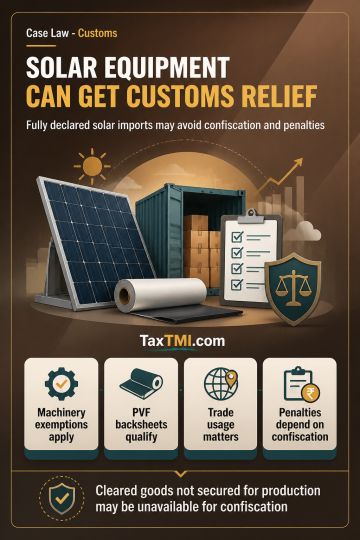
Customs exemptions cover photovoltaic assembly machinery and PVF backsheets, while fully declared cleared imports may avoid confiscation and penalties...
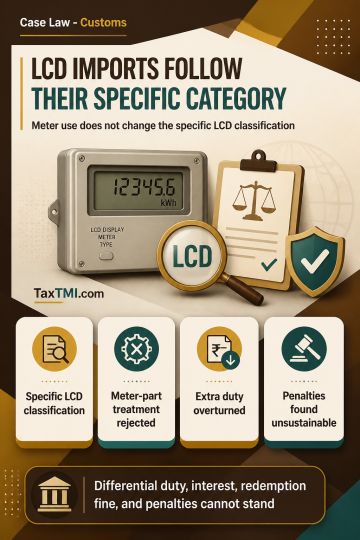
Specific tariff classification for LCD devices overrides treatment as electricity-meter parts, defeating differential duty, extended limitation, and p...
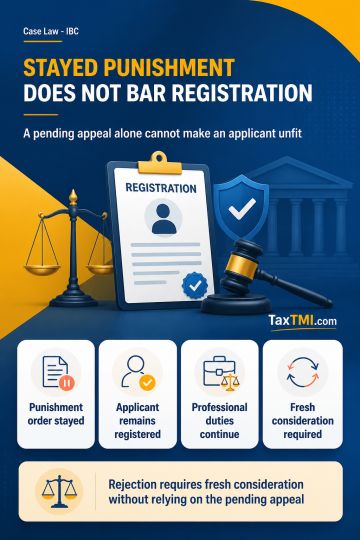
Stayed disciplinary punishment does not establish unfitness for insolvency professional registration; reconsideration must disregard mere pendency of ...
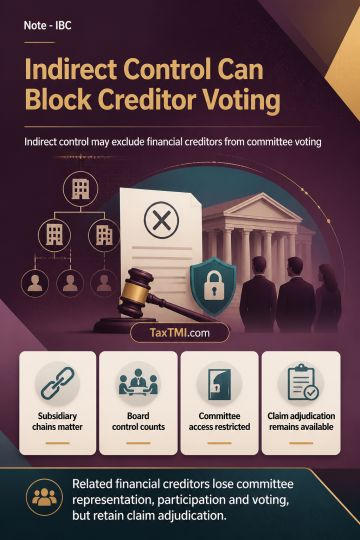
Indirect corporate control can create related-party status, excluding financial creditors from Committee of Creditors representation, participation an...
Page of 4881
Press 'Enter' after typing page number.
101 to 120 of 97618 Results
❮
❯
❯❯
0 / 200
Expand Note
Add to Folder
No Folders have been created
+
Are you sure you want to delete "My most important" ?
Recovery of service tax from the appellant, where the turnover reported in the balance sheet exceeded the amount reported in the belatedly filed Form ST-3 returns. The key points are: Section 66B imposed tax on services, except those listed in the negative list u/s 66D. Clause (p) of Section 66D excluded transportation services by road for goods, except when rendered by a Goods Transport Agency (GTA) or courier agency. The revenue treated the services as taxable transportation by a GTA, but failed to provide consignment notes issued by the appellant as required by the GTA definition. Without such evidence, the turnover cannot be attributed to GTA services. The ST-3 returns, filed after inquiry initiation without late fees, lack evidentiary value and cannot ascertain tax liability. Being defective, the returns and facts therein are non est for investigation and adjudication. The CENVAT credit demand, rooted in the invalid service tax demand, is also unsustainable. The extended period of limitation was incorrectly invoked as there was no suppression of facts. The entire demand, based on the extended period, is invalid and time-barred. The pre-show cause notice consultation requirement was not met, but as the show cause notice itself failed on various grounds, this aspect became infructuous. Ultimately.
Recovery of service tax from the appellant, where the turnover reported in the balance sheet exceeded the amount reported in the belatedly filed Form ST-3 returns. The key points are: Section 66B imposed tax on services, except those listed in the negative list u/s 66D. Clause (p) of Section 66D excluded transportation services by road for goods, except when rendered by a Goods Transport Agency (GTA) or courier agency. The revenue treated the services as taxable transportation by a GTA, but failed to provide consignment notes issued by the appellant as required by the GTA definition. Without such evidence, the turnover cannot be attributed to GTA services. The ST-3 returns, filed after inquiry initiation without late fees, lack evidentiary value and cannot ascertain tax liability. Being defective, the returns and facts therein are non est for investigation and adjudication. The CENVAT credit demand, rooted in the invalid service tax demand, is also unsustainable. The extended period of limitation was incorrectly invoked as there was no suppression of facts. The entire demand, based on the extended period, is invalid and time-barred. The pre-show cause notice consultation requirement was not met, but as the show cause notice itself failed on various grounds, this aspect became infructuous. Ultimately.
Note: It is a system-generated summary and is for quick reference only.
 TaxTMI
  TaxTMI
 of 4881