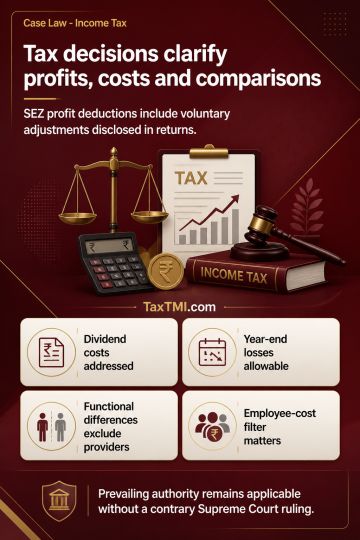
SEZ-unit profit deduction covers voluntary transfer-pricing adjustments, while exempt-income costs, foreign-exchange loss and ITeS comparables are exa...
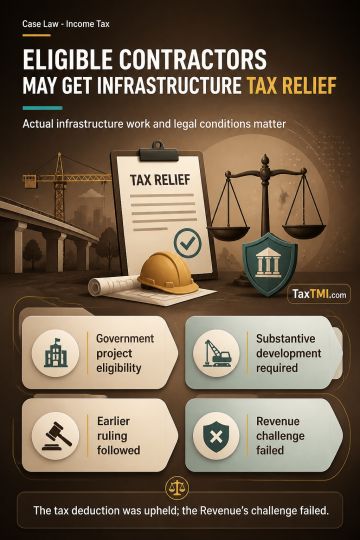
Infrastructure-development deduction remains available to EPC contractors when substantive statutory conditions outweigh contractor labels in agreemen...
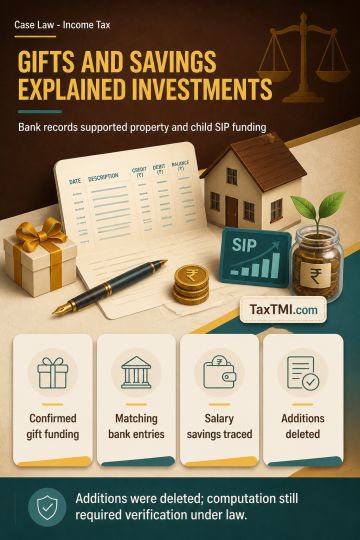
Explained Investment Sources: documented gifts and traceable salary savings supported deletion of additions for property and mutual-fund SIP investmen...
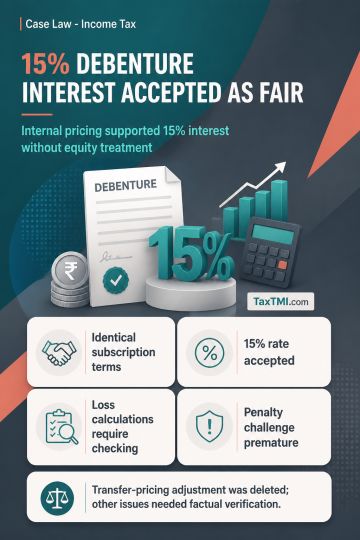
Internal comparable pricing supports arm's-length interest on compulsorily convertible debentures, preventing their recharacterisation as equity for t...
Recovery of service tax from the appellant, where the turnover reported in the balance sheet exceeded the amount reported in the belatedly filed Form ST-3 returns. The key points are: Section 66B imposed tax on services, except those listed in the negative list u/s 66D. Clause (p) of Section 66D excluded transportation services by road for goods, except when rendered by a Goods Transport Agency (GTA) or courier agency. The revenue treated the services as taxable transportation by a GTA, but failed to provide consignment notes issued by the appellant as required by the GTA definition. Without such evidence, the turnover cannot be attributed to GTA services. The ST-3 returns, filed after inquiry initiation without late fees, lack evidentiary value and cannot ascertain tax liability. Being defective, the returns and facts therein are non est for investigation and adjudication. The CENVAT credit demand, rooted in the invalid service tax demand, is also unsustainable. The extended period of limitation was incorrectly invoked as there was no suppression of facts. The entire demand, based on the extended period, is invalid and time-barred. The pre-show cause notice consultation requirement was not met, but as the show cause notice itself failed on various grounds, this aspect became infructuous. Ultimately.
Recovery of service tax from the appellant, where the turnover reported in the balance sheet exceeded the amount reported in the belatedly filed Form ST-3 returns. The key points are: Section 66B imposed tax on services, except those listed in the negative list u/s 66D. Clause (p) of Section 66D excluded transportation services by road for goods, except when rendered by a Goods Transport Agency (GTA) or courier agency. The revenue treated the services as taxable transportation by a GTA, but failed to provide consignment notes issued by the appellant as required by the GTA definition. Without such evidence, the turnover cannot be attributed to GTA services. The ST-3 returns, filed after inquiry initiation without late fees, lack evidentiary value and cannot ascertain tax liability. Being defective, the returns and facts therein are non est for investigation and adjudication. The CENVAT credit demand, rooted in the invalid service tax demand, is also unsustainable. The extended period of limitation was incorrectly invoked as there was no suppression of facts. The entire demand, based on the extended period, is invalid and time-barred. The pre-show cause notice consultation requirement was not met, but as the show cause notice itself failed on various grounds, this aspect became infructuous. Ultimately.
Note: It is a system-generated summary and is for quick reference only.
 TaxTMI
  TaxTMI
 of 4897