Customs exemptions cover photovoltaic assembly machinery and PVF backsheets, while fully declared cleared imports may avoid confiscation and penalties...
Specific tariff classification for LCD devices overrides treatment as electricity-meter parts, defeating differential duty, extended limitation, and p...
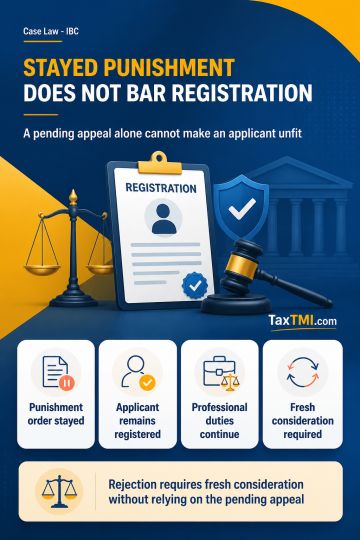
Stayed disciplinary punishment does not establish unfitness for insolvency professional registration; reconsideration must disregard mere pendency of ...
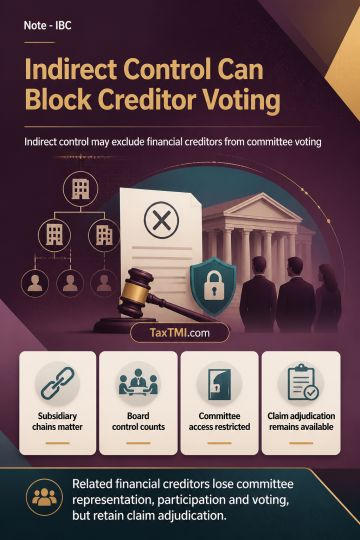
Indirect corporate control can create related-party status, excluding financial creditors from Committee of Creditors representation, participation an...
Scientific research association approval requires continuing SIRO status, annual donation reporting, and donor certificates for the approved foundatio...
Scientific research institution approval is conditional on SIRO recognition, annual donation reporting, donor certification, and prescribed compliance...
This case deals with the extinguishment of demands due to the non-filing of claims by the revenue during the Corporate Insolvency Resolution Process (CIRP) under the Insolvency and Bankruptcy Code (IBC). The key points are: 1) Ruchi Soya underwent CIRP, and Patanjali continued its business after the resolution plan was approved. 2) The revenue did not file any claim before the Interim Resolution Professional (IRP) during CIRP. 3) As the demand was not part of the resolution plan, it stood extinguished and cannot be continued per Section 31 and 32A of the IBC. 4) The Gujarat High Court held that if the revenue does not lodge a claim as an Operational Creditor before the Resolution Professional, any liability extinguishes upon the implementation of the Resolution Plan. 5) The resolution plan aims to continue the company's business as a going concern under the IBC's scheme. 6) Rule 22 of the 1982 Rules, which deals with abatement, is not applicable when a resolution plan is approved under the IBC. 7) The substantial question of law was answered in favor of the assessee against the revenue.
This case deals with the extinguishment of demands due to the non-filing of claims by the revenue during the Corporate Insolvency Resolution Process (CIRP) under the Insolvency and Bankruptcy Code (IBC). The key points are: 1) Ruchi Soya underwent CIRP, and Patanjali continued its business after the resolution plan was approved. 2) The revenue did not file any claim before the Interim Resolution Professional (IRP) during CIRP. 3) As the demand was not part of the resolution plan, it stood extinguished and cannot be continued per Section 31 and 32A of the IBC. 4) The Gujarat High Court held that if the revenue does not lodge a claim as an Operational Creditor before the Resolution Professional, any liability extinguishes upon the implementation of the Resolution Plan. 5) The resolution plan aims to continue the company's business as a going concern under the IBC's scheme. 6) Rule 22 of the 1982 Rules, which deals with abatement, is not applicable when a resolution plan is approved under the IBC. 7) The substantial question of law was answered in favor of the assessee against the revenue.
Note: It is a system-generated summary and is for quick reference only.
 TaxTMI
  TaxTMI
 of 4879