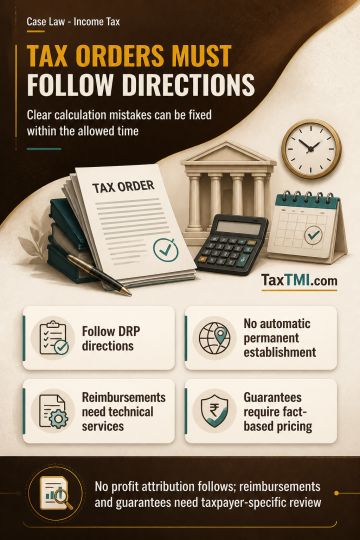
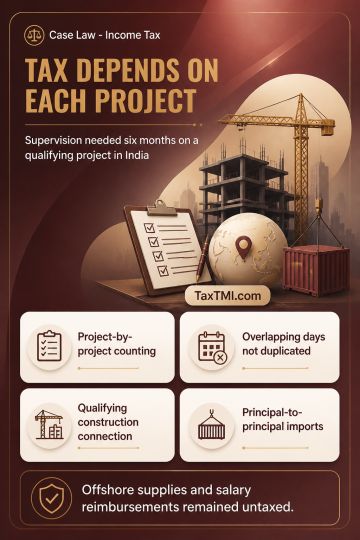
Supervisory permanent establishment requires project-wise duration and qualifying construction nexus; offshore supplies and salary reimbursements rema...
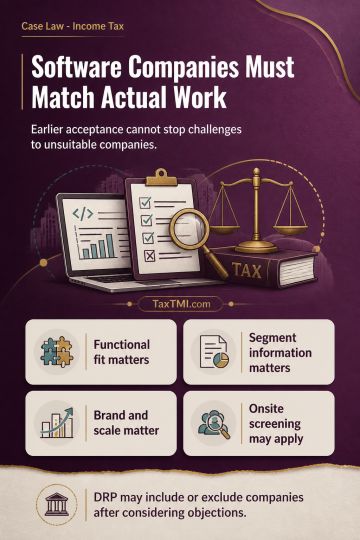
Transfer-pricing comparability permits fresh objections and filters where software service comparables are functionally unsuitable for arm's-length pr...
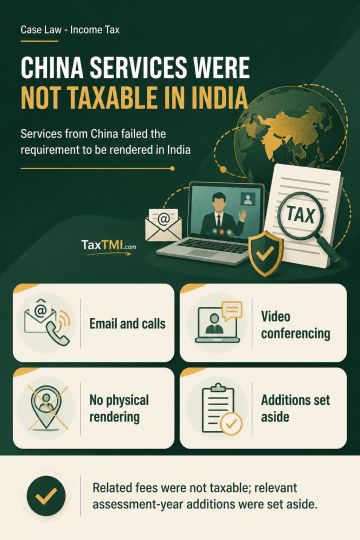
Territorial rendering requirement excludes China-based management and consultancy services from fees for technical services under the India-China DTAA...
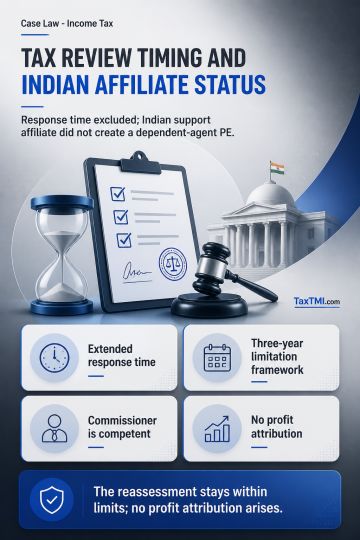
The assessment order passed u/s 144C(3) was beyond the prescribed period of one month from the end of the month in which the period for filing objections u/s 144C(2) expired. Although the assessee filed objections before the Dispute Resolution Panel beyond the 30-day period, the Assessing Officer was still required to pass the final order within the stipulated timeframe u/s 144C(4). The High Court upheld the Tribunal's decision to set aside the final assessment order as being time-barred, rejecting the Revenue's argument that the assessee cannot take advantage of its own delay in filing objections. The statutory language of Section 144C(4) is unambiguous, and the Assessing Officer's failure to comply with the time limit renders the order invalid, irrespective of the assessee's delay.
The assessment order passed u/s 144C(3) was beyond the prescribed period of one month from the end of the month in which the period for filing objections u/s 144C(2) expired. Although the assessee filed objections before the Dispute Resolution Panel beyond the 30-day period, the Assessing Officer was still required to pass the final order within the stipulated timeframe u/s 144C(4). The High Court upheld the Tribunal's decision to set aside the final assessment order as being time-barred, rejecting the Revenue's argument that the assessee cannot take advantage of its own delay in filing objections. The statutory language of Section 144C(4) is unambiguous, and the Assessing Officer's failure to comply with the time limit renders the order invalid, irrespective of the assessee's delay.
Note: It is a system-generated summary and is for quick reference only.
 TaxTMI
  TaxTMI
 of 4879