Actual-user customs exemption conditions permit turnkey project transfers when imported windmill components are exclusively used for installation and ...
Customs offence disqualification excludes civil contraventions, preventing refusal of a private bonded warehouse licence based solely on monetary pena...
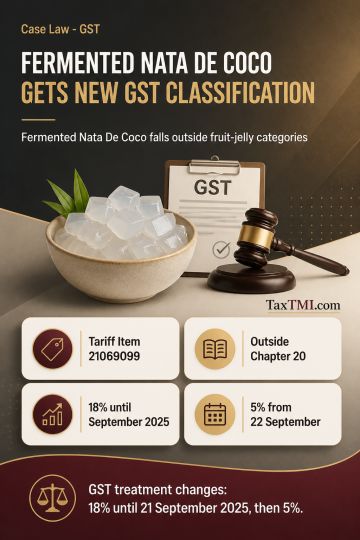
Residual food-preparation classification places fermented Nata De Coco outside fruit-jelly categories, changing its GST treatment across notified peri...
Page of 4894
Press 'Enter' after typing page number.
661 to 680 of 97867 Results
❮
❯
❯❯
0 / 200
Expand Note
Add to Folder
No Folders have been created
+
Are you sure you want to delete "My most important" ?
The assessment order passed u/s 144C(3) was beyond the prescribed period of one month from the end of the month in which the period for filing objections u/s 144C(2) expired. Although the assessee filed objections before the Dispute Resolution Panel beyond the 30-day period, the Assessing Officer was still required to pass the final order within the stipulated timeframe u/s 144C(4). The High Court upheld the Tribunal's decision to set aside the final assessment order as being time-barred, rejecting the Revenue's argument that the assessee cannot take advantage of its own delay in filing objections. The statutory language of Section 144C(4) is unambiguous, and the Assessing Officer's failure to comply with the time limit renders the order invalid, irrespective of the assessee's delay.
The assessment order passed u/s 144C(3) was beyond the prescribed period of one month from the end of the month in which the period for filing objections u/s 144C(2) expired. Although the assessee filed objections before the Dispute Resolution Panel beyond the 30-day period, the Assessing Officer was still required to pass the final order within the stipulated timeframe u/s 144C(4). The High Court upheld the Tribunal's decision to set aside the final assessment order as being time-barred, rejecting the Revenue's argument that the assessee cannot take advantage of its own delay in filing objections. The statutory language of Section 144C(4) is unambiguous, and the Assessing Officer's failure to comply with the time limit renders the order invalid, irrespective of the assessee's delay.
Note: It is a system-generated summary and is for quick reference only.
 TaxTMI
  TaxTMI
 of 4894