Arbitration of SEZ sub-lease monetary claims preserves rent, maintenance, termination, improvements and damages disputes while unused premises are vac...
Scientific research approval grants a research association tax recognition, subject to annual donor reporting, certification, and regulatory complianc...
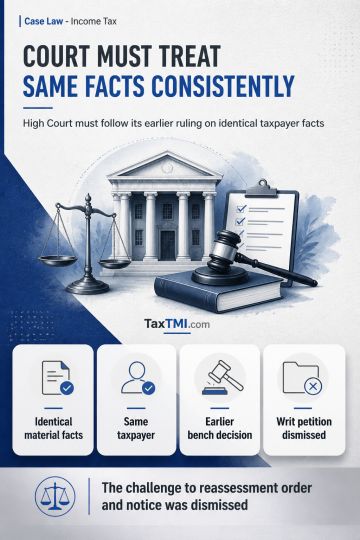
Judicial discipline requires consistent reassessment treatment where identical facts were decided for the same taxpayer in the preceding assessment ye...
The High Court held that the appellate authority erred in enhancing the tax liability payable by the appellant/assessee in an appeal filed by the assessee without following the mandatory procedure u/s 107(11) of the Act. The assessing officer had quantified the tax liability at Rs.2,58,536.80, but imposed penalty on Rs.41,83,804.72. The appellate authority was required to consider the correctness of the tax liability fixed by the assessing officer and the penalty levied, but instead enhanced the tax liability without adhering to the statutory procedure. Consequently, the orders of both the appellate authority and assessing officer were set aside, and the matter was remanded to the assessing authority for fresh consideration after following due process.
The High Court held that the appellate authority erred in enhancing the tax liability payable by the appellant/assessee in an appeal filed by the assessee without following the mandatory procedure u/s 107(11) of the Act. The assessing officer had quantified the tax liability at Rs.2,58,536.80, but imposed penalty on Rs.41,83,804.72. The appellate authority was required to consider the correctness of the tax liability fixed by the assessing officer and the penalty levied, but instead enhanced the tax liability without adhering to the statutory procedure. Consequently, the orders of both the appellate authority and assessing officer were set aside, and the matter was remanded to the assessing authority for fresh consideration after following due process.
Note: It is a system-generated summary and is for quick reference only.
 TaxTMI
  TaxTMI
 of 4897